
There is a specific type of grief that only divers understand.
It hits about three days after you return from a dive trip. You are sitting in traffic, or at a desk, or in a meeting that should have been an email — and you feel it. A phantom weightlessness. A memory of silence so complete it now makes the noise of the surface feel violent.
You have been ruined. And you know it.
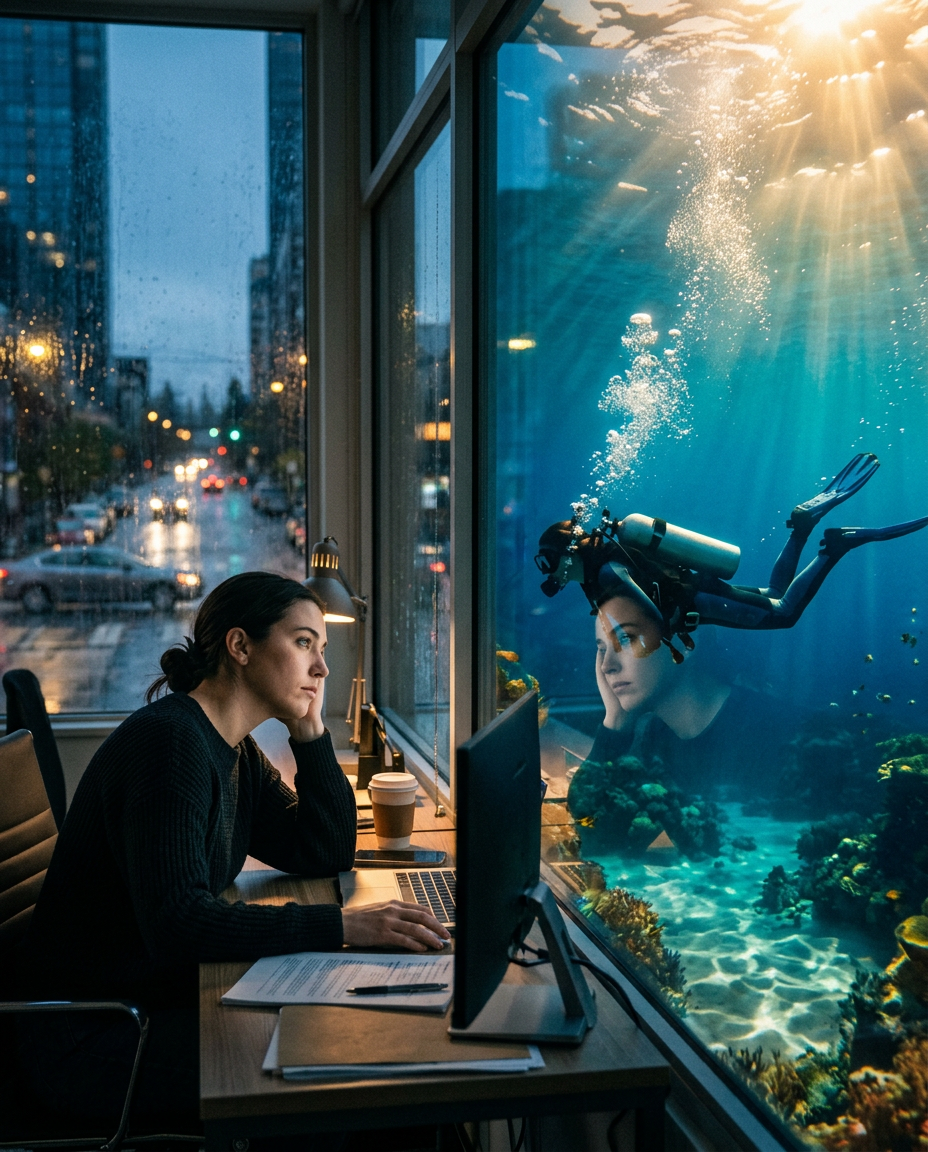
Some dive sites don't just give you a good story. They change your reference point for what "beautiful" means. They raise the bar so high that land-life feels like a compromise. Below are the 13 sites that do this most reliably. We have ranked them not by difficulty or fame, but by their capacity to destroy your tolerance for ordinary.
Consider this your warning.
1. The Great Blue Hole, Belize
Depth: 40m (recreational) / 124m (full sinkhole)
Best Season: April–June
The Ruin: You think you have seen blue. You have not seen this blue.
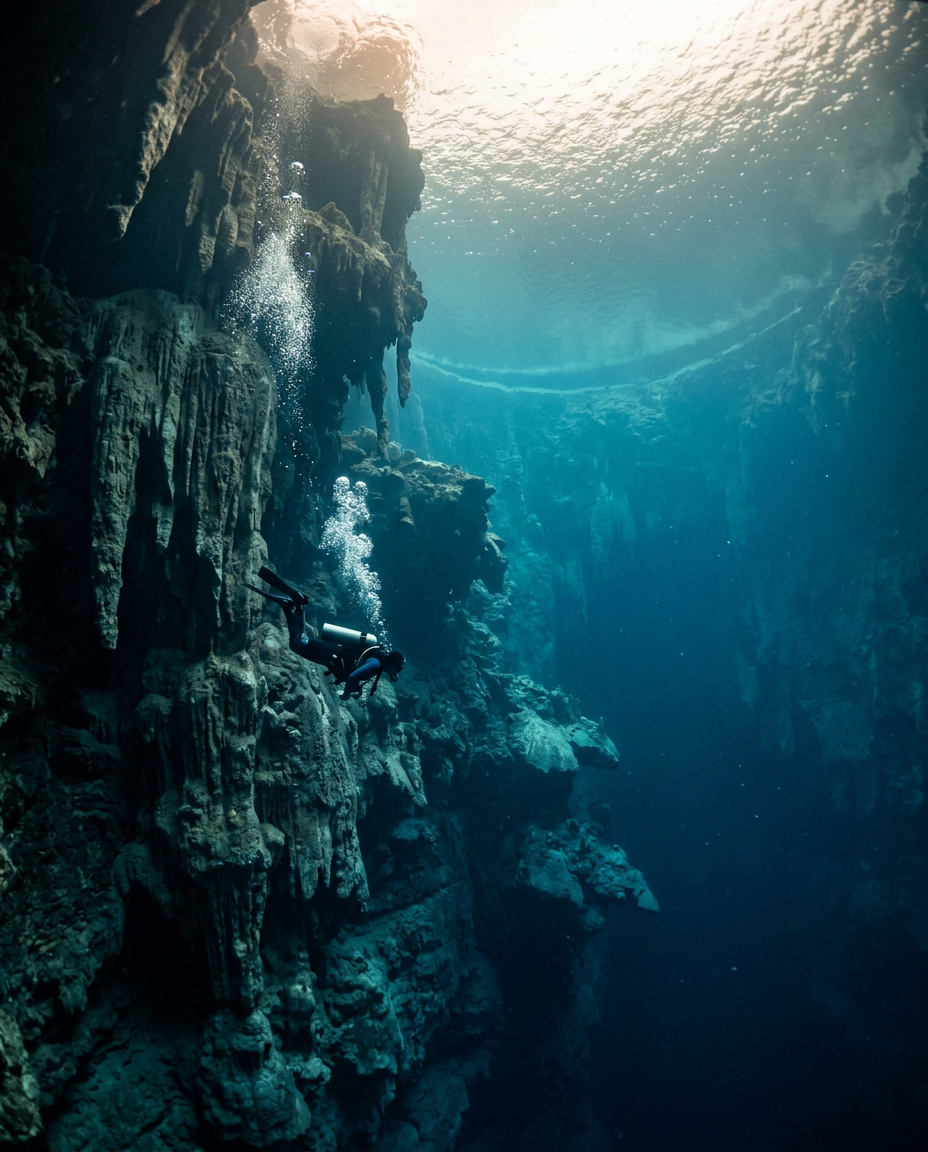
A perfectly circular submarine sinkhole 300 meters across, the Blue Hole is the kind of geological anomaly that makes you question whether Earth is trying to communicate something. Jacques Cousteau declared it one of the top ten dive sites in the world in 1971, and it has done nothing but solidify that reputation since.
The descent is vertical. The walls are sheer. At 40 meters, you enter a cathedral of ancient stalactites — formations that could only have formed above water, proof that this cave once breathed air. The visibility is so extreme that depth perception dissolves. You feel simultaneously tiny and infinite.
Hidden Gem Nearby: Half Moon Caye Wall — a drift dive along a vertical drop-off where reef sharks patrol in silver silhouette against the abyss.
2. SS Thistlegorm, Red Sea, Egypt
Depth: 18–30m
Best Season: March–May, September–November
The Ruin: You will never look at a shipwreck documentary the same way again.
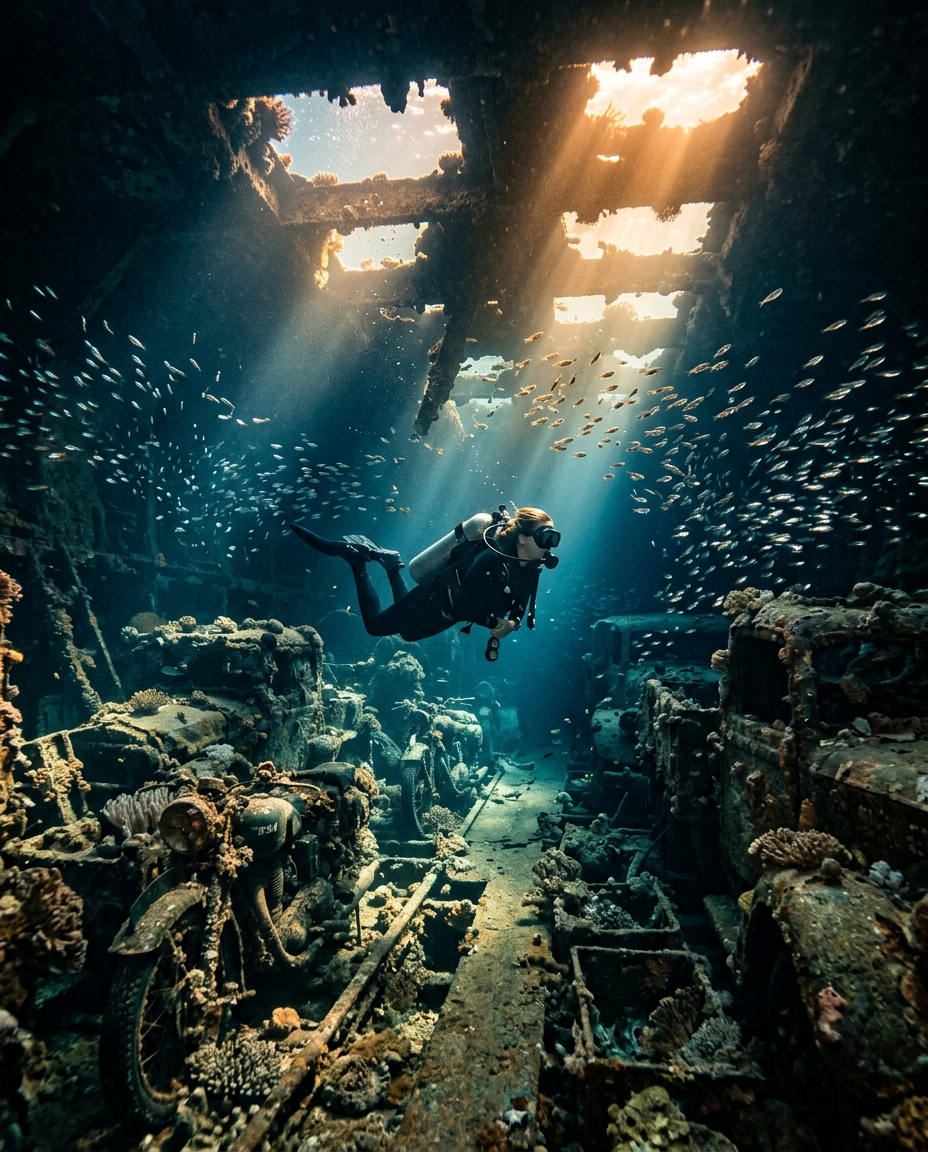
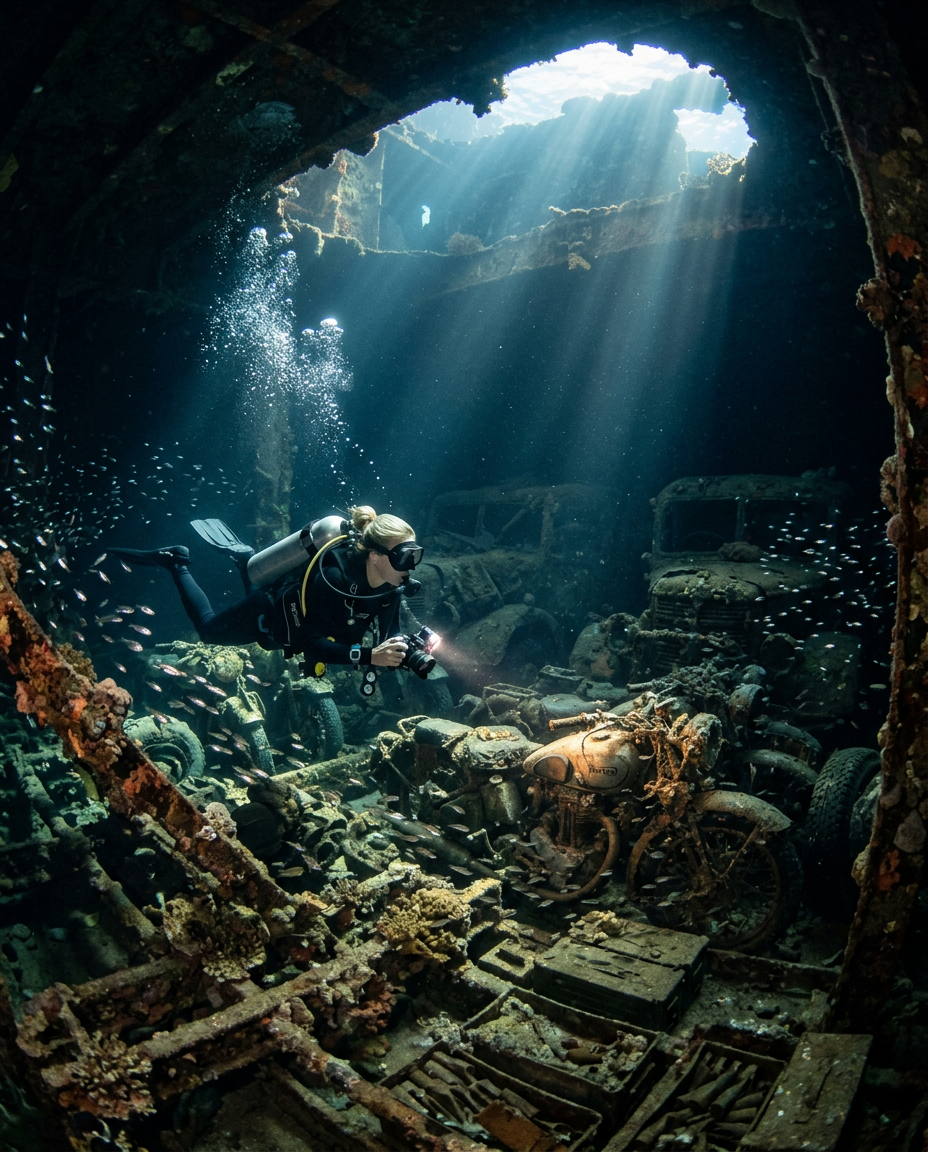
The Thistlegorm is not just a wreck. It is a time capsule. A British armed freighter sunk by German bombers in 1941, it rests upright on the sandy seabed with its cargo still intact: BSA motorcycles, Wellington boots, train carriages, rifles, and trucks that look like they could still start if you turned the key.
Swimming through the hold is an archaeological experience that happens at depth. The light penetrates through blast holes in the hull, illuminating clouds of glassfish that move like living mercury. It is beautiful and haunting in equal measure — a reminder that the ocean reclaims everything, but it does not forget.
Hidden Gem Nearby: The Bells — a dramatic wall dive with a chimney-like swim-through that drops you from the shallows to 30m in a single, heart-pounding descent.
3. Raja Ampat, Indonesia
Depth: 5–40m
Best Season: October–April
The Ruin: You will become insufferable about marine biodiversity at dinner parties.
If Raja Ampat were a person, it would be the overachiever who also happens to be effortlessly cool. Located in the Coral Triangle — the epicenter of global marine biodiversity — this archipelago holds the highest recorded diversity of coral and reef fish species on the planet.
The diving is kaleidoscopic. Pygmy seahorses no bigger than your fingernail cling to gorgonian fans. Walking sharks — yes, sharks that walk on their fins — patrol the shallows at dawn. Manta rays gather in cleaning stations like commuters at a train platform. And the coral? The coral looks like someone gave evolution an unlimited budget and no deadline.
Hidden Gem Nearby: The Passage — a narrow channel between islands where the current creates a natural aquarium of non-stop action. Soft corals bloom in every direction.
4. Silfra Fissure, Iceland
Depth: 18–40m
Best Season: Year-round (dry suit required)
The Ruin: You will never again be impressed by "clear water."
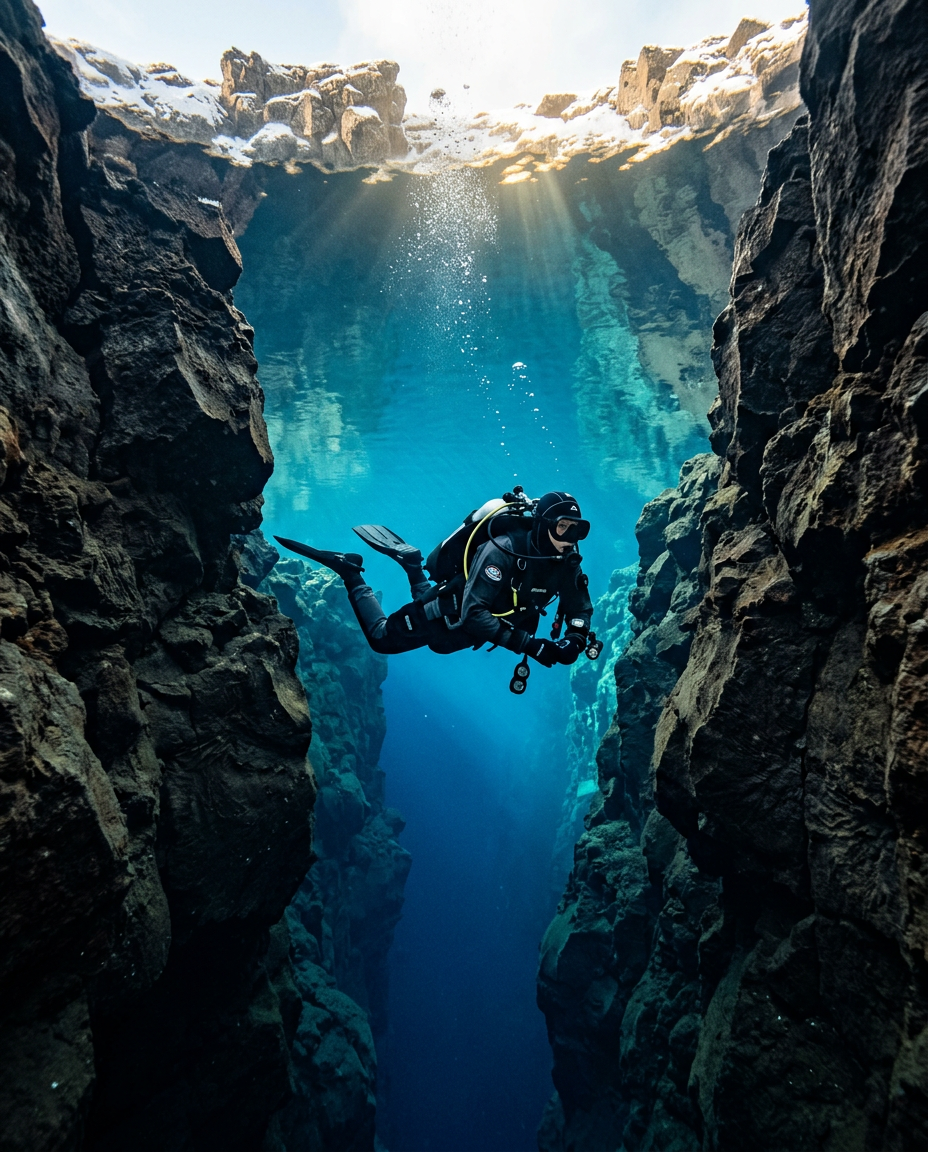
Silfra is the crack between two tectonic plates — the North American and Eurasian continents — and you can literally swim from one continent to the other. But that is not the reason you will be ruined. The reason is the visibility.
Over 100 meters.
Glacial meltwater, filtered for decades through underground lava rock, enters the fissure with such purity that you can see details at distances that feel physically impossible. There is no life. No coral. No fish. Just you, your buddy, and a landscape of cathedral-like rock formations in electric blue water so clear it feels like flying through glass.
Hidden Gem Nearby: Davíðsgjá — a less-visited fissure in Thingvallavatn Lake with the same surreal visibility but none of the tourist queues.
5. Sipadan Island, Malaysia
Depth: 5–40m
Best Season: April–December
The Ruin: You will measure all future wall dives against this one.
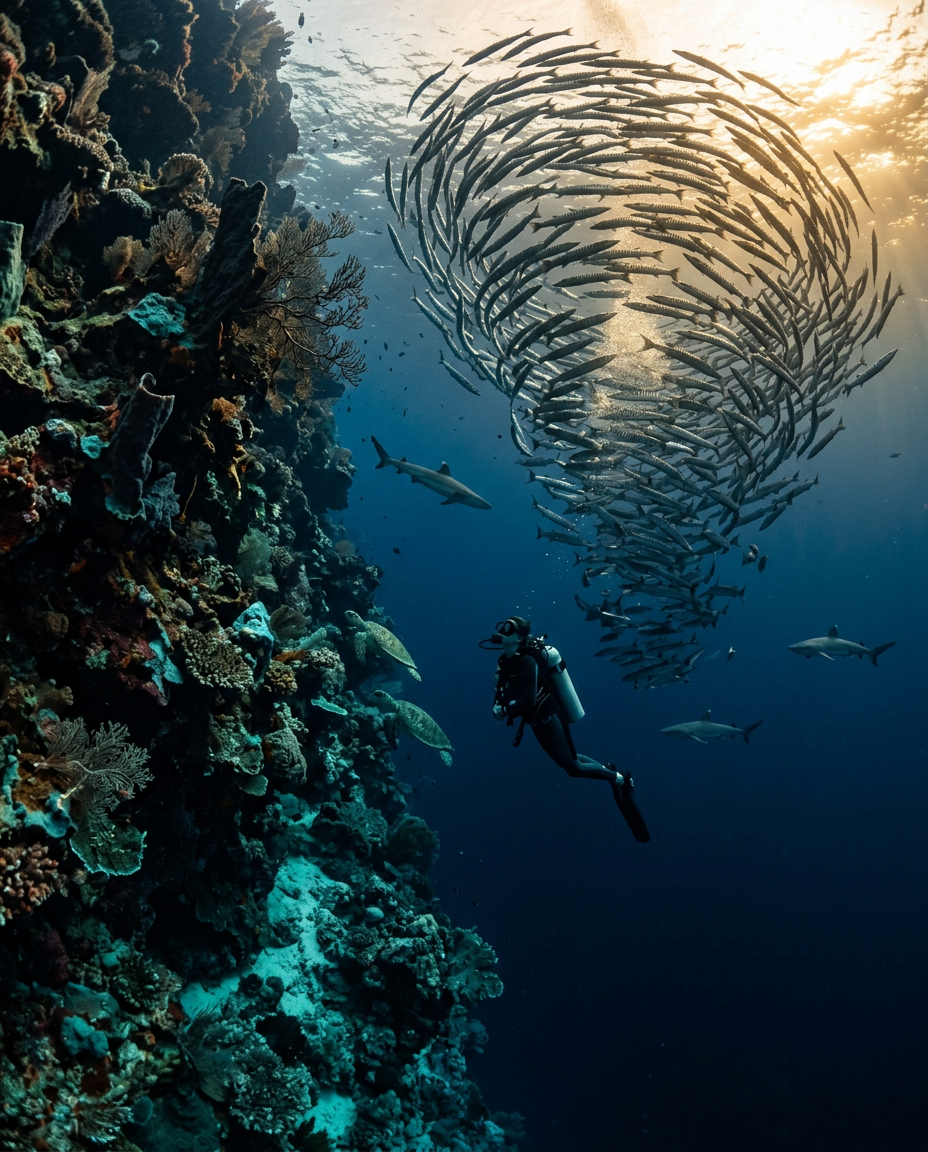
Sipadan is an oceanic island that rises 600 meters from the seabed — and the wall dive along its perimeter is the stuff of legend. You kick out from the beach, drop over the edge, and suddenly the reef ends. The bottom is not visible. The wall is vertical. And the marine life is absurdly dense.
Turtles. Dozens of them. So many that you stop counting after ten. White-tip reef sharks cruise the blue. Barracuda form tornado-like vortexes that block out the sun. And if you are lucky — if the ocean is in a generous mood — a hammerhead may drift past at 40 meters, watching you with an ancient, indifferent eye.
Hidden Gem Nearby: Mabul's House Reef — macro heaven. Frogfish, flamboyant cuttlefish, and blue-ringed octopus hide in the muck just offshore.
6. Cocos Island, Costa Rica
Depth: 10–40m
Best Season: June–November
The Ruin: You will become emotionally dependent on hammerhead sharks.
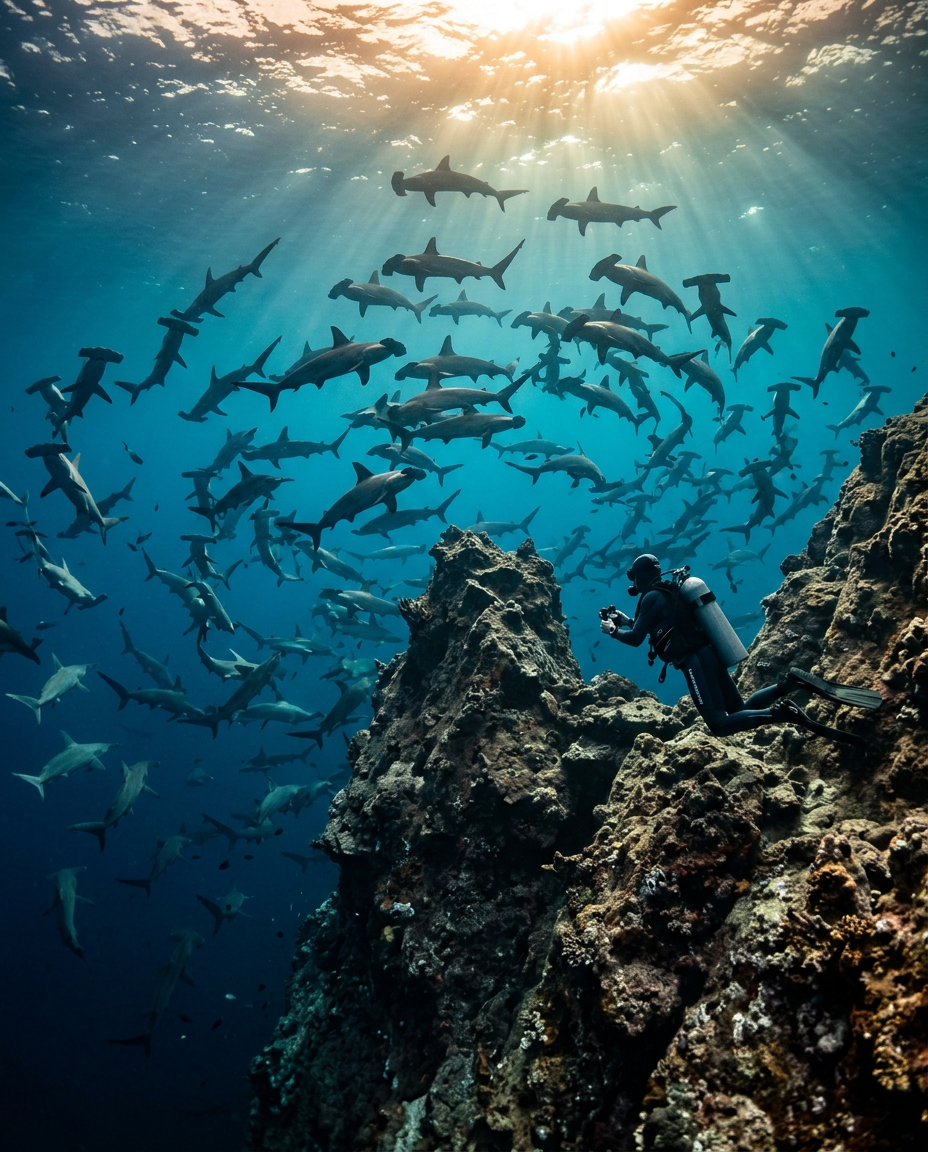
Cocos Island is a 36-hour boat ride from the mainland. There are no resorts, no roads, no Instagram crowds. Just a volcanic island in the middle of the Pacific and some of the most reliable pelagic action on Earth.
The main event is Bajo Alcyone — a seamount where hundreds of scalloped hammerhead sharks gather in schooling formations that defy description. They do not just swim past you. They orbit you. A slow, silent carousel of predators that moves with a coordination that looks choreographed. It is terrifying and beautiful in equal measure, and it will recalibrate your understanding of "wild."
Hidden Gem Nearby: Manuelita's Deeper Ledge — a night dive where whitetip reef sharks hunt in packs, turning the reef into a silent, savage theater.
7. Andaman Islands, India
Depth: 10–35m
Best Season: December–April
The Ruin: You will wonder why more Indians don't know this is in their own backyard.
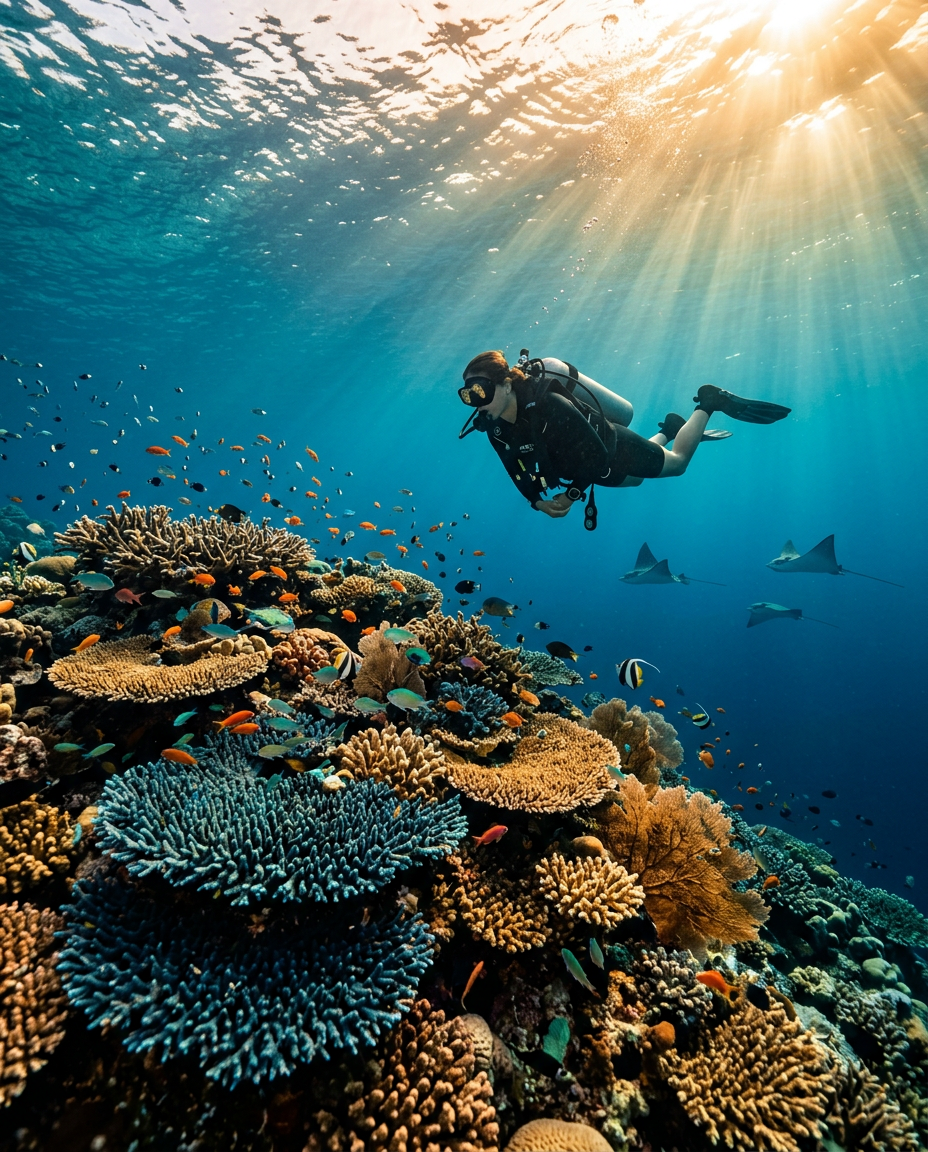
The Andamans are India's best-kept secret. Havelock Island's Elephant Beach and The Wall offer pristine coral, manta ray cleaning stations, and the occasional dugong sighting. But the real magic is Diglipur in the far north — untouched reefs, zero dive boats, and a sense of discovery that feels like the 1970s.
The water is warm. The visibility is 25–30 meters. The marine life is Indo-Pacific at its finest. And because the Andamans are still relatively undiscovered by the international dive community, you will often have entire dive sites to yourself.
Hidden Gem Nearby: The Cinque Islands — twin islands separated by a shallow channel, where barracuda, eagle rays, and reef sharks patrol a current-swept ridge that feels like a private nature documentary.
8. Galápagos Islands, Ecuador
Depth: 10–30m
Best Season: June–November (for whale sharks), December–May (for warmer water)
The Ruin: You will never again be satisfied with "just" seeing fish.
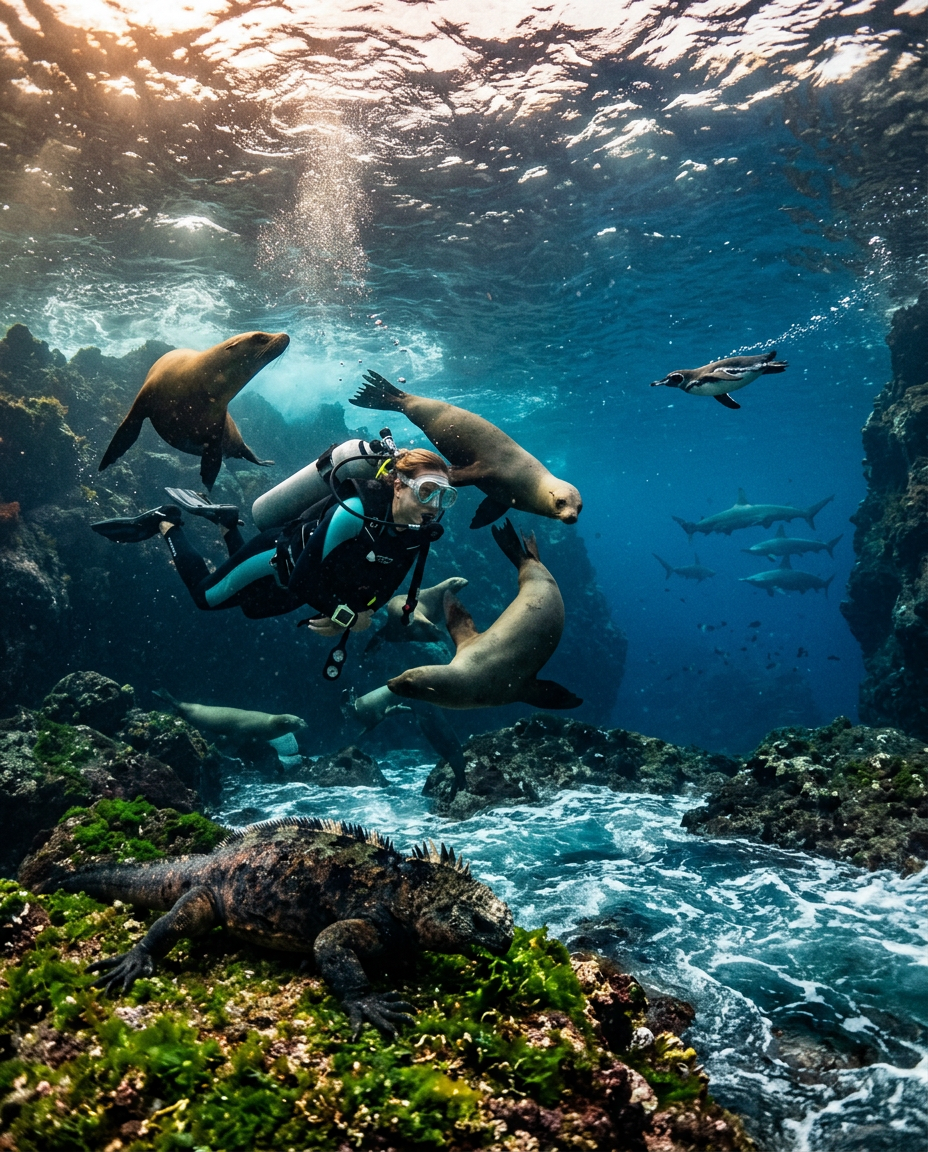
The Galápagos is where Charles Darwin changed the world — and it is where you will realize how small your definition of "wildlife" has been. Here, marine iguanas graze on algae underwater. Sea lions playfully nip at your fins. Penguins — actual penguins — rocket past you at depths that feel surreal.
Wolf and Darwin Islands are the crown jewels: whale sharks (June–November), schooling hammerheads, Galápagos sharks, and the occasional orca. The water is cold. The currents are strong. The entry is a backward roll into the unknown. And the reward is a sense of wildness that no aquarium, no nature documentary, and no land-based safari can replicate.
Hidden Gem Nearby: Cabo Marshall — a site where mola mola (ocean sunfish) gather to be cleaned by butterflyfish, creating a slow-motion spectacle of mutualism.
9. Komodo National Park, Indonesia
Depth: 5–40m
Best Season: April–November
The Ruin: You will become addicted to adrenaline.
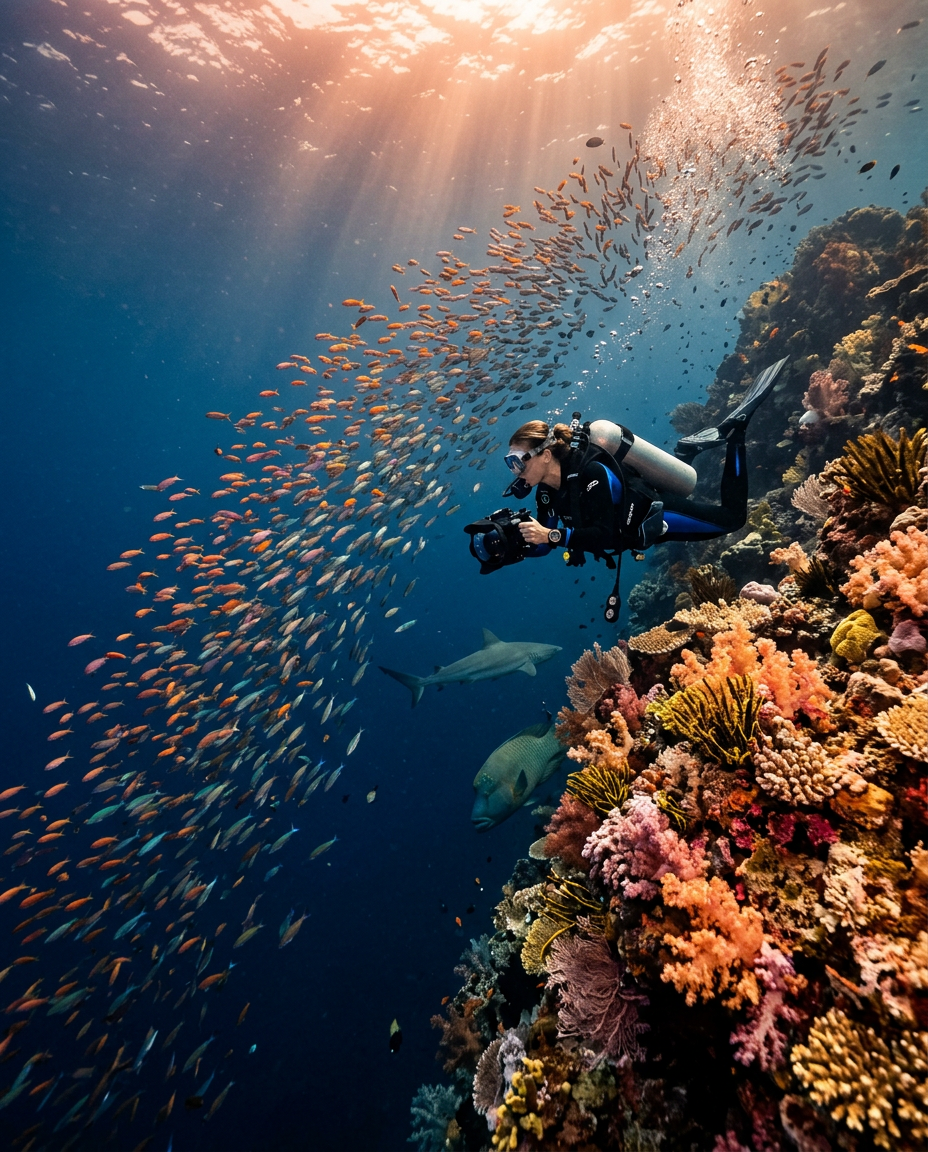
Komodo is not gentle. The currents here are legendary — ripping tides that can sweep you across a reef at speeds that feel like flying. But the payoffs are extraordinary. Batu Bolong is a pinnacle that rises from the deep like a stone skyscraper, covered in coral and patrolled by reef sharks, Napoleon wrasse, and schools of trevally that move in synchronized silver clouds.
And then there are the mantas. Manta Point is a cleaning station where these gentle giants hover in formation while wrasse pick parasites from their gills. They are so close you can see the individual spots on their bellies. So close you can hear the snap of their feeding mouths. So close you stop breathing — not because you need to, but because you have forgotten how.
Hidden Gem Nearby: Siaba Besar — a slow, sandy drift dive where you hunt for macro treasures: rhinopias, frogfish, and the occasional wonderpus.
10. The Maldives (South Ari Atoll & Fuvahmulah)
Depth: 5–30m
Best Season: November–April (mantas & whale sharks); November–April (tiger sharks at Fuvahmulah)
The Ruin: This is where DeepBeatDives launches. And this is where your land-life officially ends.
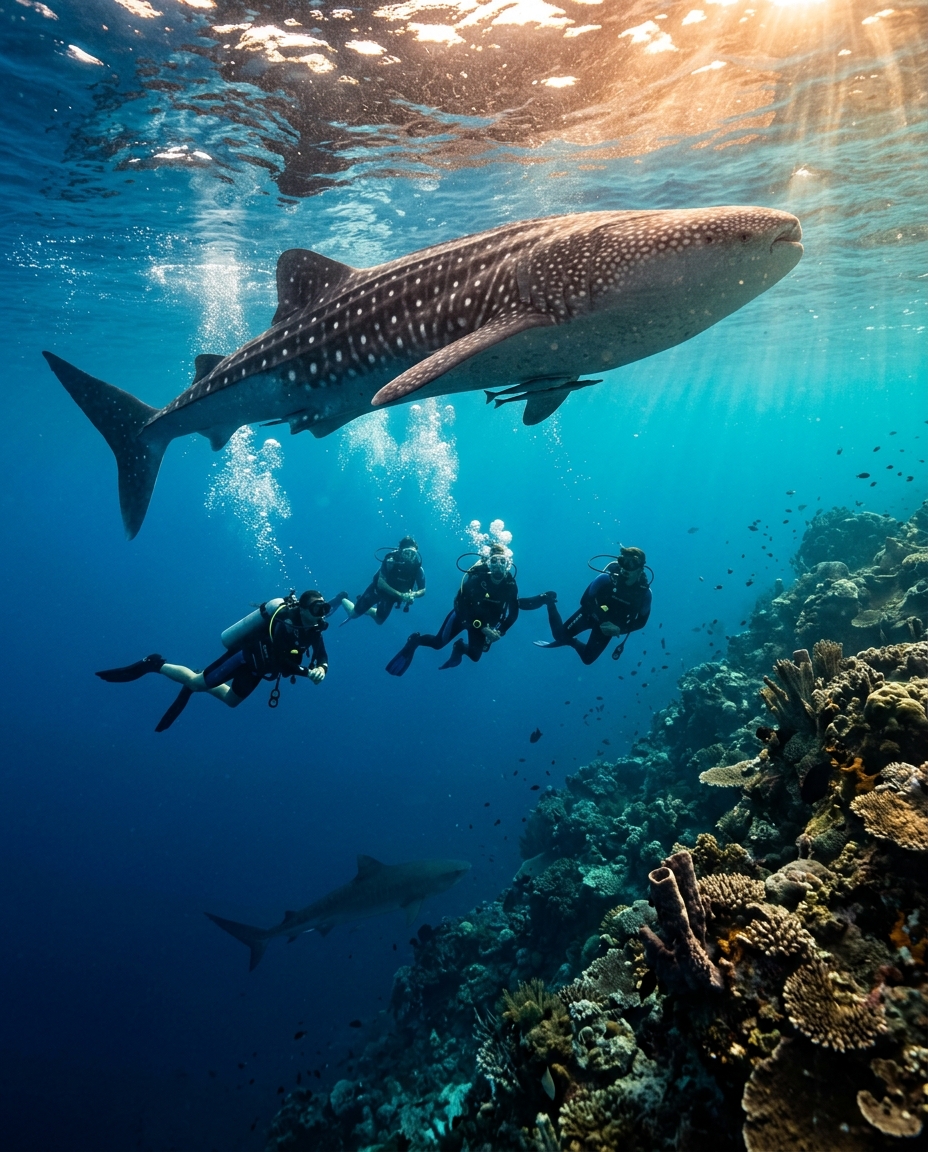
The Maldives does not do subtle. It is a string of atolls in the Indian Ocean where the water is so clear it looks Photoshopped, the reefs are so healthy they look planted, and the marine life operates on a scale that feels fictional.
South Ari Atoll is one of the only places on Earth where whale sharks are sighted year-round. These gentle giants — the largest fish in the ocean — cruise the surface at dawn, filter-feeding on plankton while snorkelers and divers float beside them in stunned silence.
And then there is Fuvahmulah — a single island in the deep south where tiger sharks patrol the shallows with a predictability that has made it one of the world's most reliable shark encounters. It is not a cage dive. It is not a baited dive. It is you, the reef, and a 4-meter apex predator that is curious enough to investigate, but confident enough not to care.
Hidden Gem Nearby: Fotteyo Kandu — a channel in Vaavu Atoll where the current draws grey reef sharks, eagle rays, and massive schools of snapper into a single, electrifying convergence.
11. Samaesan Hole, Thailand
Depth: 15–85m
Best Season: November–April
The Ruin: You will develop a taste for the abyss.
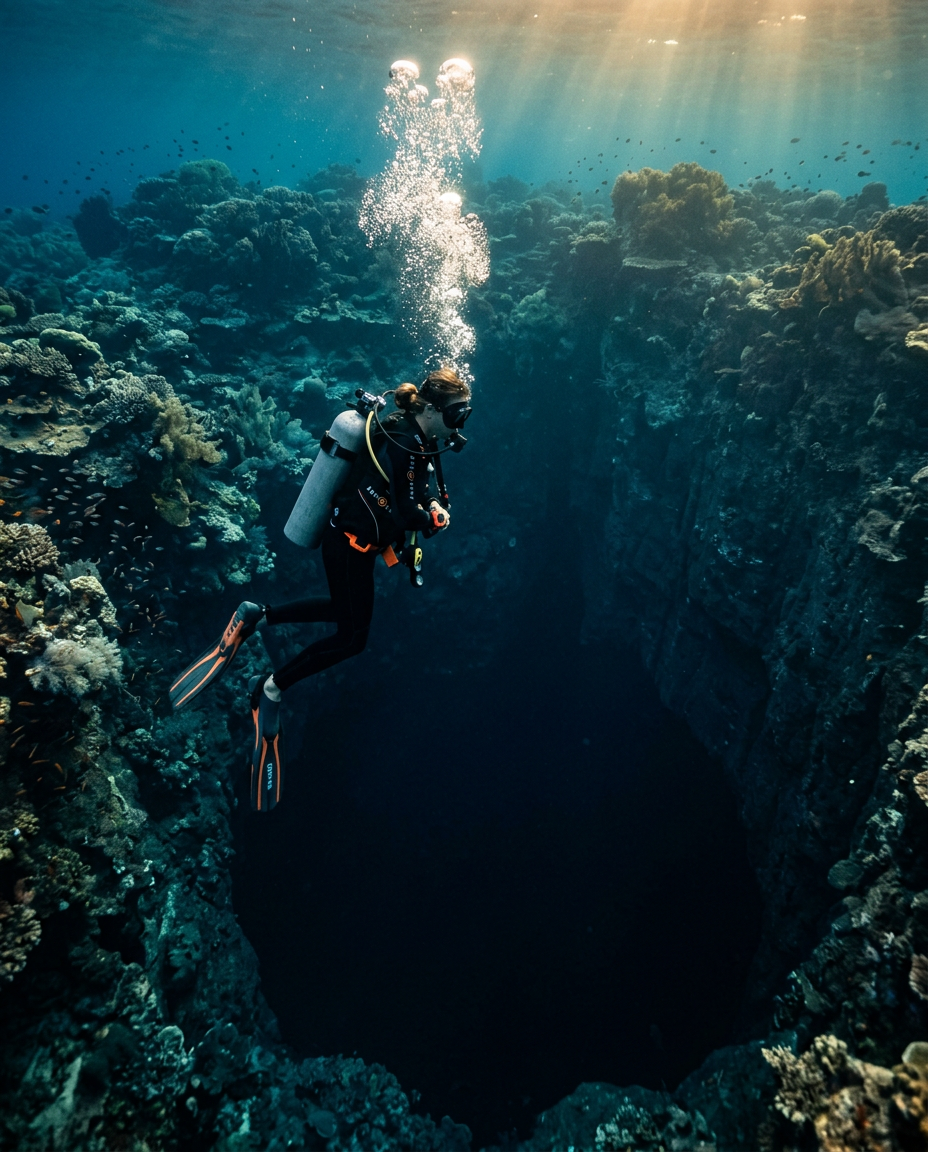
Samaesan Hole is not for beginners. It is a submarine sinkhole near Pattaya that starts at 15 meters and drops into darkness. The visibility is unpredictable. The currents are real. And the thrill is primal.
What makes this site extraordinary is not what you see — it is what you feel. The hole is an entrance to something older than memory. Descending into it feels like descending into yourself. And when you surface, gasping and grinning and already planning your next dive, you will understand why some divers chase depth the way others chase summits.
Hidden Gem Nearby: Koh Chang's Western Reefs — shallow, relaxed dives with surprisingly healthy coral and the occasional whale shark passing through.
12. The Great Barrier Reef, Australia
Depth: 5–30m
Best Season: June–October
The Ruin: You will understand, finally, what we are losing.
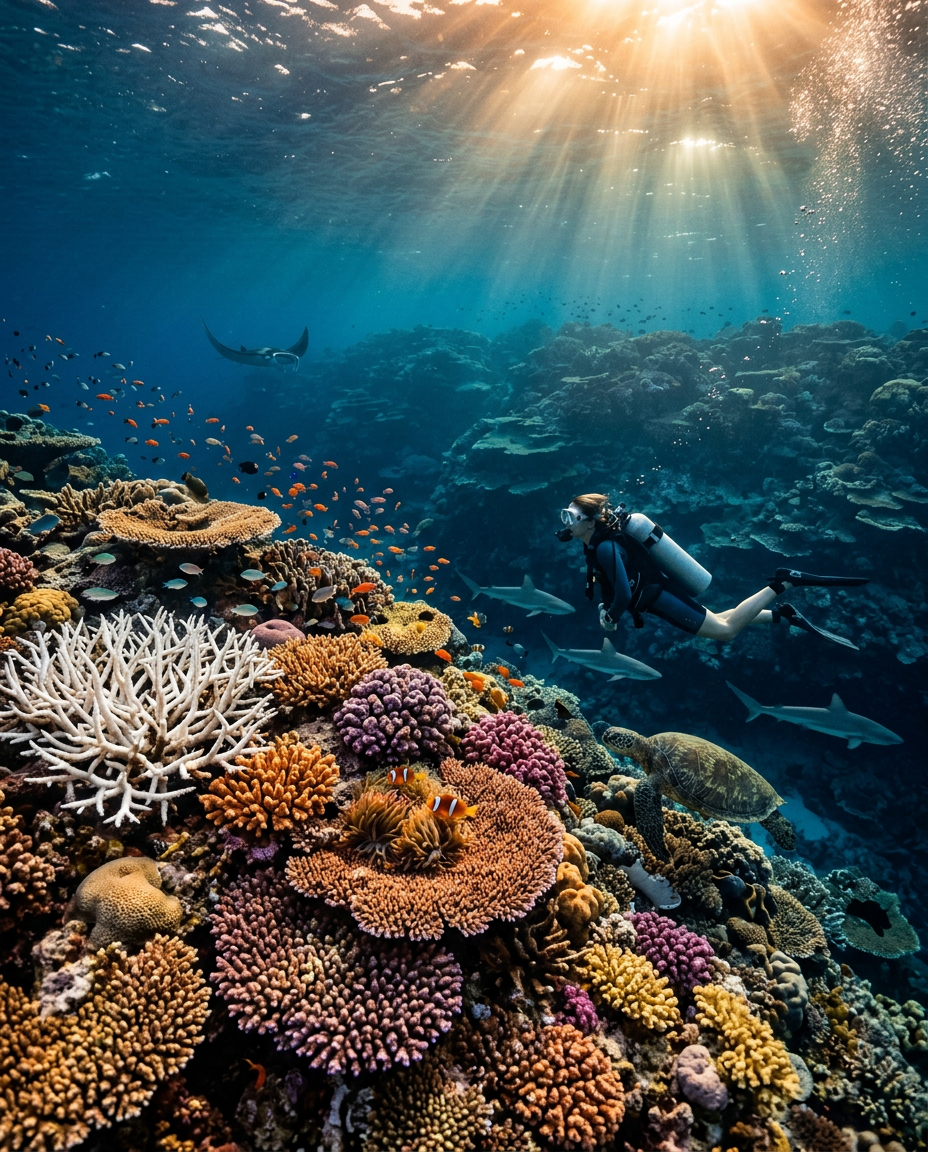
The Great Barrier Reef is the largest living structure on Earth — visible from space, ancient beyond comprehension, and heartbreakingly fragile. Diving it is not just beautiful. It is a responsibility.
The Outer Reef sites offer the healthiest coral, the most diverse marine life, and the kind of visibility that makes you feel like you are flying over an underwater city. Turtles, sharks, rays, and clownfish (yes, Nemo is real, and yes, he is adorable) populate a landscape of brain coral, staghorn thickets, and anemone gardens that stretch to every horizon.
But you will also see the bleaching. The rubble. The sections where warm water has stripped the color from coral that was vibrant ten years ago. And that seeing — that witnessing — is part of the gift. Because once you have seen what is at stake, you cannot unsee it.
Hidden Gem Nearby: Osprey Reef — a remote coral atoll in the Coral Sea with 40m+ visibility, shark feedings (controversial but spectacular), and a sense of isolation that feels like the edge of the world.
13. Your First Dive Site
Depth: Whatever your certification allows
Best Season: The day you decide to stop thinking about it and just go
The Ruin: This is the one that starts everything.
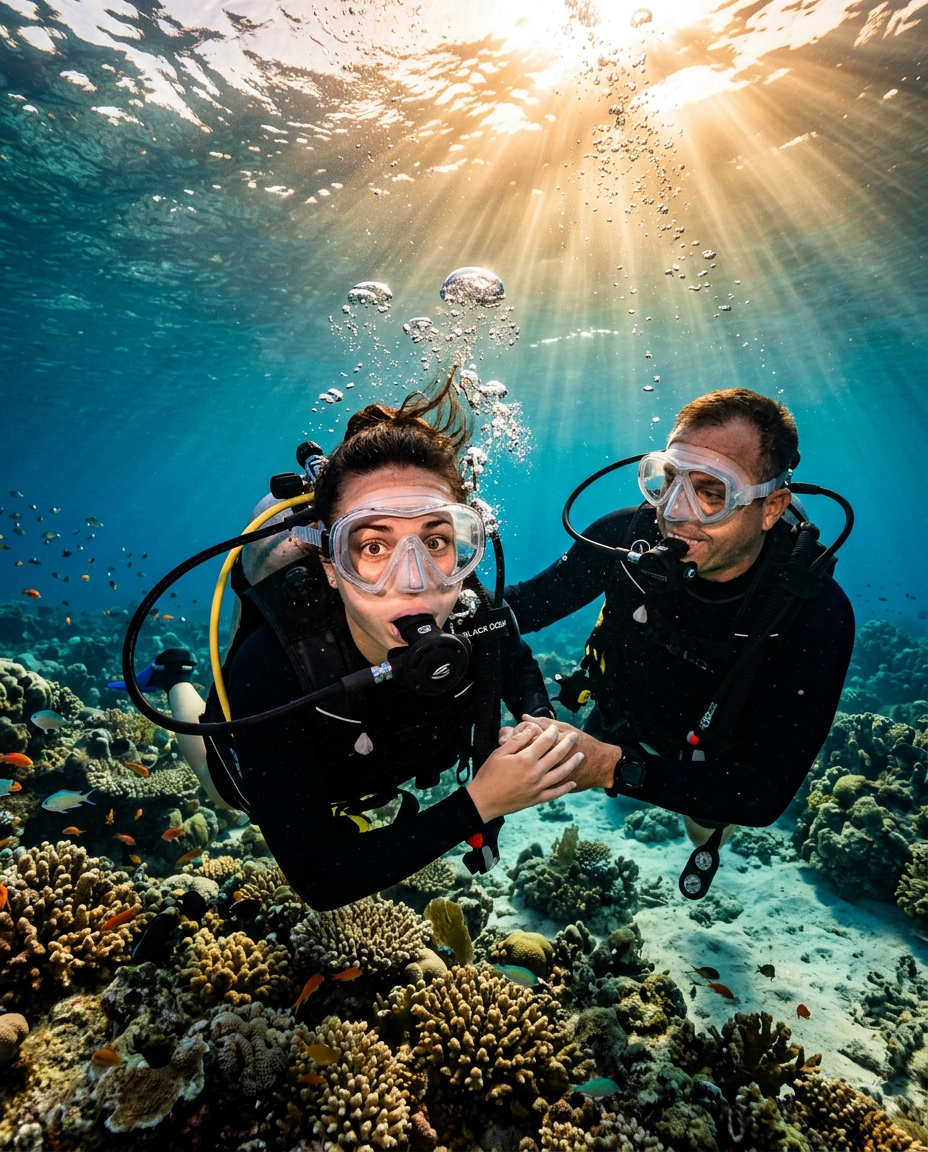
Here is the secret that experienced divers rarely admit: the site that ruins your land-life is not necessarily the most famous one. It is the one where you first understood what the ocean feels like. The one where the mask cleared, the ears equalized, the breathing slowed, and the thought occurred — unbidden, unwelcome, and irrevocable:
I cannot go back to who I was before this.
For some, that site is a training pool. For others, it is a quarry in the Midlands. For many of us in India, it is a shore dive off Netrani Island or a boat dive at Havelock. The location does not matter. The moment does.
And once you have had it, you are already ruined. Welcome to the tribe.
🗺️ Get One Hidden Gem Per Month
We found the quietest corners of the ocean. And we're only sharing them with the tribe.
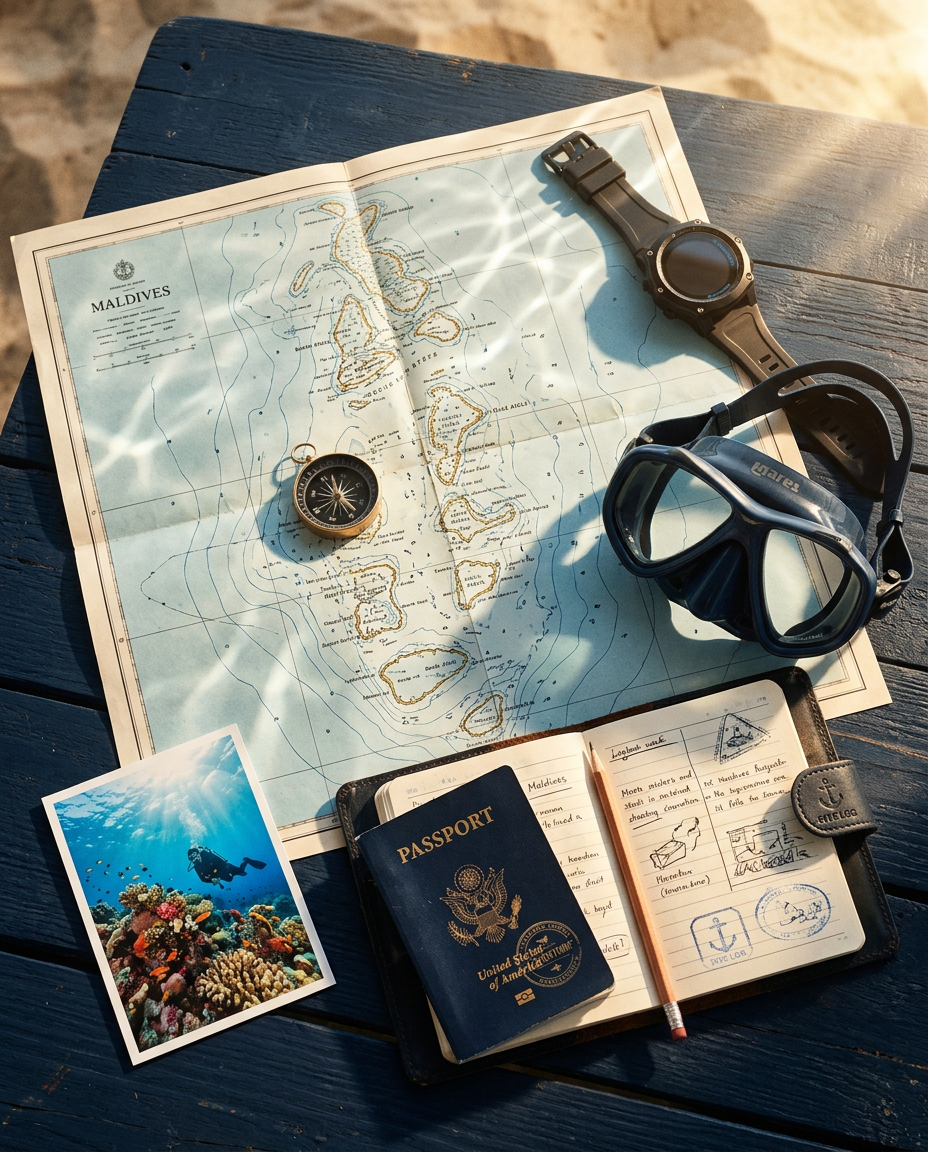
📥 Free Download: The DeepBeatDives Maldives Calendar: What to See, When to Go
- Month-by-month marine life guide (mantas, whale sharks, tiger sharks, bioluminescence)
- Weather windows and booking recommendations
- Liveaboard vs. resort decision framework
- Insider notes from our dive team on the ground
Subscribe to the DeepBeat Dispatch →
The bucket list is not a checklist. It is a promise you make to yourself. And the ocean always remembers who keeps their promises.