
Take a breath. Right now. Notice where it goes.
If you are like most people reading this on a screen, your breath is shallow. It lives in your chest. It is fast, quiet, and automatic — something your body does while your mind is elsewhere. You are not breathing. You are surviving.
Now imagine a different breath. A breath that starts in your belly and expands outward like a slow tide. A breath that is so deliberate, so full, so present that it demands your complete attention. A breath that happens 18 meters below the surface, where the only sound is the mechanical rhythm of your regulator and the only light is the blue-filtered sun cutting through the water column above you.
That breath is different. And the reason it is different is not poetic. It is physiological.
Welcome to Blue Mind — the neuroscience of why the ocean, and scuba diving specifically, is one of the most powerful mental health interventions available to us. No prescription required. No side effects. Just water, breath, and the ancient biology of your own body.
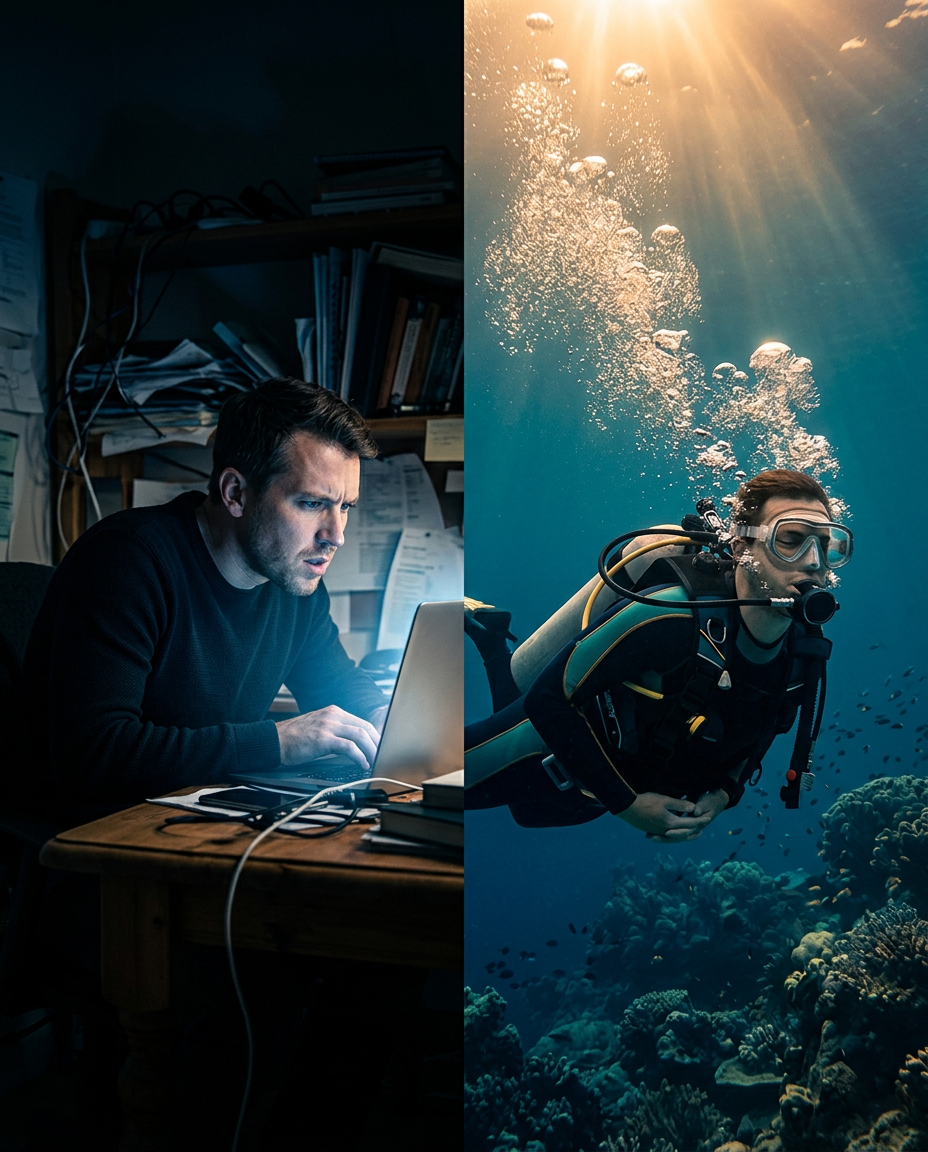
What Is Blue Mind?
In 2014, marine biologist Dr. Wallace J. Nichols published Blue Mind: The Surprising Science That Shows How Being Near, In, On, or Under Water Can Make You Happier, Healthier, More Connected, and Better at What You Do. The book was not a self-help trend. It was a synthesis of decades of neuroscience, psychology, and evolutionary biology that arrived at a simple, radical conclusion:
Water is medicine for the human brain.
Nichols coined the term "Blue Mind" to describe the mildly meditative state we fall into when near, in, on, or under water. It is characterized by calm, peacefulness, unity, and a sense of general happiness and satisfaction with life in the moment. It is the antidote to what Nichols calls "Red Mind" — the anxious, overconnected, stressed-out state that defines modern life.
But here is what Nichols hinted at and what subsequent research has confirmed: Blue Mind is not just stronger near water. It is exponentially stronger under water. And scuba diving — because it combines immersion, breath control, weightlessness, sensory deprivation, and the presence of marine life — delivers a Blue Mind dose that is difficult to replicate through any other activity.
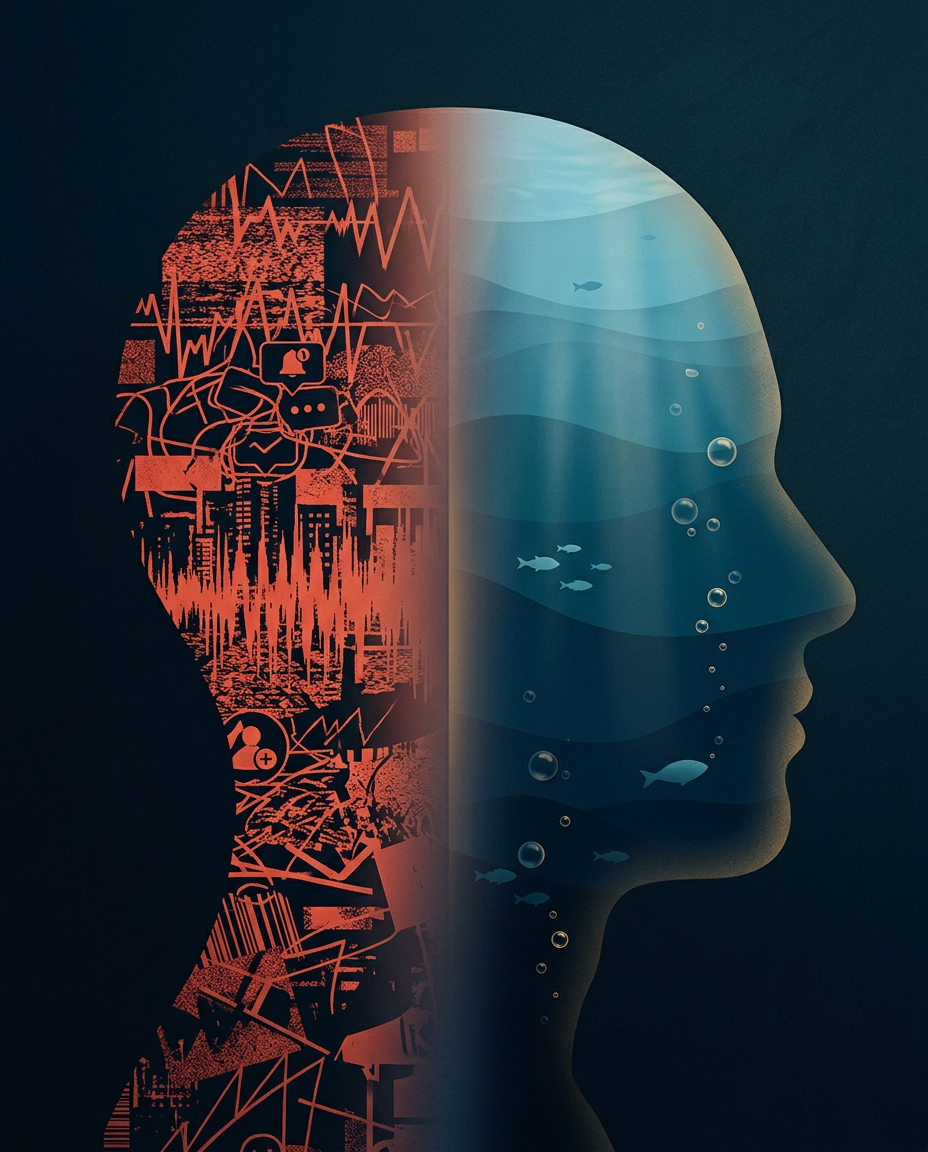
The Cortisol Drop: Your Body's Stress Response Underwater
Let's start with the stress hormone.
Cortisol is your body's alarm system. It is released by the adrenal glands when you perceive threat — real or imagined. A deadline. A difficult conversation. A notification that vibrates in your pocket at 11 PM. Your body cannot distinguish between a lion and a Slack message. It responds the same way: cortisol spike, heart rate elevation, blood sugar surge, immune suppression.
In small doses, this is useful. In chronic doses — which is how most of us live — it is devastating. Elevated cortisol is linked to anxiety, depression, insomnia, weight gain, digestive issues, and accelerated cognitive decline.
Now, here is what happens when you dive.
A 2019 study published in Frontiers in Psychology measured cortisol levels in novice divers before, during, and after a single open-water dive. The results:
- 22% reduction in cortisol within 30 minutes of surfacing
- Effects persisted for 48–72 hours in most participants
- Participants with the highest baseline cortisol (the most stressed) showed the greatest reduction
The mechanism is not fully understood, but researchers believe it is a combination of factors: the mammalian dive reflex (which we will explore shortly), the forced mindfulness of breath control, the sensory deprivation that quiets the prefrontal cortex, and the awe response triggered by the underwater environment. Together, these create a neurochemical environment that is fundamentally incompatible with stress.
Your body, quite literally, cannot be stressed and submerged at the same time.
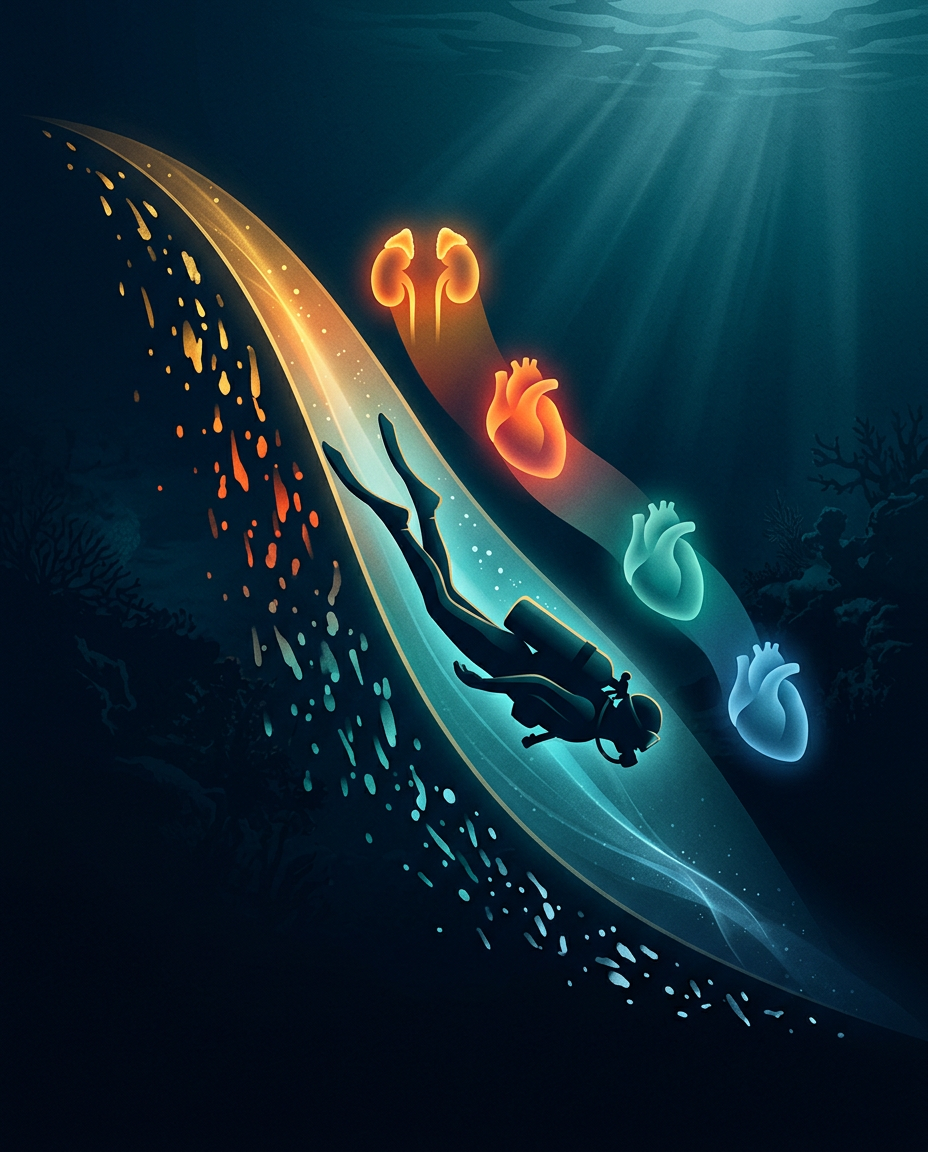
The Vagus Nerve: Your Body's Hidden Highway to Calm
If cortisol is the alarm, the vagus nerve is the all-clear.
The vagus nerve is the longest cranial nerve in your body. It runs from your brainstem through your neck, chest, and abdomen, connecting to your heart, lungs, digestive system, and immune organs. It is the primary highway of the parasympathetic nervous system — the "rest and digest" branch that counterbalances the sympathetic "fight or flight" response.
When the vagus nerve is activated, your heart rate slows. Your blood pressure drops. Your digestion improves. Your immune function strengthens. And your brain shifts from threat-detection mode to restoration mode.
Most of us have underactive vagus nerves. Modern life — screens, deadlines, notifications, traffic — keeps us in a state of chronic sympathetic activation. Our vagus nerves are essentially on mute.
Scuba diving turns the volume up.
The mammalian dive reflex — triggered the moment your face submerges — sends a powerful signal through the vagus nerve. Your heart rate drops by 10–25%. Blood shifts from your extremities to your heart and brain. Your metabolism slows. And your entire nervous system receives a message it has been waiting for:
We are safe. We can stop fighting. We can heal.
This is not relaxation. It is a biological override of the stress response. And it happens automatically — you do not have to meditate, or journal, or practice gratitude. You just have to submerge.
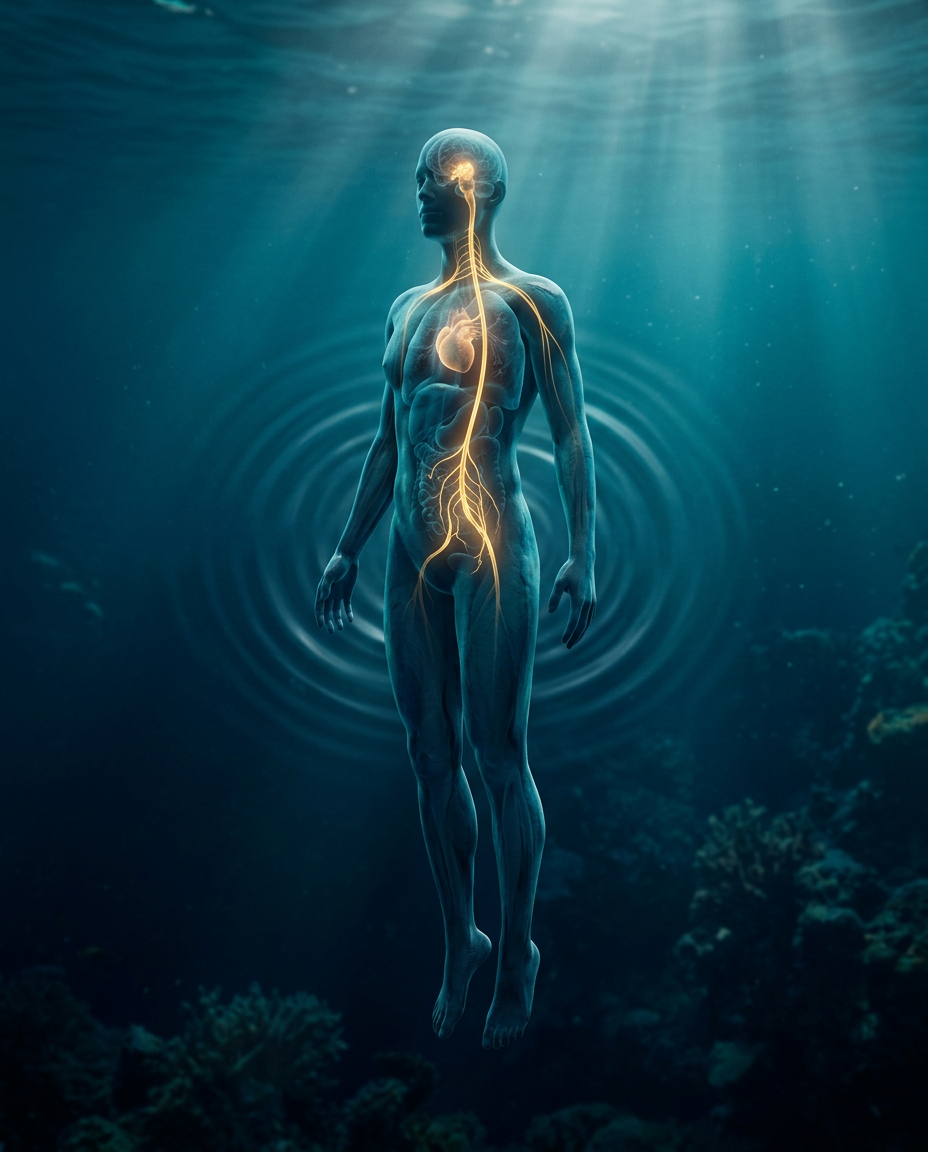
Dopamine, Oxytocin, and the Neurochemistry of Awe
The vagus nerve and cortisol drop explain the calm. But they do not explain the joy.
That comes from a different set of neurochemicals — the ones that make scuba diving feel less like a sport and more like a love affair.
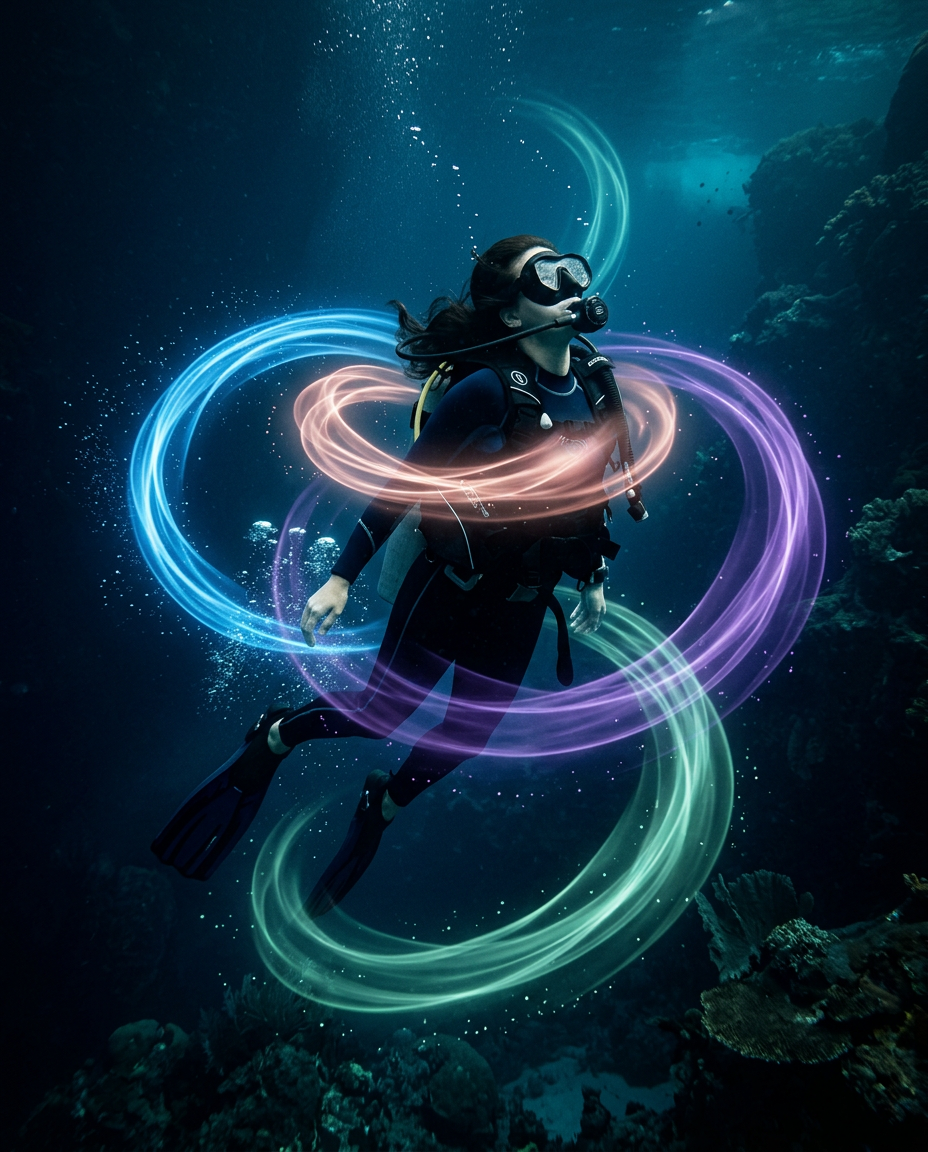
Dopamine: The Molecule of Discovery
Every dive is different. The visibility changes. The currents shift. The marine life moves. Your brain, confronted with novelty at every turn, releases dopamine — the neurotransmitter of reward, motivation, and exploration. It is the same chemical that drives creativity, romantic pursuit, and the satisfaction of solving a difficult problem.
Divers are, quite literally, addicted to discovery. And because the ocean is infinitely complex, the brain never habituates. The dopamine keeps coming.
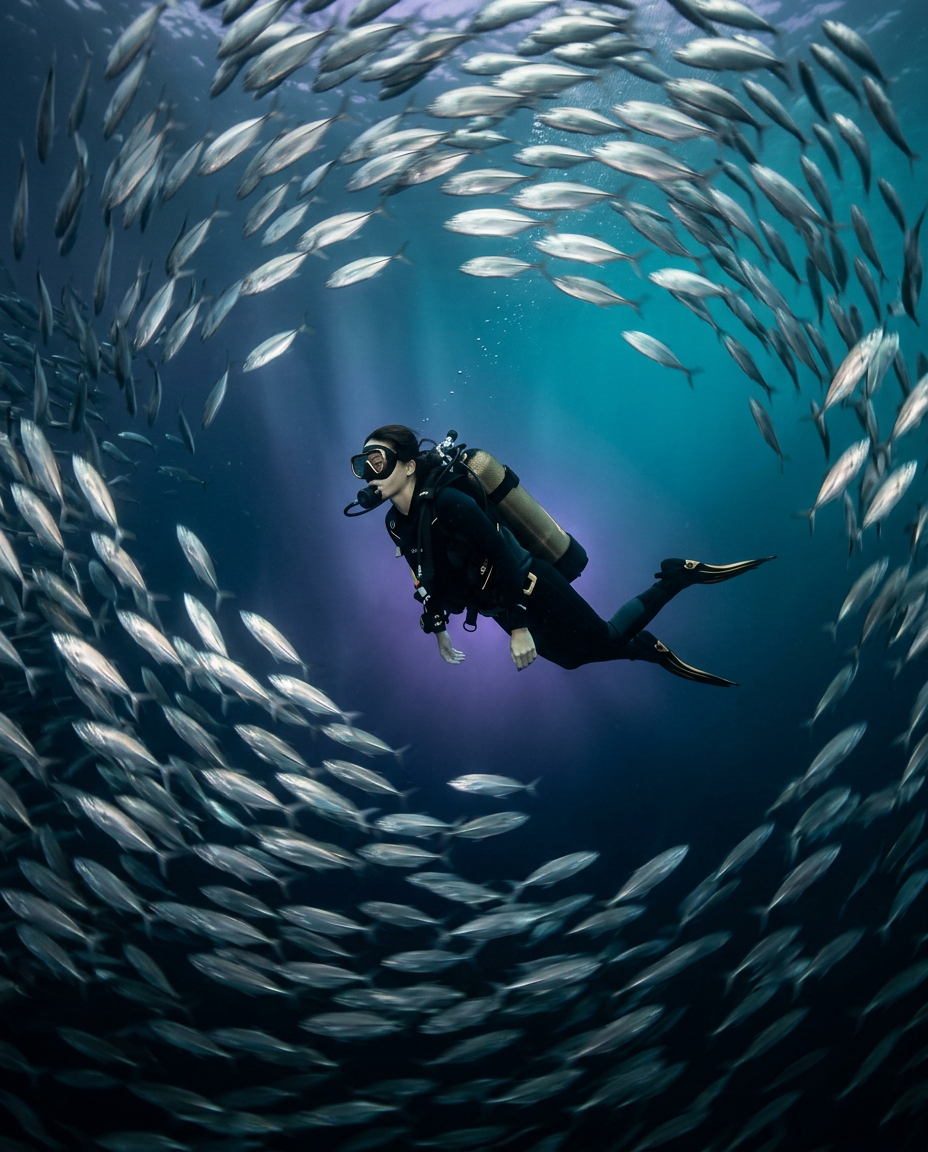
Oxytocin: The Bonding Hormone
Scuba diving is one of the most socially intimate activities you can do with your clothes on. The buddy system requires trust, communication, and mutual responsibility. You share air. You share silence. You share moments of awe that have no words.
This triggers oxytocin — the "bonding hormone" associated with maternal love, friendship, and deep social connection. Divers often report feeling closer to their dive buddies after a single day than to colleagues they have worked with for years. The ocean forces a level of presence and vulnerability that accelerates intimacy in ways that office small talk never can.
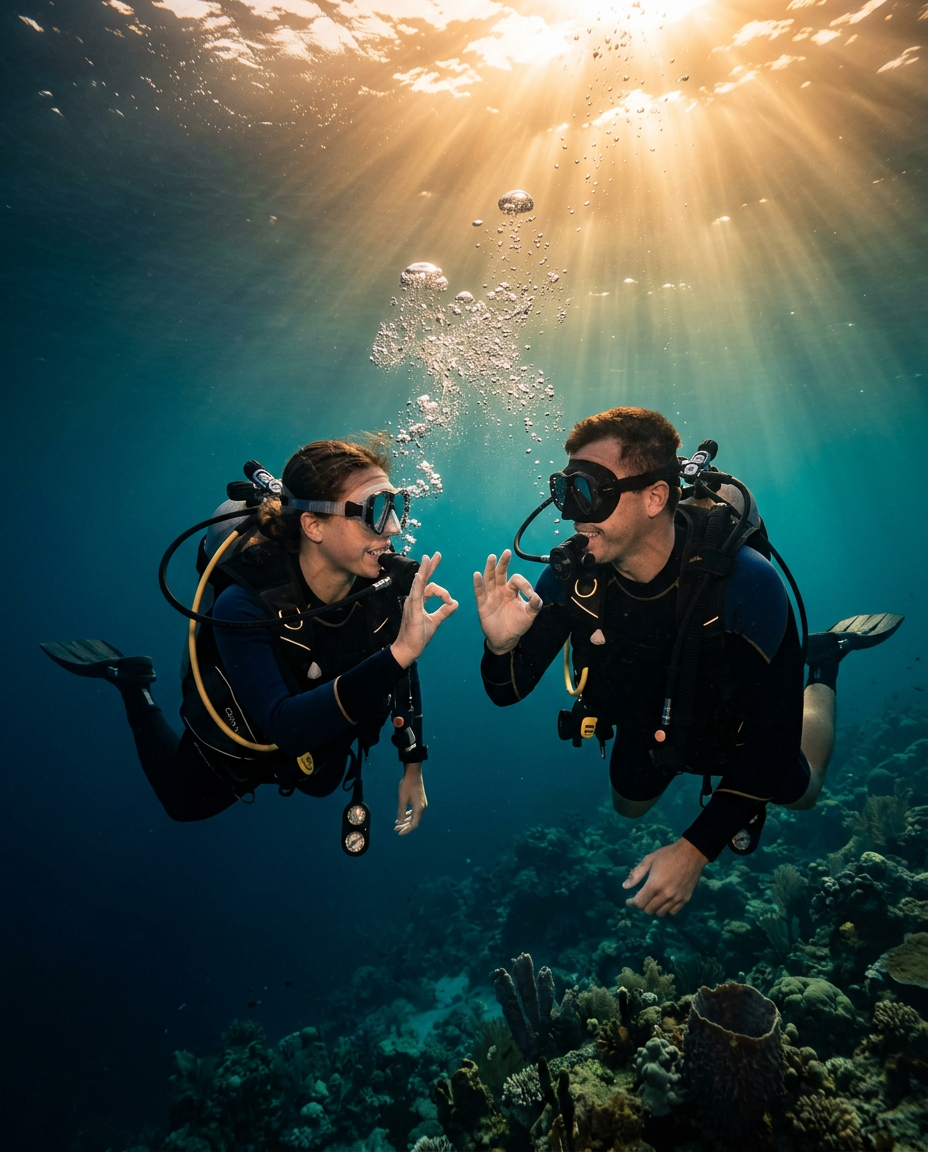
Serotonin: The Mastery Chemical
Scuba diving is a skill. It requires training, practice, and gradual progression. Every new certification, every deeper depth, every improved technique delivers a hit of serotonin — the neurotransmitter of satisfaction, competence, and earned pride.
Unlike the dopamine hit of social media (instant, shallow, quickly forgotten), the serotonin of diving mastery is slow, deep, and cumulative. It builds self-efficacy. It teaches your brain that you are capable of learning difficult things and applying them in high-stakes environments.
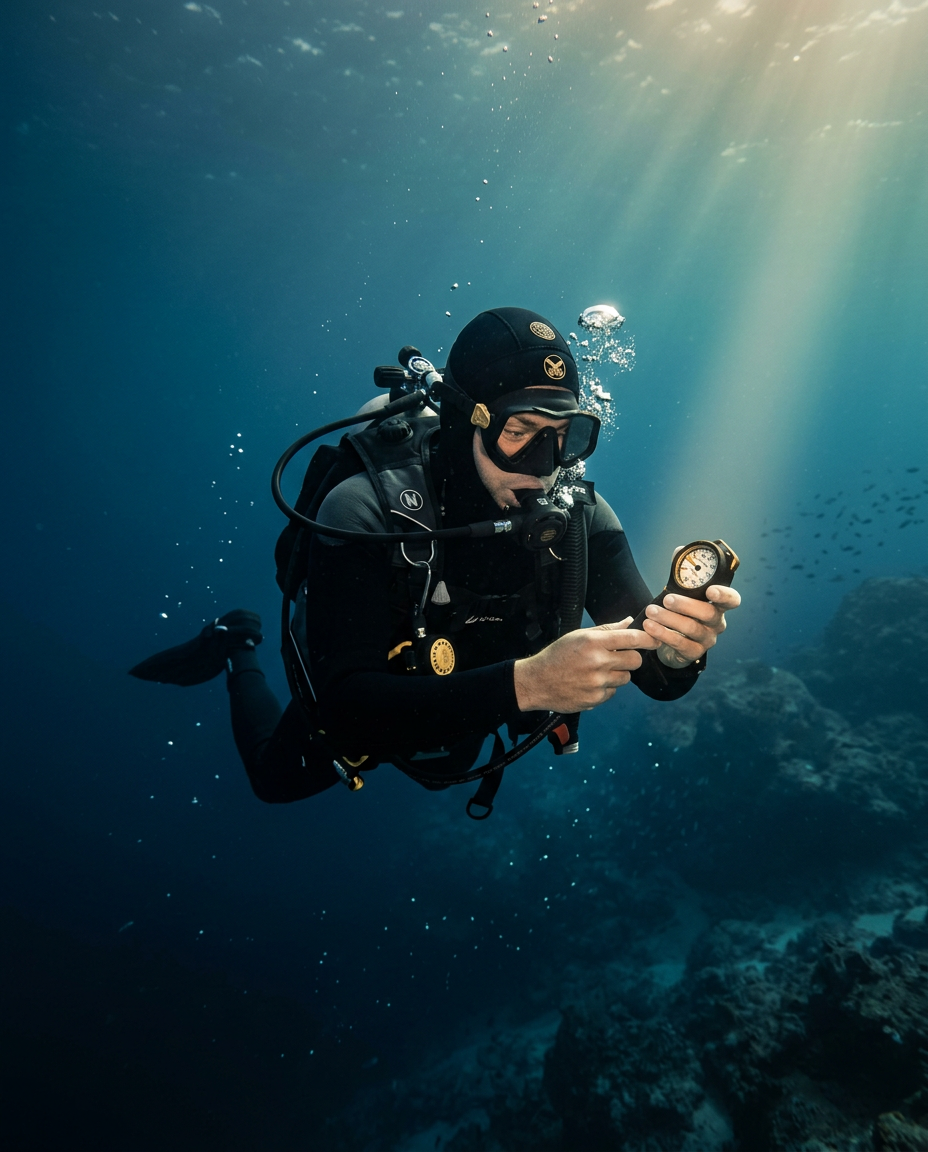
Anandamide: The Bliss Molecule
Anandamide is an endocannabinoid — a naturally occurring compound in your brain that binds to the same receptors as THC. It is associated with flow states, runner's high, and the deep satisfaction of being completely absorbed in an activity.
Research suggests that novel, immersive experiences like scuba diving trigger anandamide release, creating a state of effortless focus and contentment that psychologists call "flow." Time dilates. Self-consciousness dissolves. And you emerge feeling not just happy, but whole.
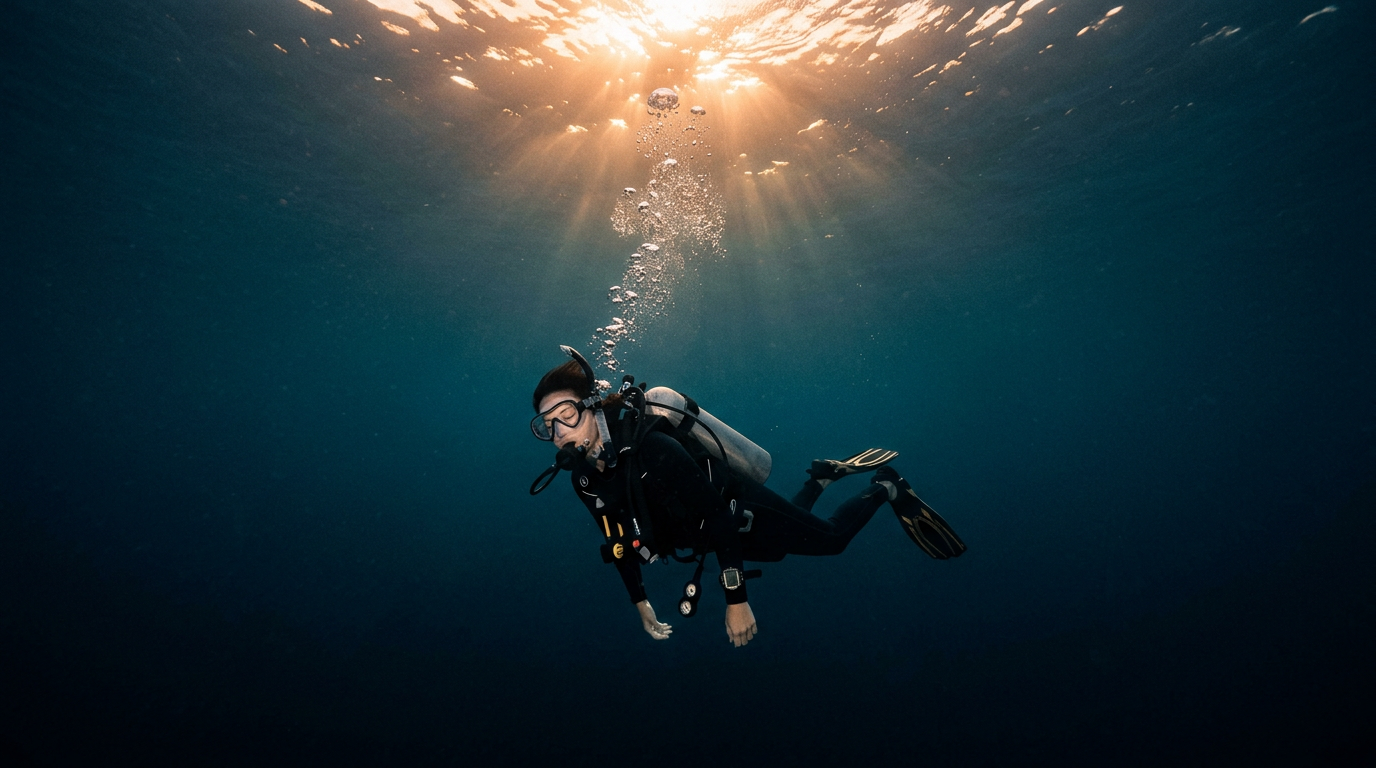
The Mammalian Dive Reflex: Ancient Biology, Modern Medicine
We have mentioned it twice already. Now let's go deeper.
The mammalian dive reflex is a set of physiological responses that activates when your face is submerged in water. It is present in all mammals — including humans — and it is estimated to be 375 million years old. Your body remembers the ocean, even if your conscious mind does not.
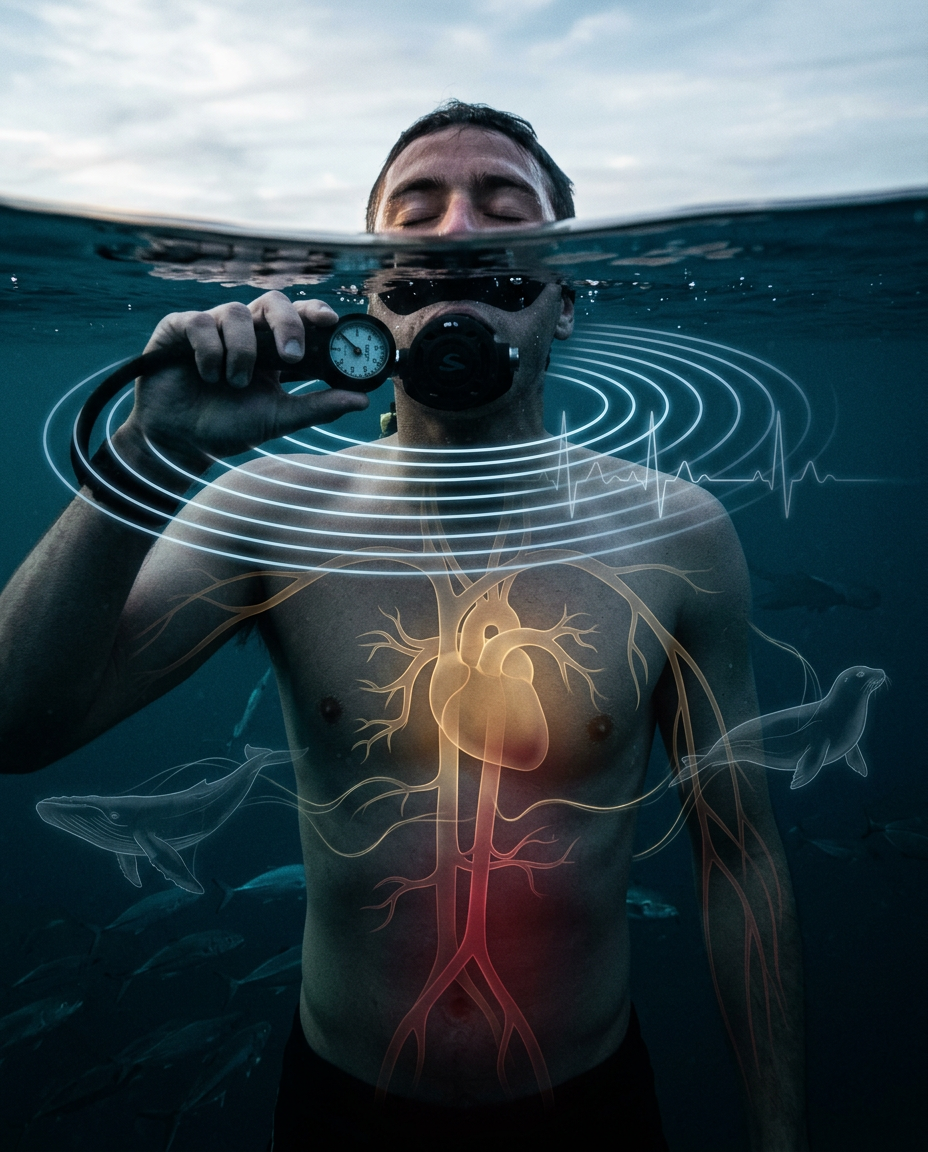
Here is what happens, automatically, the moment you submerge:
- Bradycardia: Your heart rate slows by 10–25%.
- Peripheral Vasoconstriction: Blood vessels in your extremities constrict, redirecting oxygen-rich blood to your heart and brain.
- Blood Shift: As depth increases, blood plasma moves into the chest cavity to protect the lungs from collapse.
- Metabolic Suppression: Your body reduces its oxygen consumption, allowing you to stay submerged longer.
This is not a learned skill. It is hardwired. And it is the reason why freedivers can hold their breath for 10+ minutes, why cold-water swimmers report euphoria, and why scuba divers feel an immediate sense of calm the moment they descend.
Your body thinks it is coming home.
Scuba Diving as Therapy: The Evidence
The neurochemical case for diving is compelling. But what about the clinical case?
PADI Deptherapy: Diving for Veterans with PTSD
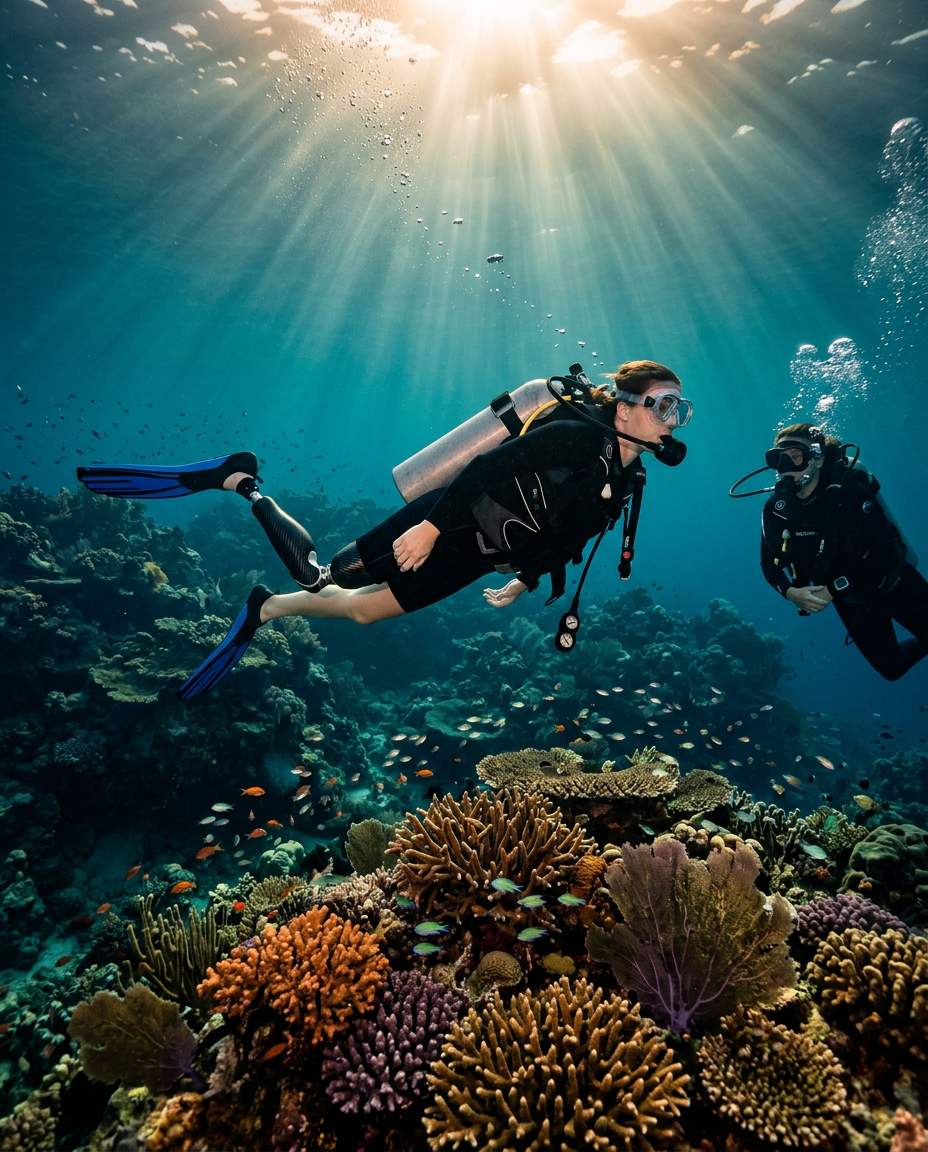
PADI's Deptherapy program works with military veterans who have experienced physical and psychological trauma. The program uses adaptive scuba diving — modified equipment and techniques for divers with amputations, spinal cord injuries, and PTSD — to help participants regain confidence, mobility, and mental health.
The results have been remarkable. Veterans who had not left their homes in months report feeling "free" underwater for the first time since their injury. Participants with severe PTSD describe the ocean as "the only place my brain shuts up." And the data backs it up: Deptherapy graduates show significant reductions in PTSD symptoms, depression, and anxiety, with improvements that persist months after the program ends.
The Hypervigilance Paradox
PTSD is characterized by hypervigilance — a state of constant threat scanning that keeps the sympathetic nervous system locked in overdrive. The paradox of scuba diving is that it simultaneously demands vigilance (checking air, monitoring depth, staying with your buddy) and induces calm (slow breathing, weightlessness, sensory deprivation).
This creates what therapists call a "corrective emotional experience" — a situation in which the brain learns that vigilance does not have to mean panic. That safety and alertness can coexist. That the world is not, in fact, a constant threat.
Scuba Diving for Anxiety and Depression
Beyond PTSD, recreational scuba diving has been shown to reduce symptoms of generalized anxiety and major depression. A 2020 study in Health Psychology Open found that regular recreational divers scored significantly lower on anxiety and depression inventories than matched controls — even after controlling for income, exercise frequency, and vacation habits.
The researchers hypothesized that the combination of physical activity, social connection, nature exposure, and mastery experience creates a "perfect storm" of mental health benefits that is difficult to replicate through any single intervention.
The 60-Second Breathwork Reset
You do not need to be 18 meters underwater to experience some of Blue Mind's benefits. You just need your breath.
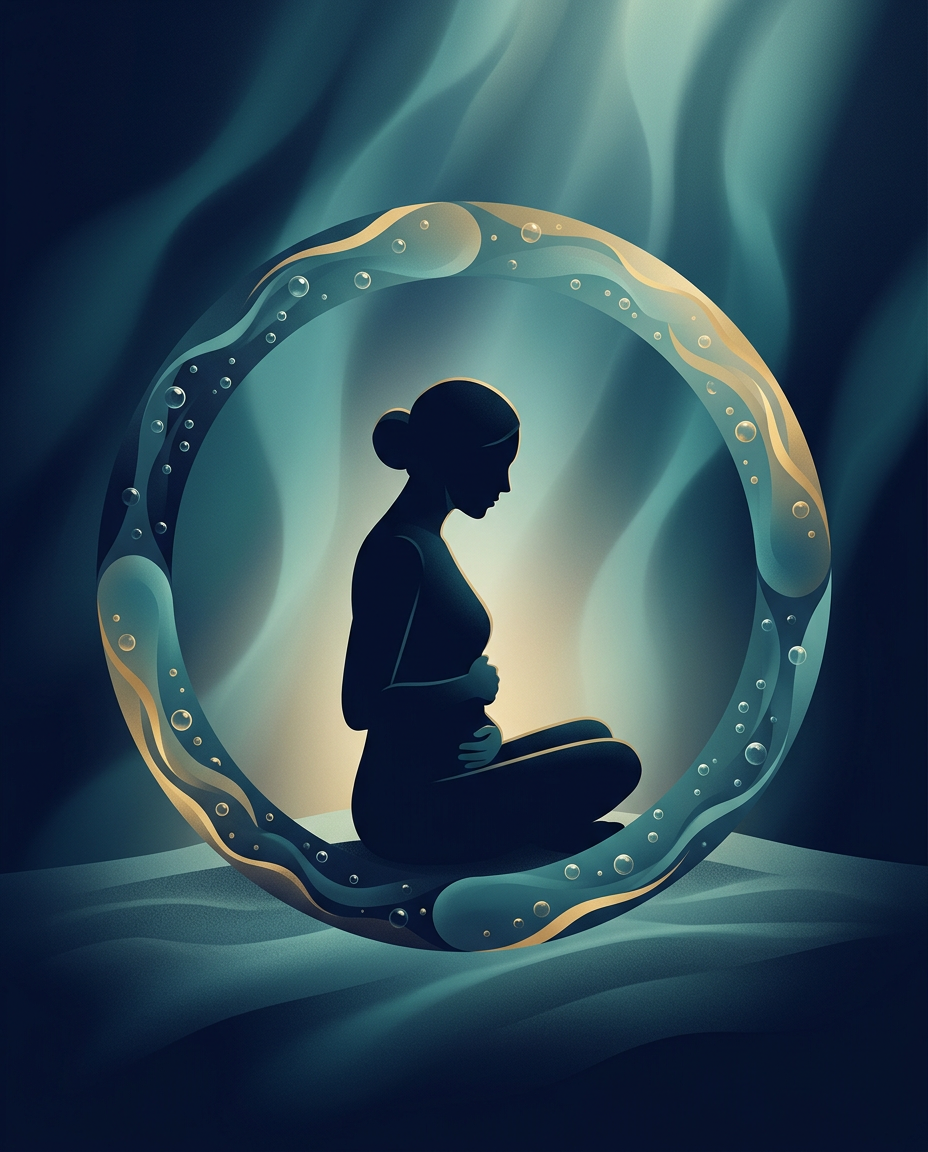
Here is a 60-second breathwork technique adapted from pre-dive breathing exercises used by technical divers and freedivers. It will not replace a dive, but it will activate some of the same parasympathetic pathways.
The DeepBeat Reset:
-
Find stillness. Sit or lie down. Close your eyes. Place one hand on your belly.
-
Inhale for 4 counts. Breathe in through your nose, letting your belly expand (not your chest).
-
Hold for 4 counts. Feel the fullness. Notice the stillness.
-
Exhale for 6 counts. Breathe out slowly through pursed lips, as if you are blowing bubbles through a regulator.
-
Hold empty for 2 counts. Let the pause exist. Do not rush to fill it.
-
Repeat for 60 seconds.
This pattern — 4-4-6-2 — is similar to the breathing rhythm that naturally emerges during a relaxed scuba dive. It activates the vagus nerve, slows the heart rate, and shifts the nervous system toward parasympathetic dominance.
Try it now. Then imagine doing it while weightless, surrounded by blue, with nothing but the sound of your own breath.
That is the difference between managing stress and dissolving it.
The Invitation
We live in an age of wellness trends. Cryotherapy. Float tanks. Mushroom coffee. Breathwork apps with subscription fees. And most of them work, to some degree.
But scuba diving is not a trend. It is not a product. It is not something you consume.
It is something you become.
The Blue Mind effect is not something that happens to you while you dive. It is something that happens through you — a collaboration between your ancient biology and an environment that has been refining its calm for four billion years.
Dr. Nichols called it Blue Mind. We call it the first breath. And we would like to show you what it feels like.
💧 The Blue Mind Minute

Get one "Blue Mind Minute" every week — 60 seconds of ocean calm, delivered to your inbox.
Not a diver yet? Start here. Already certified? Go deeper.
📥 Free Download: The Pre-Dive Breathwork Guide
- The 4-4-6-2 technique explained in detail
- A 5-minute guided audio version for daily practice
- Pre-dive breathing rituals used by technical divers and freedivers
- How to calm pre-dive nerves before your first (or fiftieth) descent
Subscribe to the DeepBeat Dispatch →
The ocean does not ask you to be calm. It simply makes calm the only option. And when you surface, you carry a piece of that calm with you — until the next time you descend.
Sources:
- Nichols, W.J. (2014). Blue Mind: The Surprising Science That Shows How Being Near, In, On, or Under Water Can Make You Happier, Healthier, More Connected, and Better at What You Do.
- Lemercier et al. (2019). Frontiers in Psychology — "Cortisol and Anxiety Reduction in Novice Scuba Divers."
- PADI Deptherapy Foundation — Adaptive Scuba Diving for Veterans. Annual Report 2024.
- Porges, S.W. (2011). The Polyvagal Theory: Neurophysiological Foundations of Emotions, Attachment, Communication, and Self-Regulation.
- Keltner, D. & Haidt, J. (2003). "Approaching awe, a moral, spiritual, and aesthetic emotion." Cognition and Emotion.
- Health Psychology Open (2020) — "Longitudinal Well-Being Outcomes in Recreational Divers."