
You are certified. You have your Open Water card. You have logged twenty, maybe fifty, maybe a hundred dives. And you still look like a yo-yo.
Up. Down. Up. Down. You kick the reef. You grab the sand. You inflate your BCD, then deflate it, then overcorrect, then curse quietly through your regulator while your instructor watches with the patient, exhausted expression of someone who has seen this exact struggle a thousand times.
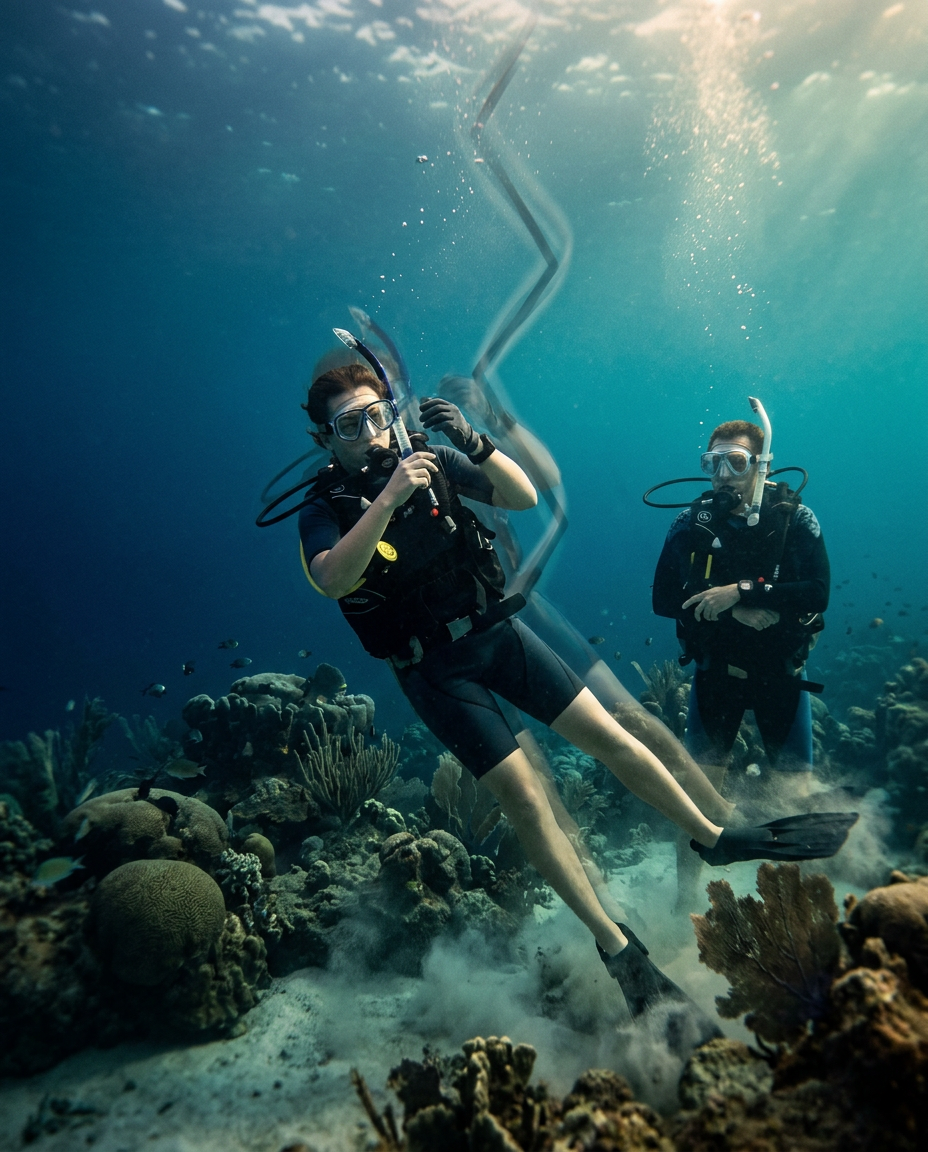
Here is the truth that no one tells you in Open Water class: buoyancy is not a gear problem. It is a breathing problem. And the mistake that 90% of certified divers make — from freshly minted Open Water students to divers with years of experience — is so simple, so fundamental, and so overlooked that once you understand it, you will never dive the same way again.
It is not your weight. It is not your BCD. It is not your wetsuit thickness or your tank material or whether you are diving steel or aluminum.
It is your breath.
Specifically: you are breathing from your chest, not your diaphragm. And that single habit is destroying your stability underwater.
Why Buoyancy Is the Divider
Before we fix the mistake, let's understand why this matters.
Buoyancy control is the single most important skill in scuba diving. Not navigation. Not deep diving. Not underwater photography. Buoyancy.
Why? Because everything else depends on it.
- Without buoyancy, you cannot hover. You are constantly fighting the water column instead of observing it.
- Without buoyancy, you damage the reef. Every time you kick down to stay level, every time you grab coral to steady yourself, you are destroying the very thing you came to see — the world-class dive sites that make this sport worth it.
- Without buoyancy, you consume air faster. Fighting your position is work. Work consumes oxygen. Consuming oxygen faster means shorter dives.
- Without buoyancy, you look like a tourist. Experienced divers can spot poor buoyancy from across the site. It is the diving equivalent of wearing socks with sandals — one of those things only scuba divers understand.
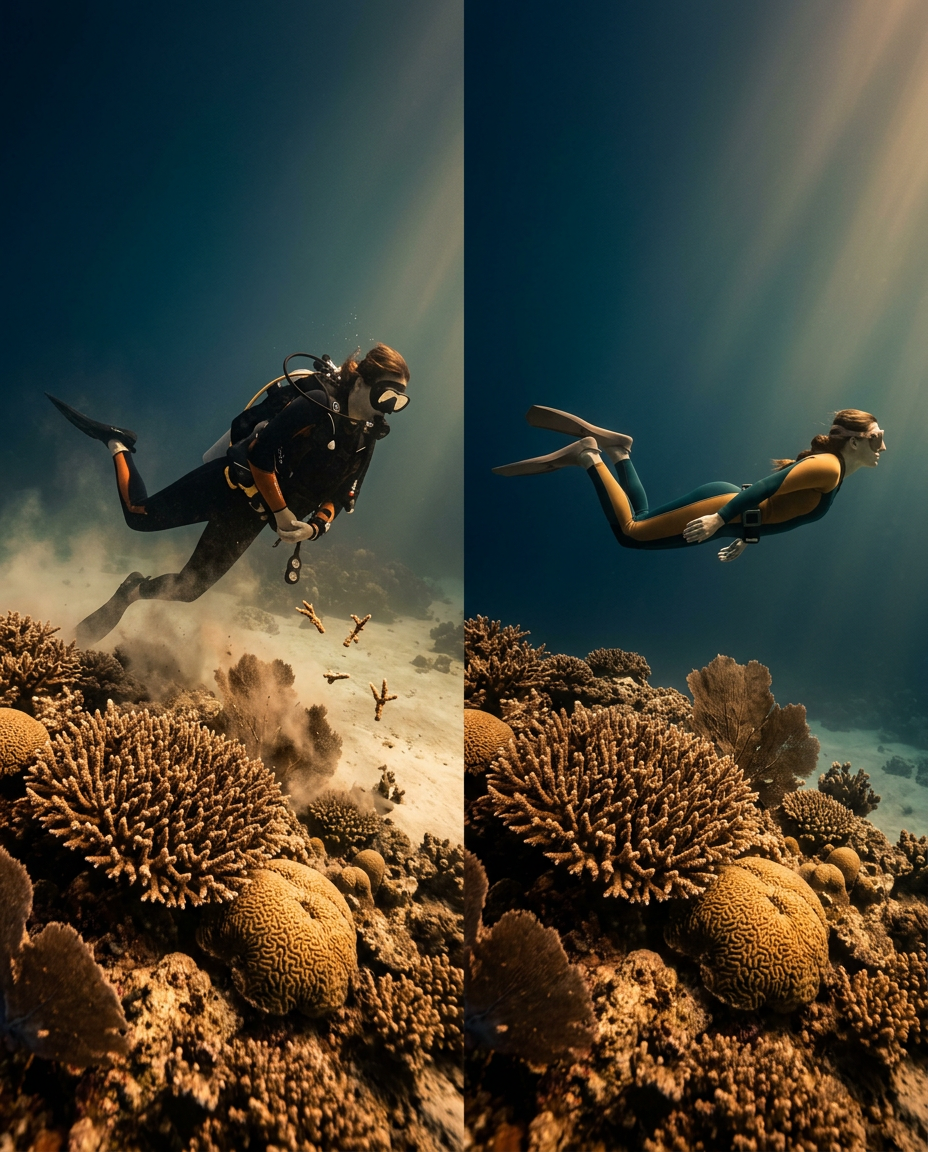
PADI and SSI both emphasize buoyancy in their curriculum. And yet, after certification, most divers plateau at "good enough" — a functional but unstable state where they are constantly making micro-adjustments instead of effortlessly floating.
The gap between "good enough" and "effortless" is one breath.
The Mistake: Chest Breathing vs. Diaphragmatic Breathing
On land, most of us are chest breathers. We breathe shallowly, using the intercostal muscles between our ribs to expand the chest cavity. This is fine for walking, talking, and existing. It is catastrophic for diving.
Here is why:
When you breathe from your chest, each inhale raises your chest wall. This changes your center of gravity. Your upper body lifts. Your lower body drops. You become positively buoyant in the chest and negatively buoyant in the legs. The result: you tilt forward, your fins drop, you kick the reef, and you overcorrect by dumping air from your BCD.
Then you exhale. Your chest contracts. Your center of gravity shifts down. Your legs rise. You start ascending. You add air to your BCD. The cycle repeats.
You are not floating. You are fighting your own breathing.
The solution is diaphragmatic breathing — also called belly breathing. Instead of expanding your chest, you expand your abdomen. The diaphragm — the dome-shaped muscle beneath your lungs — contracts downward, pulling air into the lower lobes of your lungs. Your chest stays relatively stable. Your center of gravity stays relatively stable. And your position in the water column becomes predictable.
This is not a small adjustment. It is a fundamental rewiring of how you breathe.
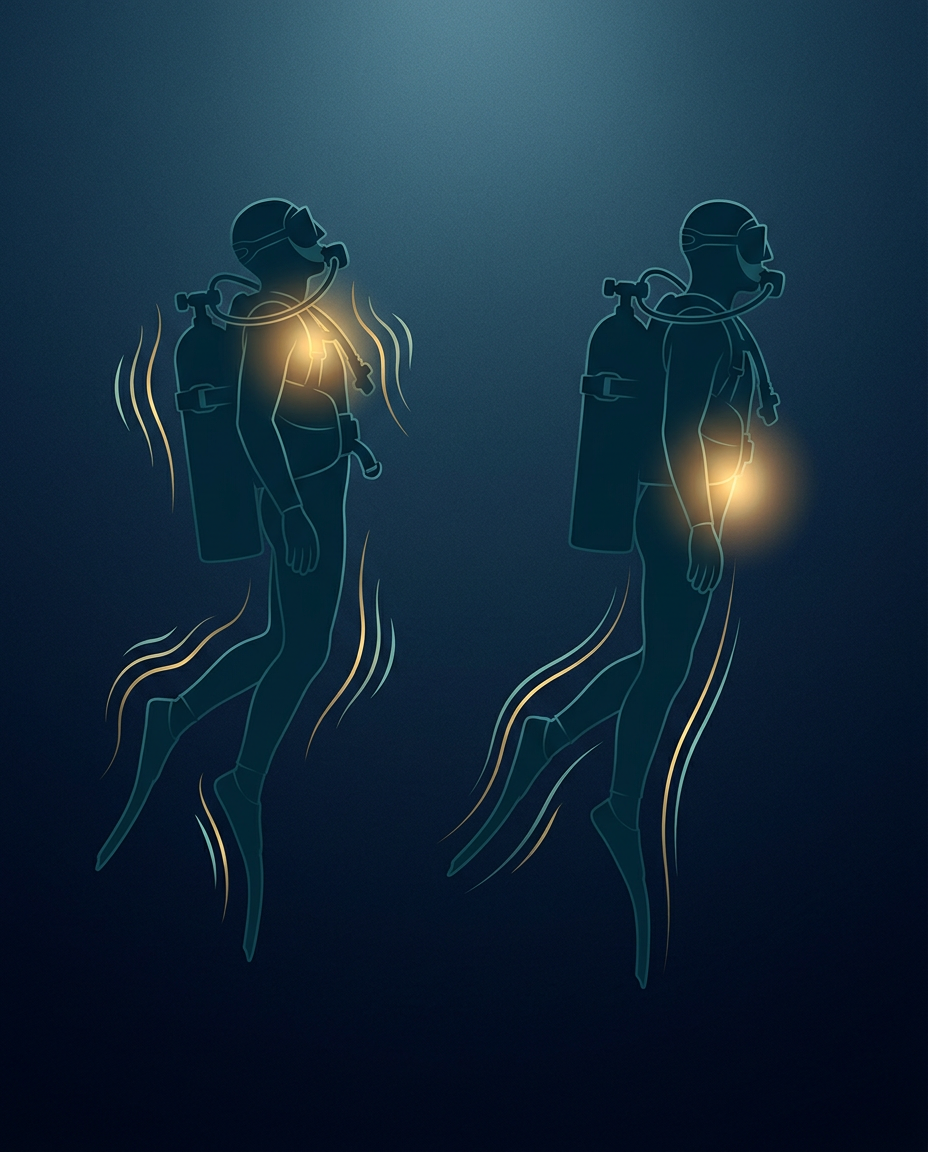
The 3-Breath Technique: What Our Instructors Teach Before Every Sunrise Dive
At DeepBeatDives, our instructors teach a specific 3-breath protocol before every dive — not because it is complicated, but because it is a physical anchor. A reset button. A way to remind your body how to breathe before you descend into an environment where breathing is the only thing that keeps you alive.
Breath 1: The Setup
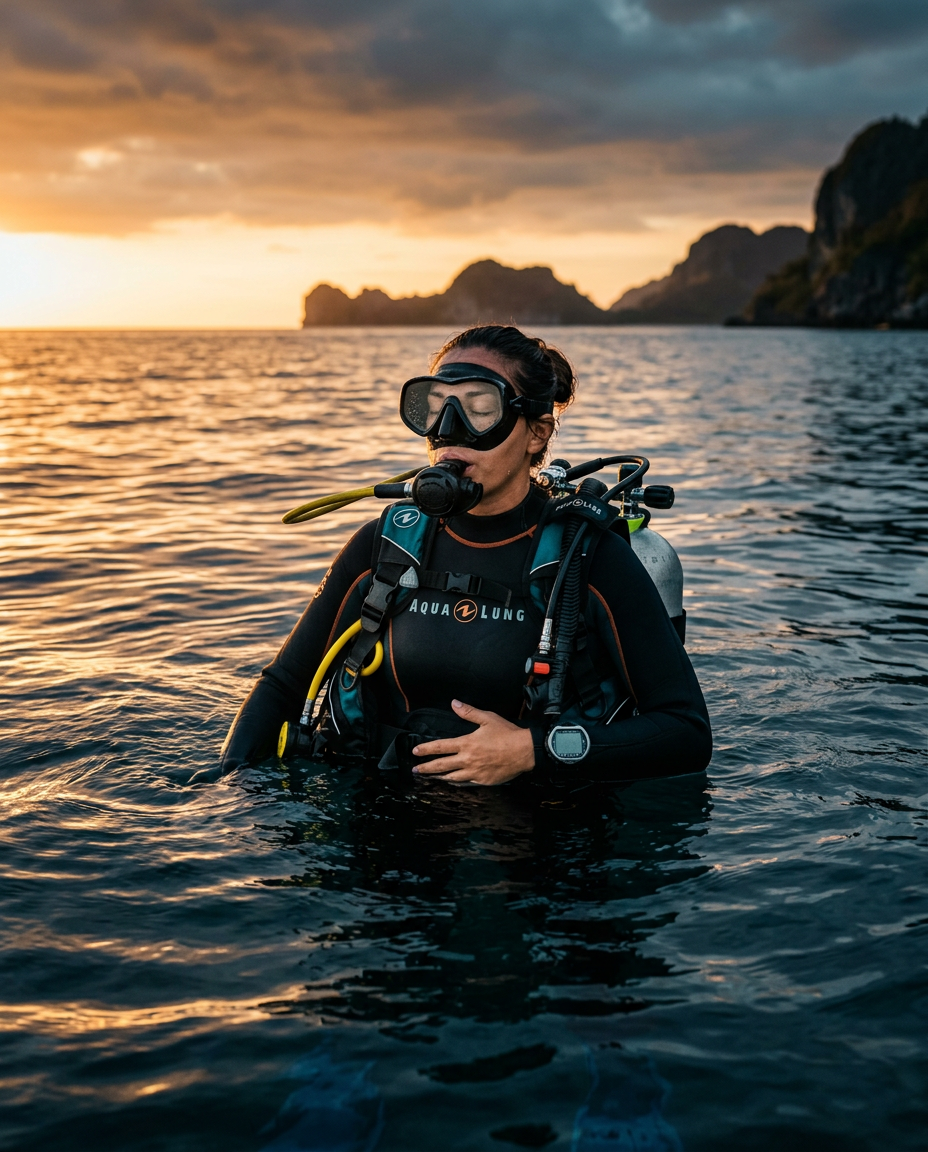
Before you descend. On the surface, in your gear, with your regulator in your mouth.
- Place one hand on your belly, just below your ribcage.
- Inhale slowly through your regulator for a count of 4. Feel your hand rise. Your chest should move minimally.
- Hold for a count of 2.
- Exhale slowly for a count of 6. Feel your hand fall.
- Repeat three times.
This is not relaxation breathing. This is calibration breathing. You are teaching your body, right now, at the surface, where the diaphragm is and how it moves. You are setting the pattern that your body will default to once you are underwater.
Breath 2: The Shift
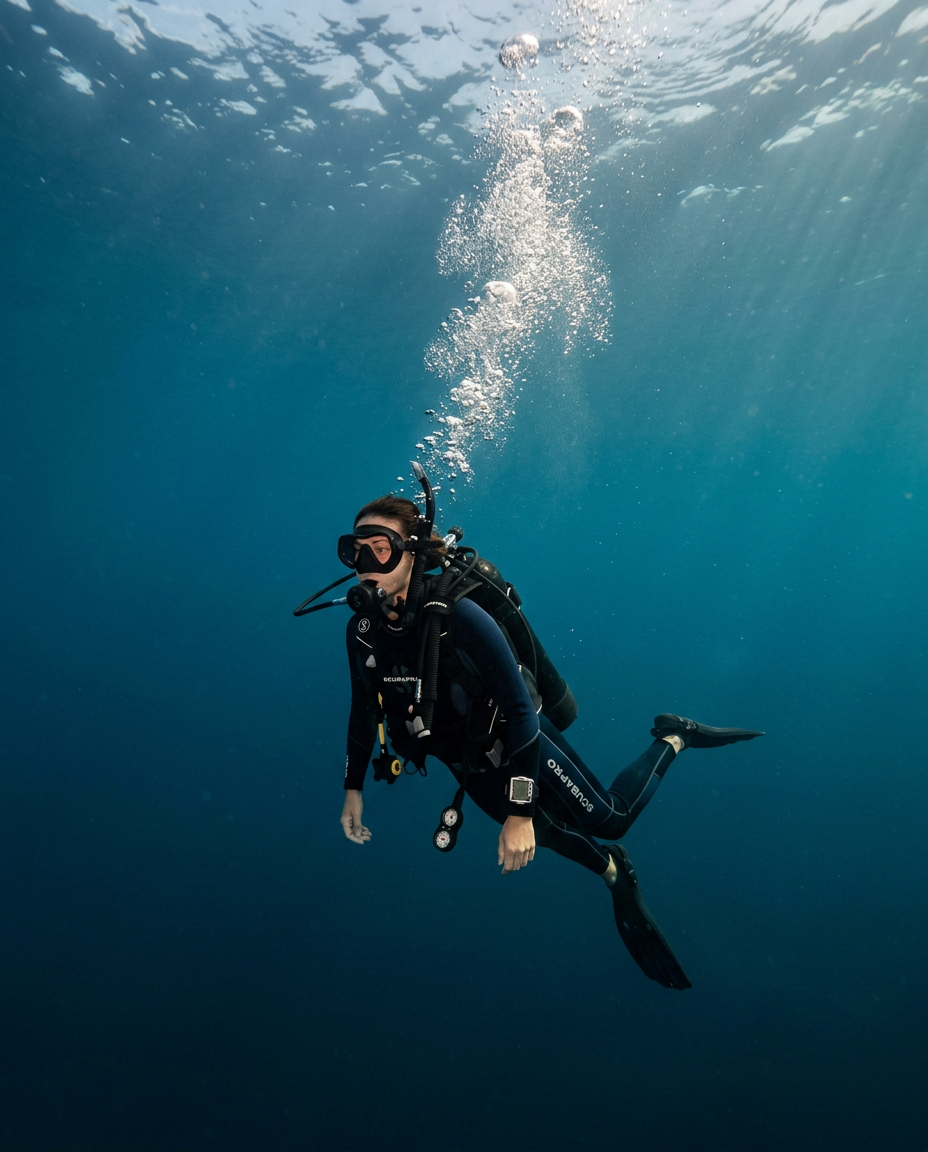
At 5 meters, during your descent. You have equalized. You have oriented yourself. You are sinking steadily.
- Take a full, diaphragmatic inhale for a count of 4.
- Do not hold. Immediately begin a slow, controlled exhale for a count of 6.
- At the end of the exhale — the moment when your lungs are at their smallest volume — pause for 2 seconds.
- Notice where you are in the water column. This is your natural buoyancy point with empty lungs.
- Inhale again. Notice how you rise, gently, by a few centimeters.
This breath is the shift from "descending" to "floating." It is the moment you stop fighting gravity and start working with it.
Breath 3: The Lock
At your target depth. You have reached the reef, the wreck, or the sand bottom. You are ready to begin the dive.
- Take a normal, diaphragmatic breath — not deep, not shallow. Just normal.
- As you inhale, add a tiny burst of air to your BCD. The smallest amount. A micro-click of the inflator button.
- Exhale fully. Pause. Are you sinking? Add another micro-burst.
- Repeat until you are hovering — completely still — at the end of a normal exhale.
- Now, breathe normally. Inhale: you rise a few centimeters. Exhale: you fall a few centimeters. The range is small. The movement is gentle. You are not adjusting your BCD. You are adjusting your breath.
This is the lock. This is buoyancy mastery. And it happens through breath control, not gear manipulation.
The Weight Myth: Why You Are Probably Overweighted
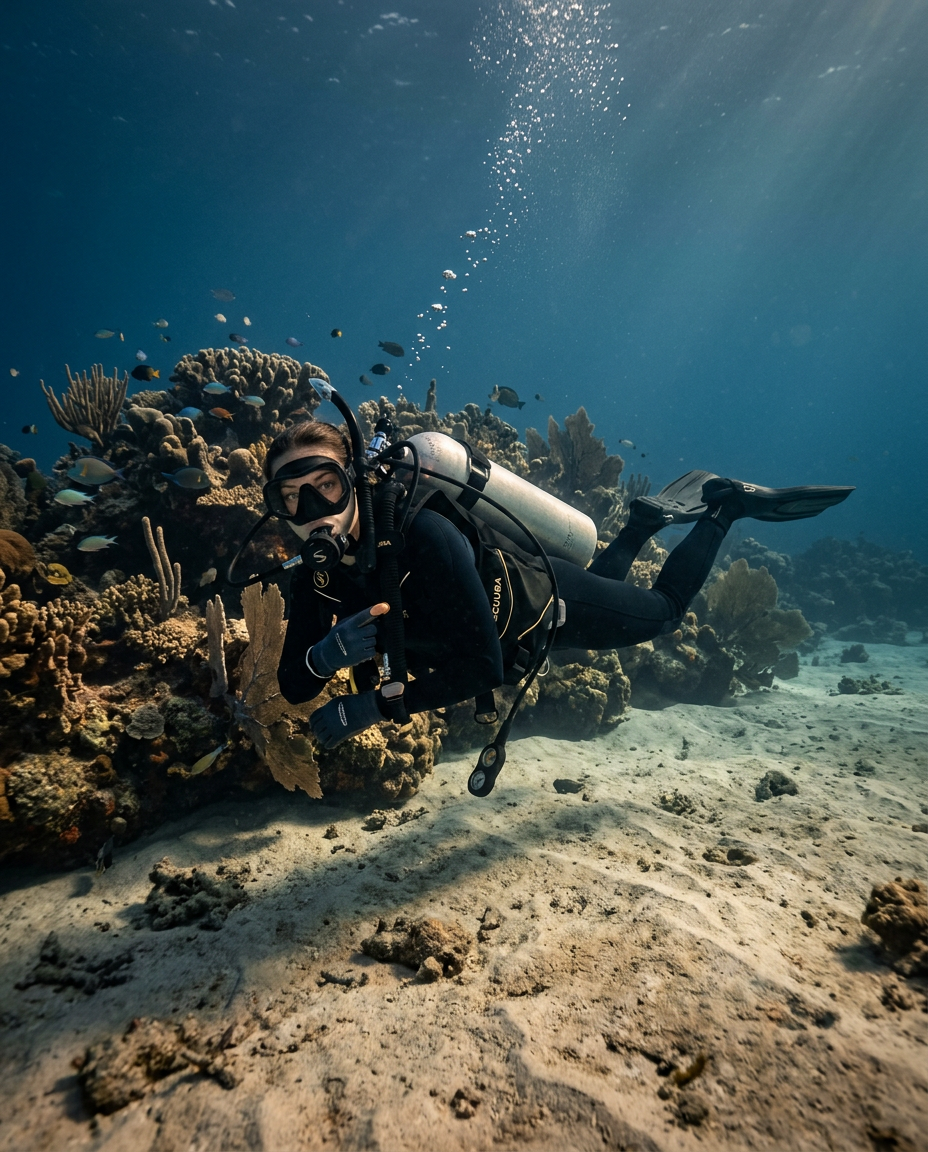
Here is a second mistake that compounds the first: most divers carry too much weight.
The logic seems sound. "More weight means easier descent." But the problem is not the descent. The problem is what happens after.
If you are overweighted, you need to add more air to your BCD to stay neutral. More air in the BCD means a larger volume of gas that expands and compresses with depth changes. This makes your buoyancy unstable — a small depth change creates a large buoyancy shift, which you then overcorrect, which creates another shift, which you overcorrect again.
The result: yo-yo diving.
The correct approach is to be slightly underweighted — just enough that you can descend with a normal exhale, but not so much that you are dragging along the bottom. At DeepBeatDives, our instructors conduct a weight check at the surface before every dive:
- At the surface, with an empty BCD and full tank, take a normal breath and hold it.
- You should float at eye level.
- Exhale fully. You should begin to sink slowly.
- If you sink while holding a normal breath, you are overweighted. Remove 1–2 pounds and try again.
This simple check — which takes 60 seconds — eliminates 80% of buoyancy problems before the dive even begins.
Trim Position: The Forgotten Variable
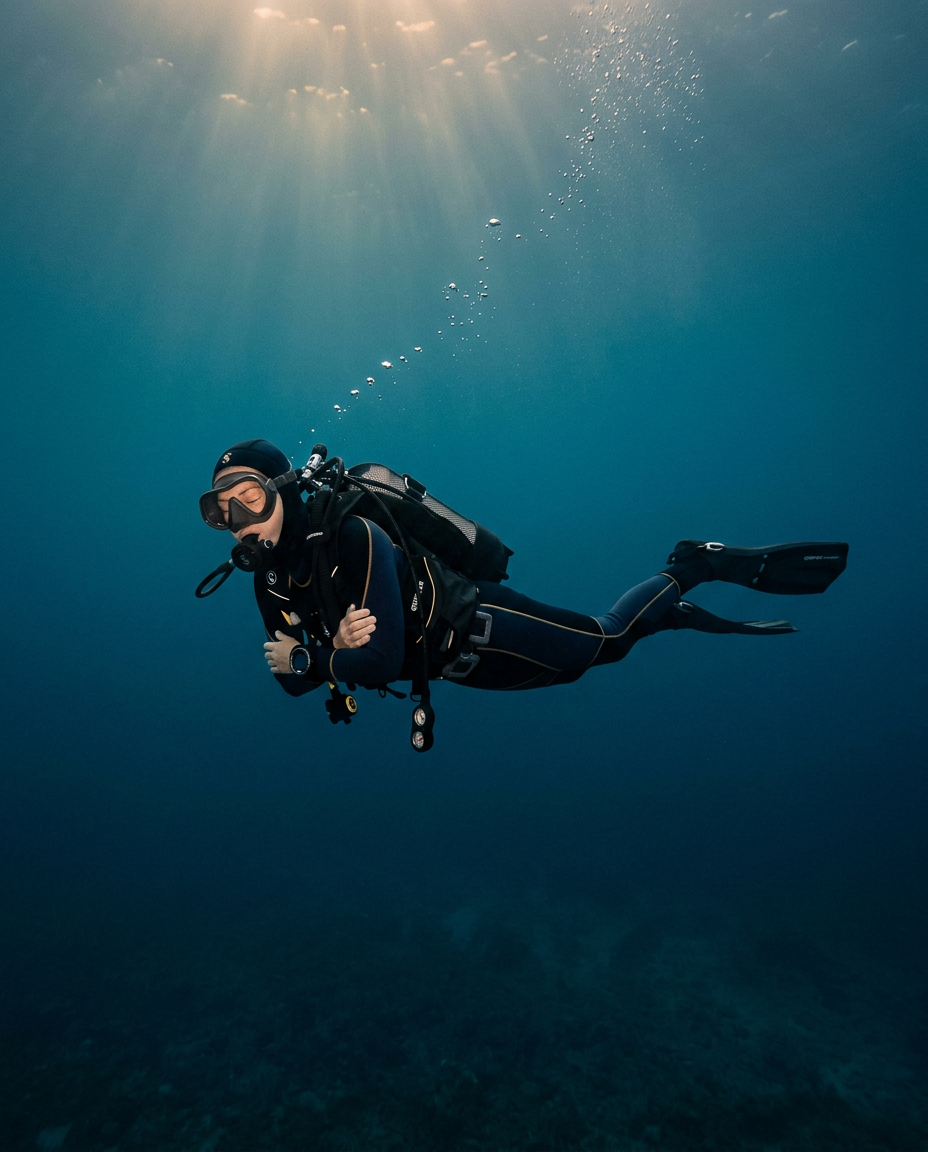
Even with perfect breathing and perfect weighting, you will still struggle if your trim is wrong.
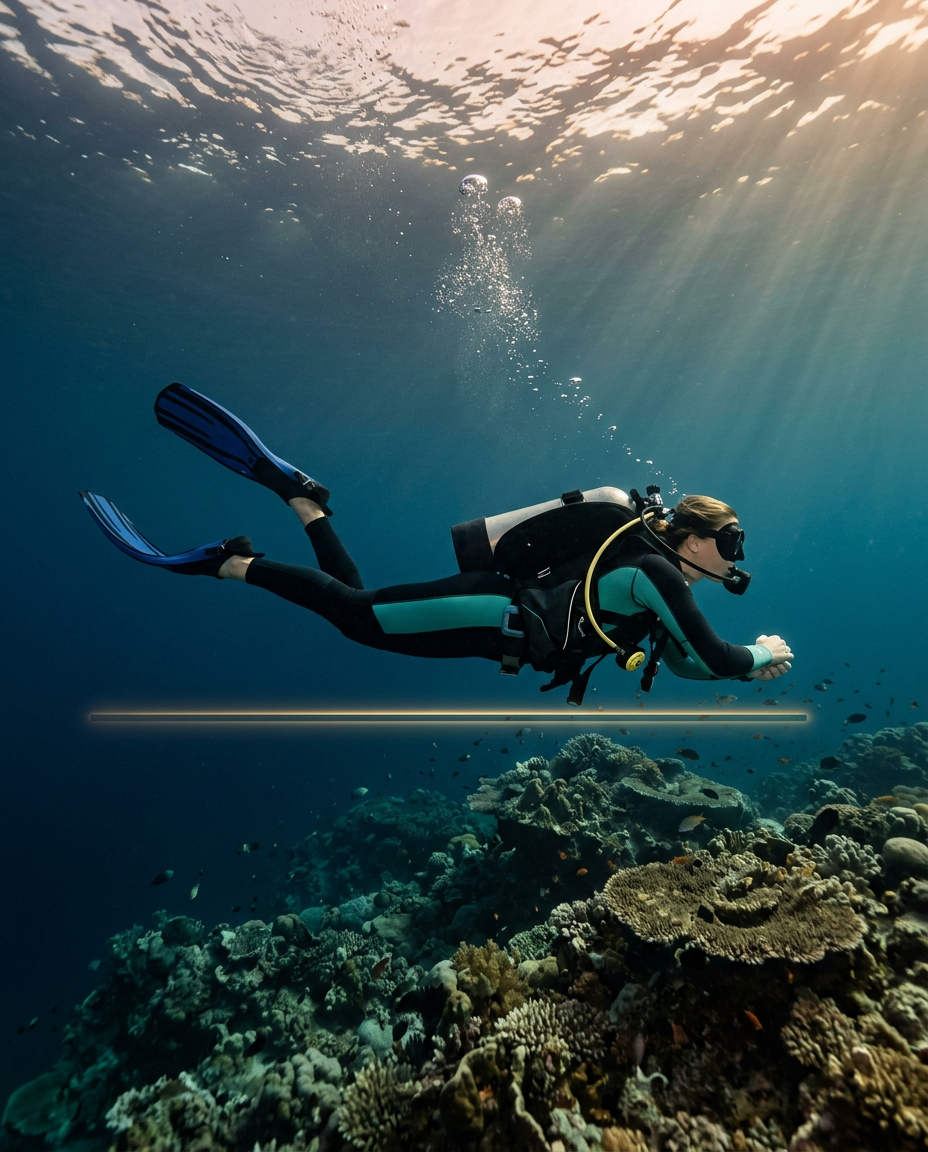
Trim is your body position in the water. Ideally, you want to be horizontal — parallel to the surface — with your head slightly up, your chest relaxed, and your legs extended behind you. This minimizes drag, keeps your fins off the reef, and makes your buoyancy adjustments more predictable.
Common trim mistakes:
- Head too high: Lifts your chest, creates drag, forces you to kick harder.
- Tank too low: Tilts you forward, drops your legs, makes you kick the reef.
- Weight belt too low: Pulls your hips down, puts you in a "seated" position.
At DeepBeatDives, we teach a simple trim check:
- Hover at 5 meters. Stop all movement. Close your eyes.
- Where does your body settle? If your legs drop, your tank is probably too low. If your head drops, your weight distribution is off.
- Adjust in small increments. Move the tank up one strap. Shift one weight to a higher pocket.
- Test again.
Small adjustments, big results.
The Hover Challenge: The 60-Second Test
Here is how you know you have it.
At any depth, at any point in the dive:
- Stop all movement. No finning. No hand sculling. No BCD adjustments.
- Take a normal breath. Hold it. You should rise slightly.
- Exhale fully. Hold it. You should sink slightly.
- Breathe normally. Your depth should not change by more than 30 centimeters.
- Hold this position for 60 seconds.
If you can do this — completely still, completely relaxed, for one full minute — you have achieved buoyancy mastery. If you cannot, you know exactly what to work on.
At DeepBeatDives, this is our standard. Our instructors can hover for 10 minutes without moving a fin. Not because they are superhuman. Because they breathe from their diaphragm, carry the right weight, and maintain proper trim.
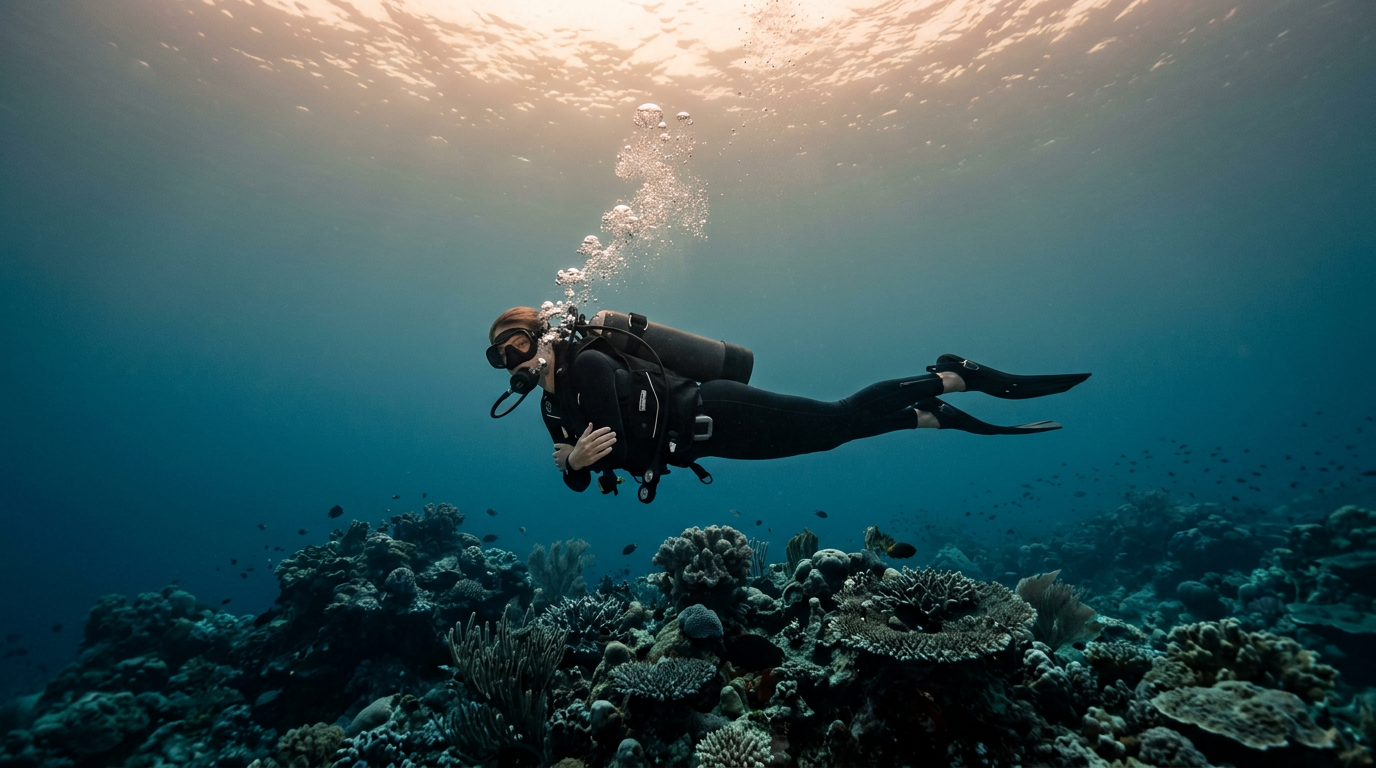
You can too.
Interactive Quiz
Quick Quiz: What Is Your Buoyancy Level?
Question 1: During a normal dive, how often do you adjust your BCD?
Question 2: When you stop moving, what happens?
Question 3: Do you ever kick the reef or disturb sediment?
Question 4: How do you breathe underwater?
Question 5: Have you done a proper weight check in the last 10 dives?
🔵 The Reef Brief
One skill. One species. One song. Every week.
Subscribe to The Reef Brief — and level up your diving, one breath at a time.
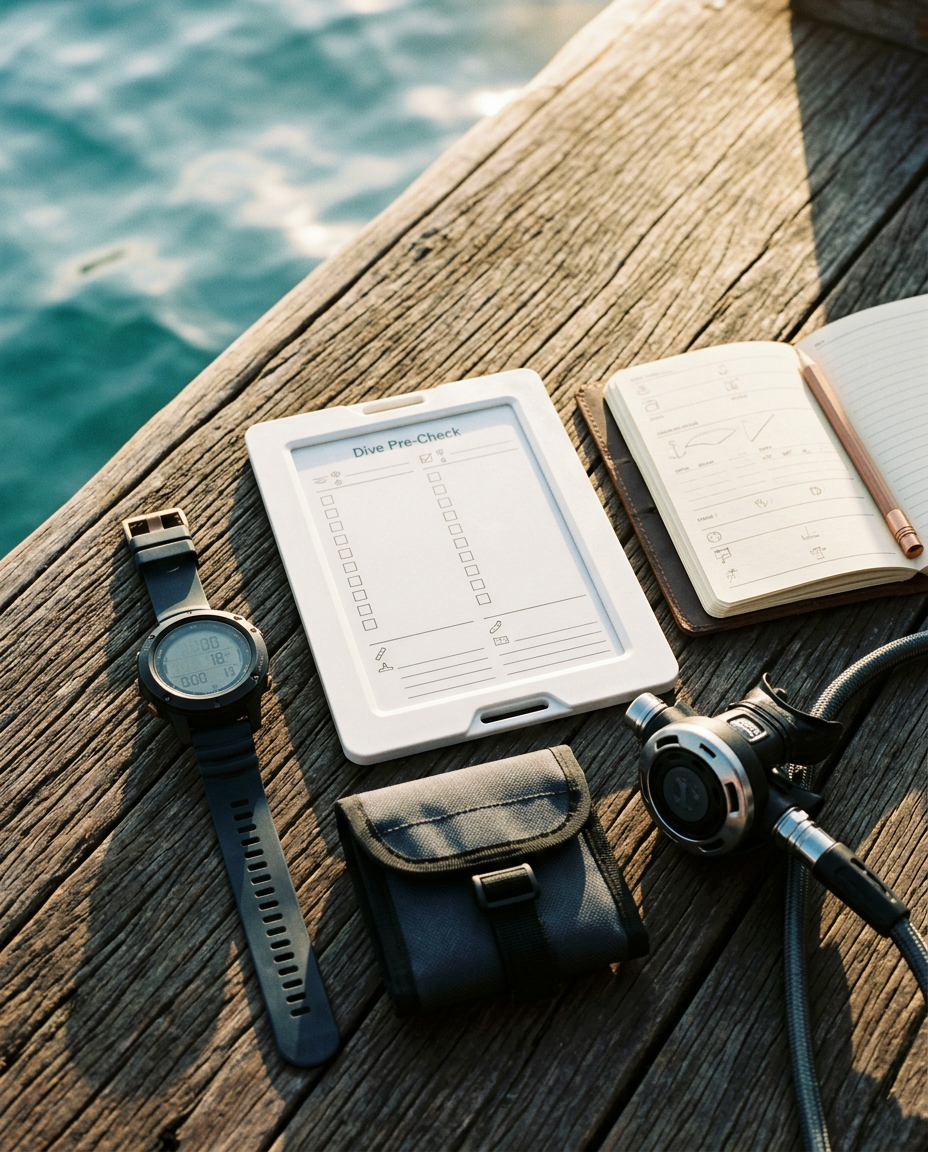
📥 Free Download: The Buoyancy Cheat Sheet: Our Instructors' Field Notes
- The 3-breath technique on a waterproof card
- Weight check protocol (surface and underwater)
- Trim adjustment guide
- The 60-second hover challenge tracker
Subscribe to the DeepBeat Dispatch →
Master the skill. Then master the ocean. The tribe is waiting — and the reef will thank you for every kick you don't take.