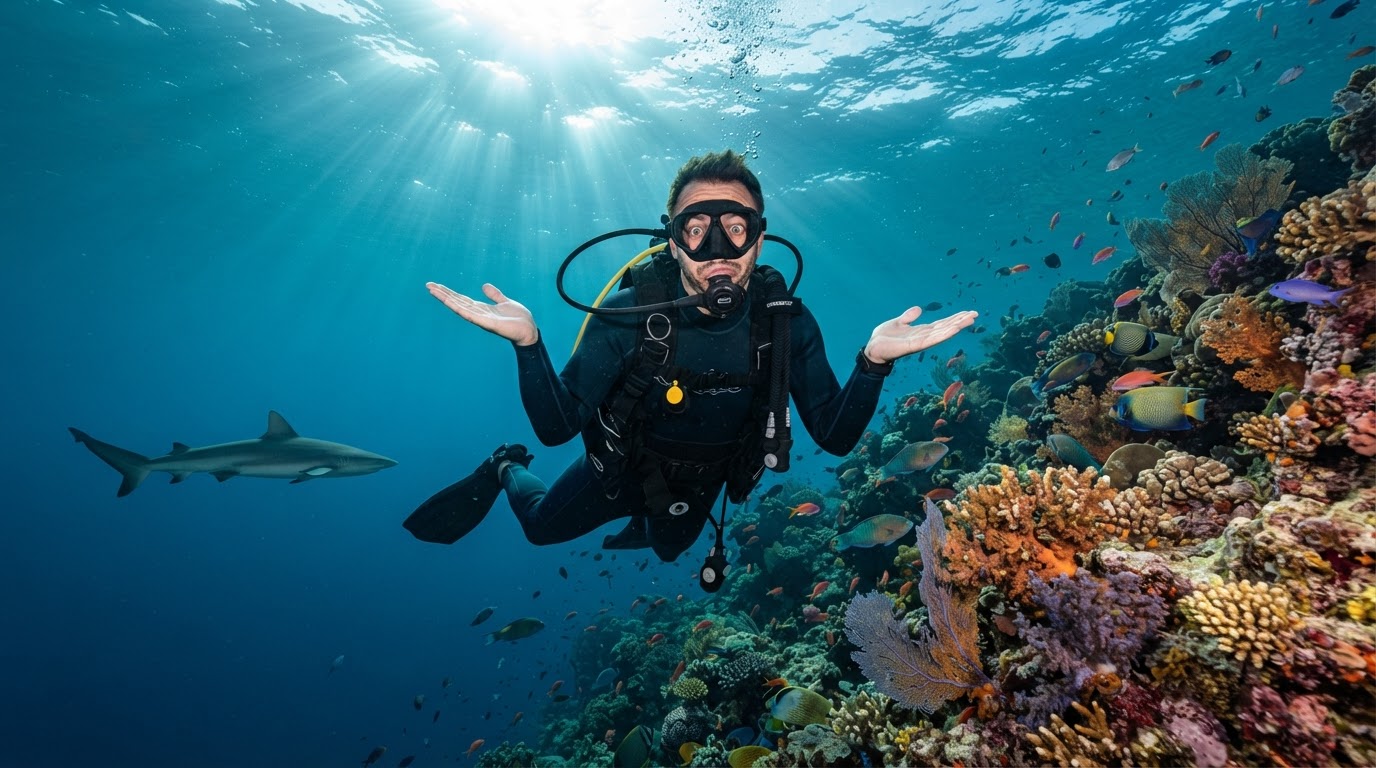
Every tribe has its folklore. The diving tribe? We have an entire aquarium of nonsense.
Walk onto any dive boat and you'll hear it — the well-meaning cousin who "saw something on Discovery Channel," the friend who "read an article once," the co-worker who is absolutely certain your brain will explode if you ascend too fast. (Spoiler: it won't.)
At DeepBeatDives, we've watched our instructors develop a very particular facial expression. The facepalm. The slight eye-twitch. The patient smile that says, "I've explained this four hundred times, and I love you, but please stop."
So we asked them: what myths make you facepalm the hardest?
Their answers became this quiz. Twelve statements. True or false. No pressure — except the 1.3 atmospheres at 18 metres.
🎯 The Rules
Read each statement. Make your call. Then scroll for the reveal.
At the end, count your score. The tribe is watching.
Myth 1: Sharks Are the Biggest Threat to Divers
TRUE or FALSE?
FALSE. 🦈
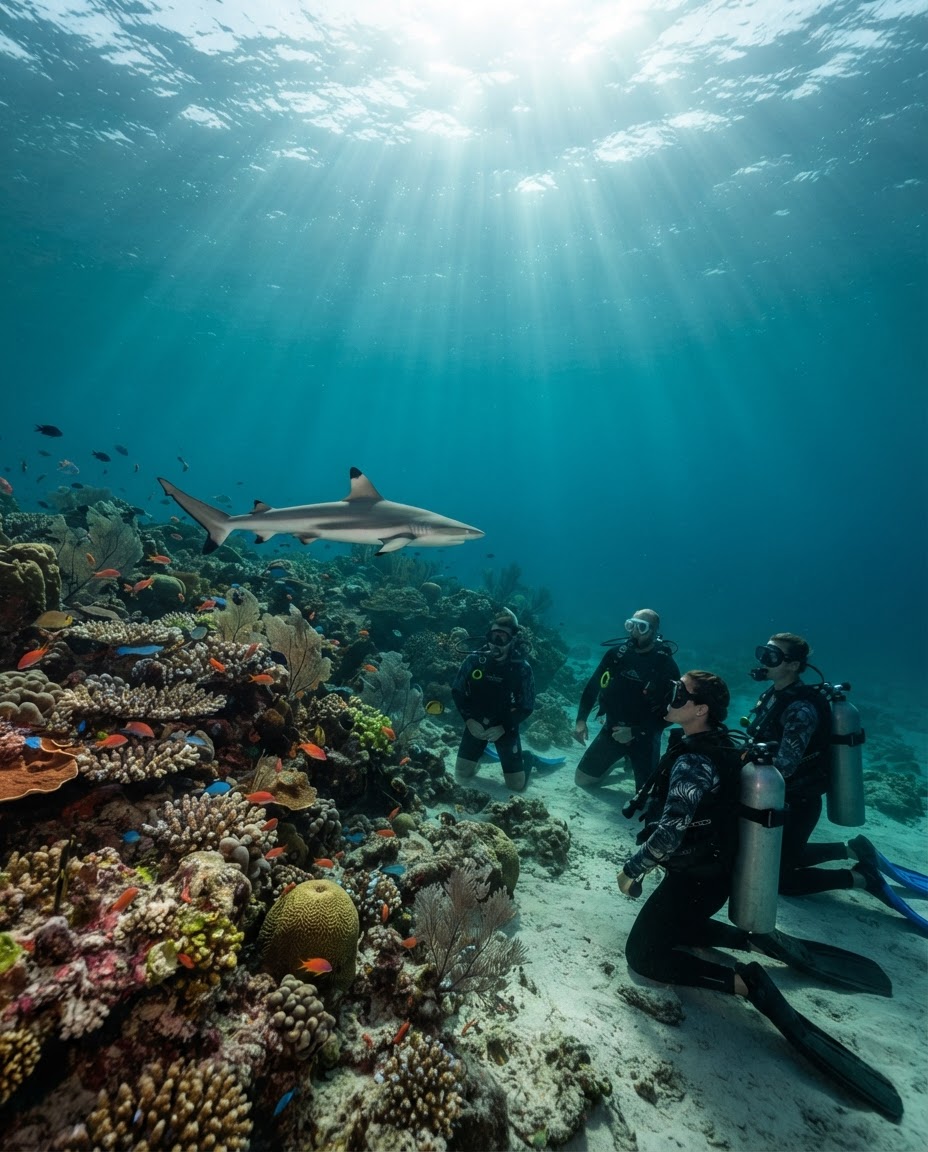
Here's the stat that should embarrass Hollywood: unprovoked shark attacks worldwide average about six fatalities per year (International Shark Attack File, University of Florida). Six. Total. Globally. In 2022, there were five. In 2023, ten — still double digits, barely.
You know what's actually dangerous? Poor buoyancy control. Running out of air. Skipping your safety stop. Boat propellers. The real threats are the boring ones — the ones that don't make blockbuster trailers.
Your odds of being killed by a shark are roughly 1 in 4.3 million. Your odds of an instructor facepalming at your shark question? Significantly higher.
Myth 2: Falling Coconuts Kill 150 Divers Per Year
TRUE or FALSE?
FALSE. 🥥

This one's our favourite — because the myth about the myth is more entertaining than the truth.
The "150 deaths per year" figure traces back to a 2002 press briefing by shark researcher George Burgess, who quoted it to make sharks seem less scary. The source? A British travel-insurance firm's press release. The actual data? A 1984 study from a hospital in Papua New Guinea that reported two anecdotal deaths over four years — not 150 per year.
There is no global coconut death database. No WHO category for "falling fruit." The 150 figure is statistical vapor — repeated so often it feels true.
But here's the real kicker: sharks are still more dangerous than coconuts. In most tropical dive destinations, your shark risk is documented, tracked, and statistically higher than your coconut risk. So yes, watch the reef. Don't worry about the palm trees.
Myth 3: Peeing in Your Wetsuit Is Gross and Unhealthy
TRUE or FALSE?
FALSE. 💦
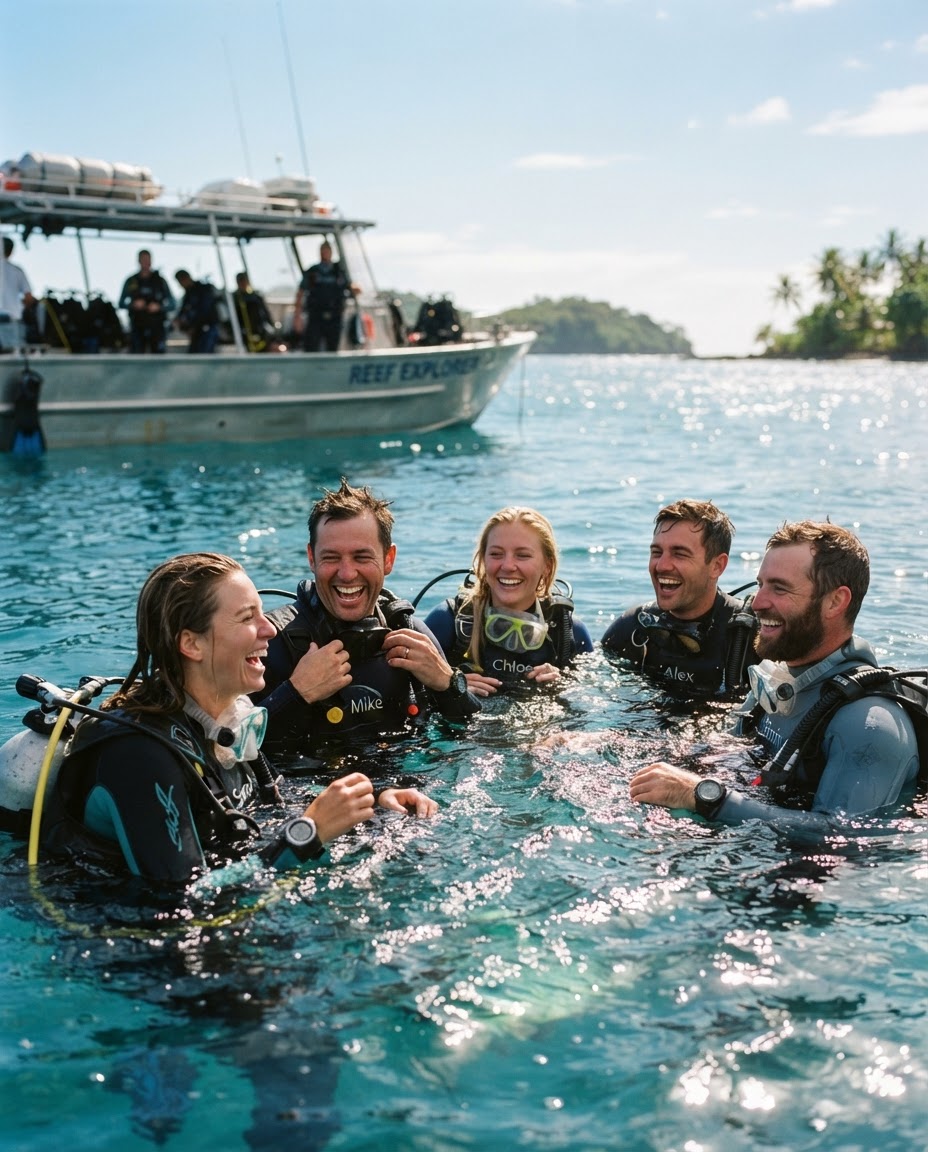
There's an old diving proverb — one that every seasoned diver quietly understands: "There are two types of divers — those who pee in their wetsuit, and those who lie about it."
Here's the biology: when you submerge in water colder than air, your blood vessels constrict and shunt blood to your core. Your body interprets this as fluid overload and signals your kidneys to produce urine. It's called immersion diuresis, and it happens to almost everyone.
Holding it? That's the unhealthy choice. It can lead to bladder irritation, urinary tract infections, and — worst of all — a distracted diver. A distracted diver is an unsafe diver.
DAN (Divers Alert Network) confirms: urinating in a wetsuit is common, generally harmless, and far better than the alternatives. Just rinse your suit afterward. Your buddies will thank you. Your neoprene will survive.
Myth 4: Scuba Diving Is Too Expensive for Most People
TRUE or FALSE?
FALSE. 💰
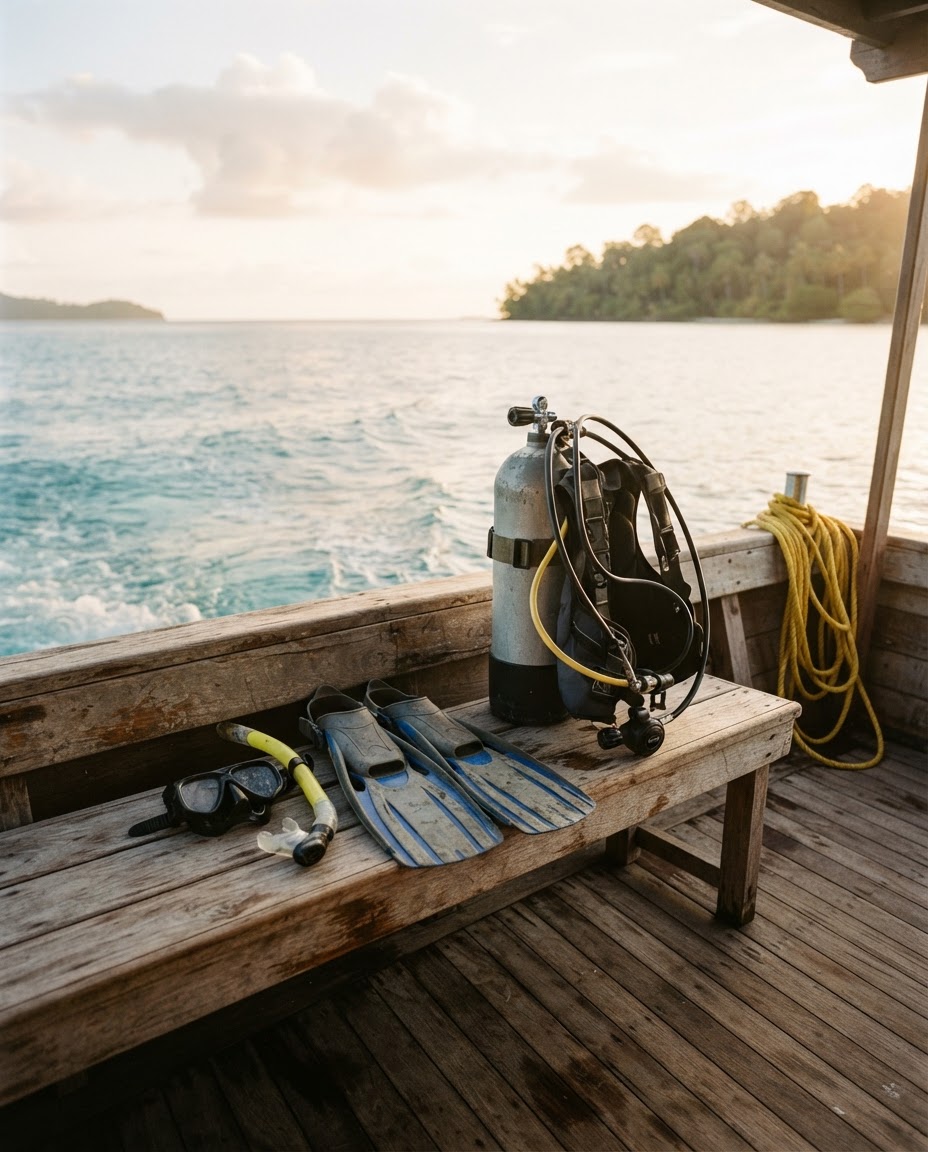
Let's do the math. A PADI Open Water certification costs roughly $300–$500. Your basic personal gear — mask, snorkel, fins — runs $150–$300. That's your entire entry investment.
Compare that to: a decent mountain bike ($1,500+), a season of golf ($2,000+), or a single weekend of skiing ($800+ with gear, lift tickets, and lodging). Diving is cheaper than most "aspirational" hobbies — and unlike golf, you get to explore 71% of the planet.
Yes, liveaboards in Raja Ampat can cost thousands. But your local shore dive? $25–$40 for a tank fill. The ocean doesn't charge admission. The real barrier isn't cost — it's the myth of cost.
Myth 5: You Can't Dive If You Wear Glasses
TRUE or FALSE?
FALSE. 👓
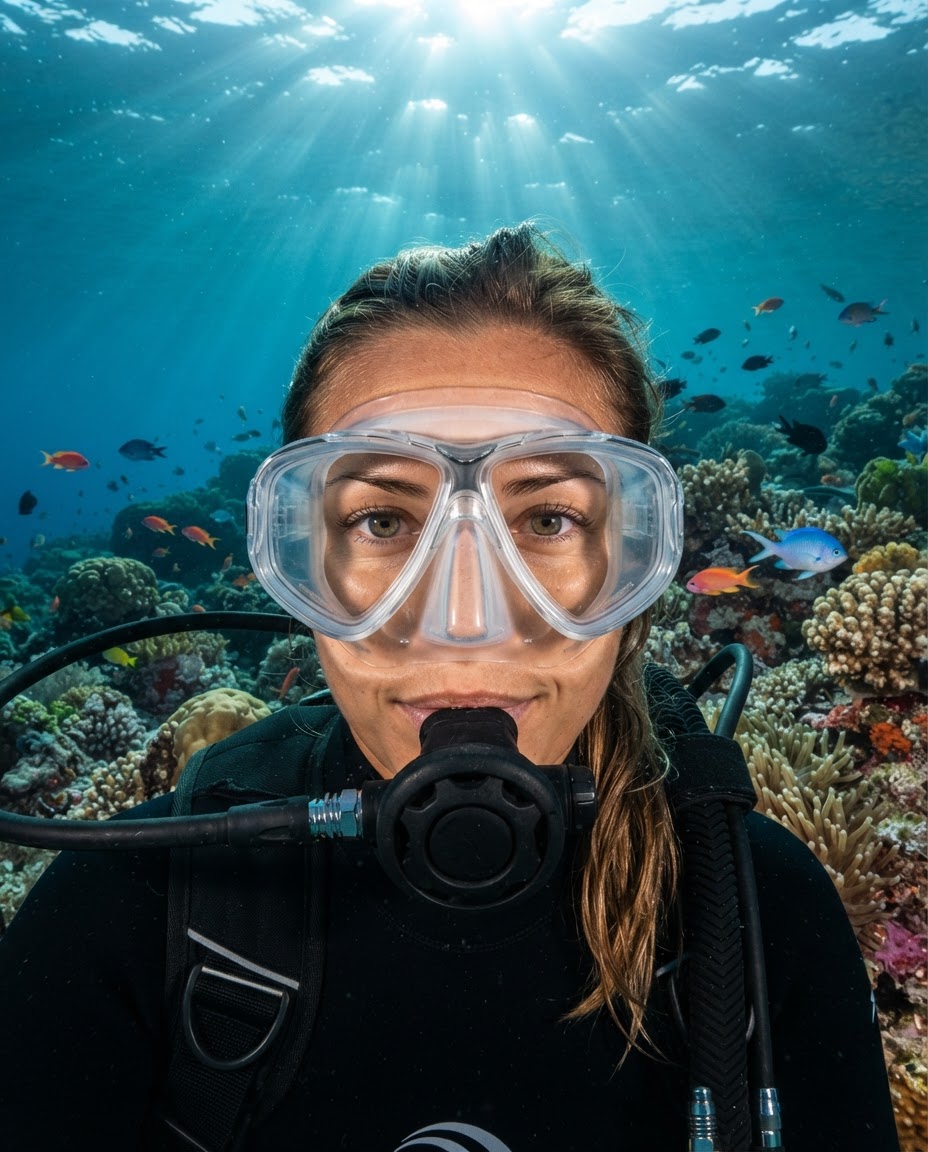
This myth dies hard because it used to be partially true. Regular eyeglasses won't fit under a standard dive mask. But that was decades ago.
Today, divers with vision correction have three solid options:
- Prescription dive masks — custom lenses bonded to your mask (from ~$150)
- Soft contact lenses — daily disposables work great; just keep eyes closed during mask floods
- Mask-compatible prescription glasses — newer designs like MaskOptix fit inside standard masks
PADI officially confirms: diving with corrective lenses is standard practice. The underwater world doesn't care about your prescription. And thanks to underwater refraction, objects appear about 33% larger and closer — which actually helps many mildly nearsighted divers see better without any correction at all.
Myth 6: You Have to Be an Expert Swimmer to Scuba Dive
TRUE or FALSE?
FALSE. 🏊
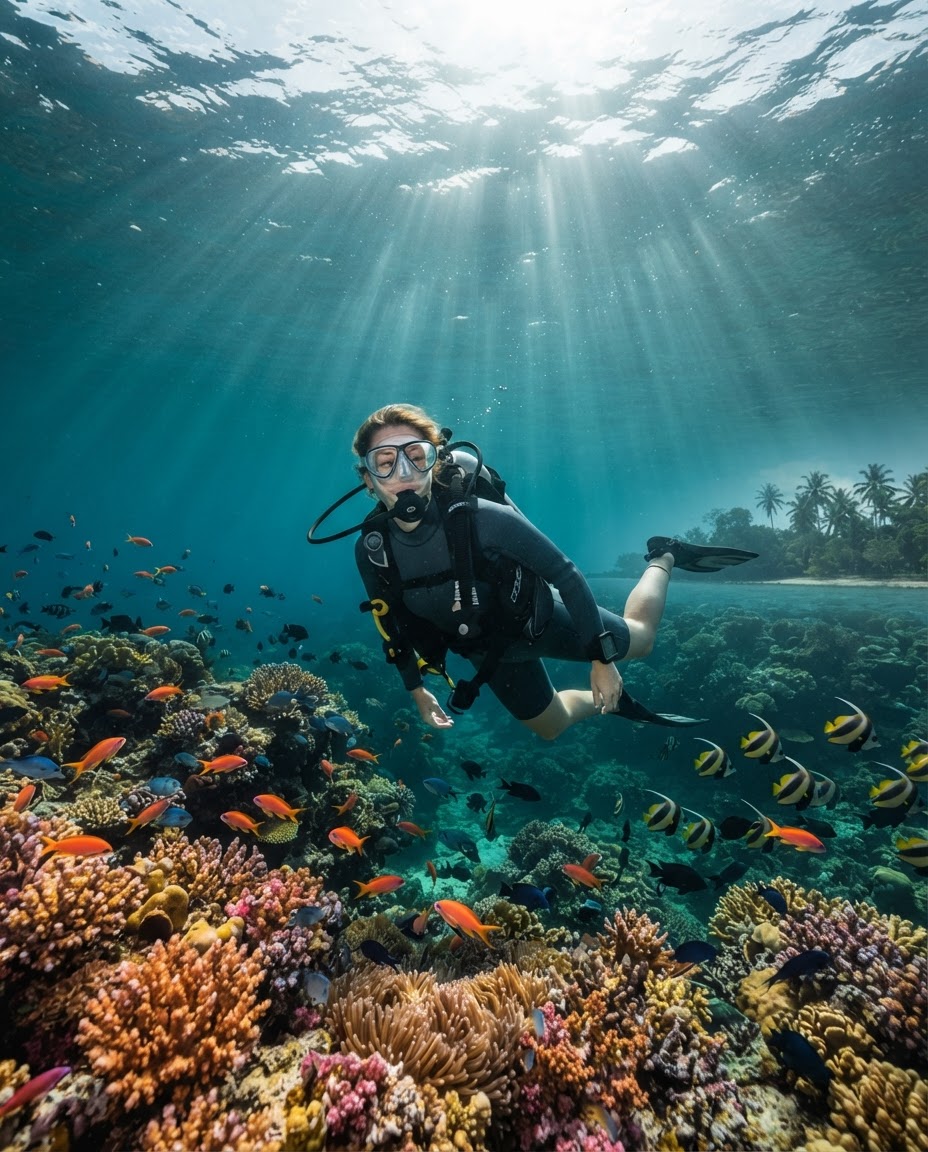
You need to be comfortable in water, not Michael Phelps. PADI's swim test requires a 200-metre swim (any stroke, no time limit) or a 300-metre swim with mask, fins, and snorkel. That's it. Dog paddle counts.
Scuba diving is not swimming. You float. You breathe. You move slowly. The gear does most of the work. We've certified accountants who hadn't been in a pool since childhood, retirees who hadn't "swum" in forty years, and people who openly describe their swimming ability as "I won't drown immediately."
If you can float, breathe, and follow instructions, you can dive. The ocean meets you where you are.
Myth 7: You Breathe Pure Oxygen from Scuba Tanks
TRUE or FALSE?
FALSE. 🫁
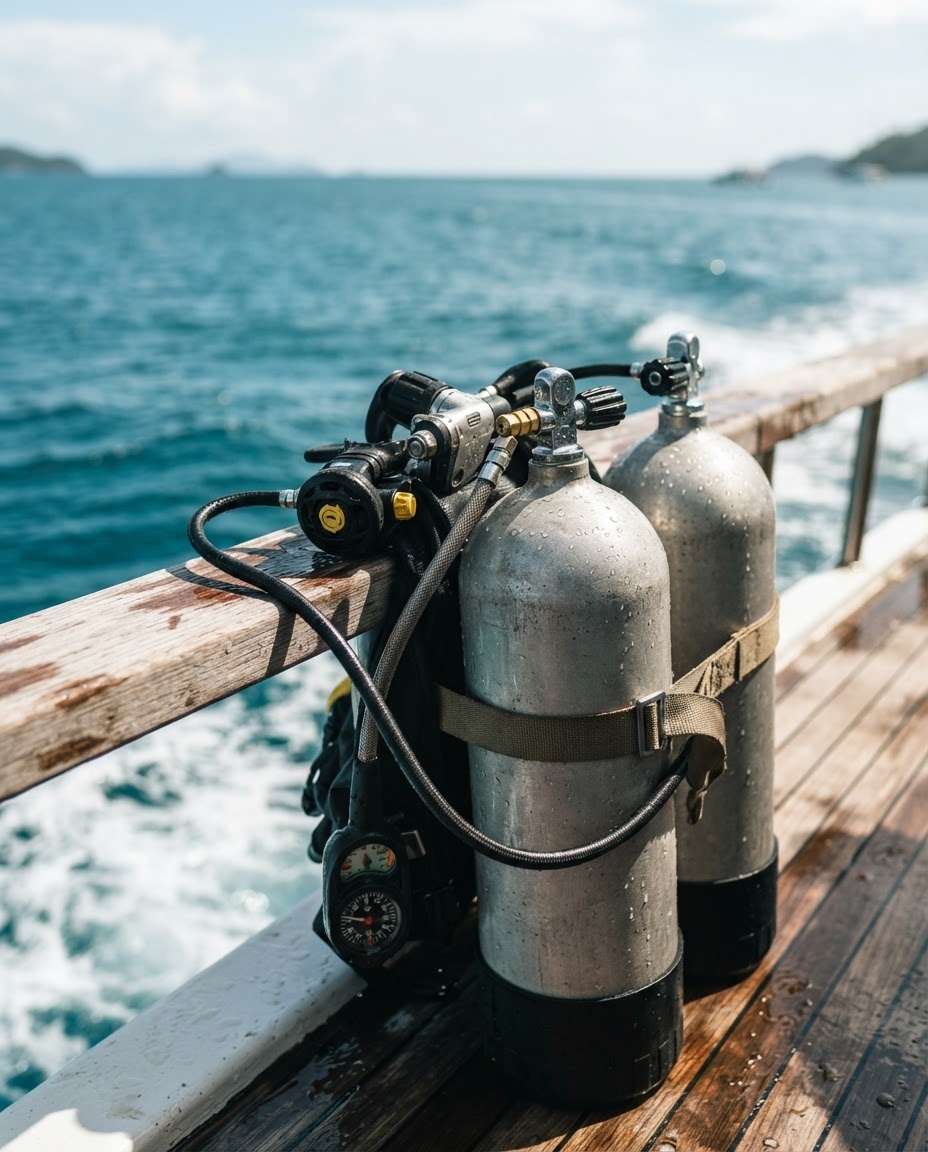
Scuba tanks contain compressed air — approximately 21% oxygen, 79% nitrogen, same as what you're breathing right now. (Unless you're reading this from the ISS. If so, hi.)
Breathing pure oxygen below about 6 metres becomes toxic. It causes oxygen toxicity — convulsions, unconsciousness, drowning. Not ideal.
Nitrox (enriched air) contains more oxygen (typically 32–36%), but that's different from pure O₂. Technical divers use different gas blends for deep decompression, but your standard recreational tank? Just air. Compressed. Dry. Tasting slightly of rubber and adventure.
Myth 8: Scuba Diving Is Only for Young, Fit People
TRUE or FALSE?
FALSE. 🎂
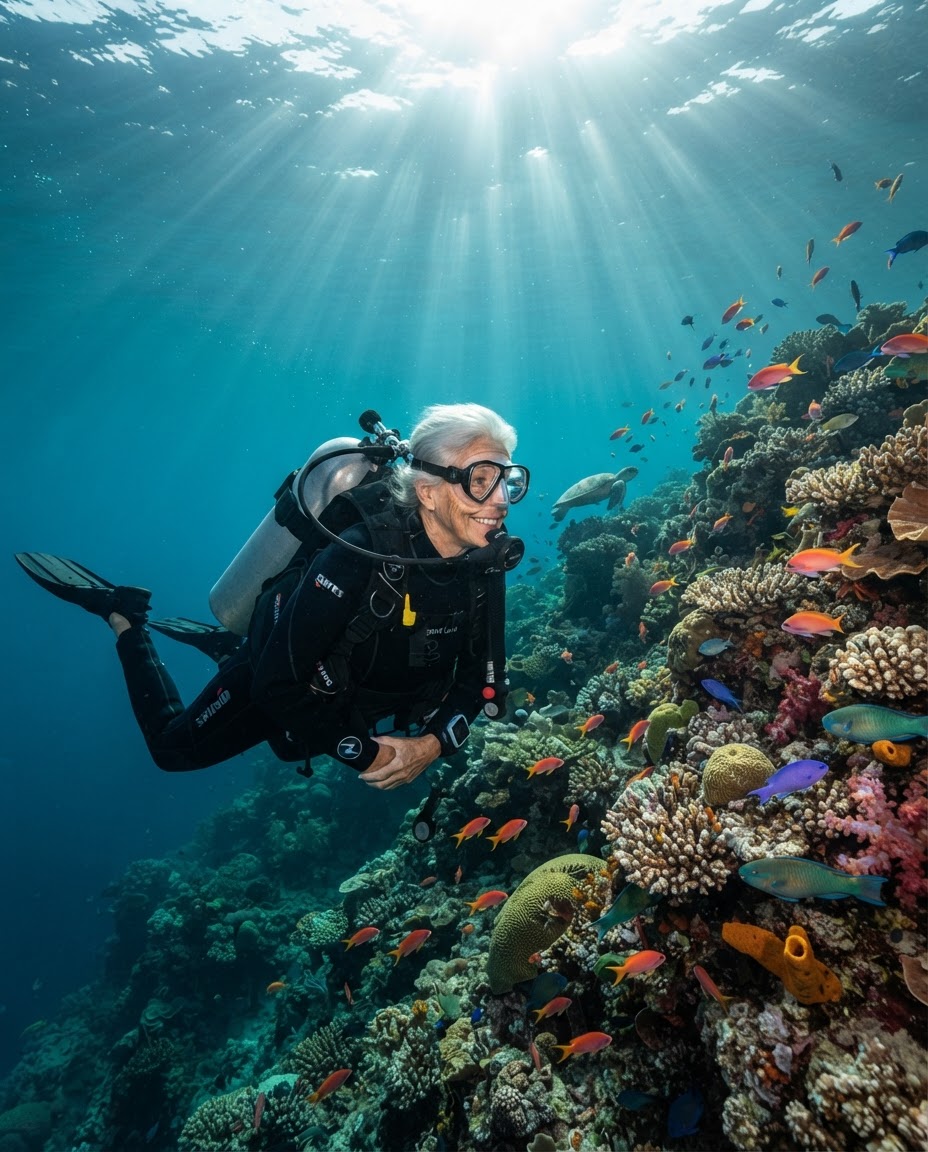
The oldest certified diver on record was 96 years old when he completed his PADI Open Water. We've dived with 70-year-olds who have better buoyancy than 25-year-olds. We've watched retirees complete their Advanced Open Water while their grandchildren panic on the surface.
You don't need six-pack abs. You need a medical clearance (standard form, any GP can sign it), reasonable cardiovascular health, and the ability to carry 15–20 kg of gear short distances. That's it.
Diving is one of the most age-inclusive sports on Earth. The water supports your weight. The pace is slow. The fish don't card you.
Myth 9: It's Dark and Murky Underwater — You Can't See Anything
TRUE or FALSE?
FALSE. 👀
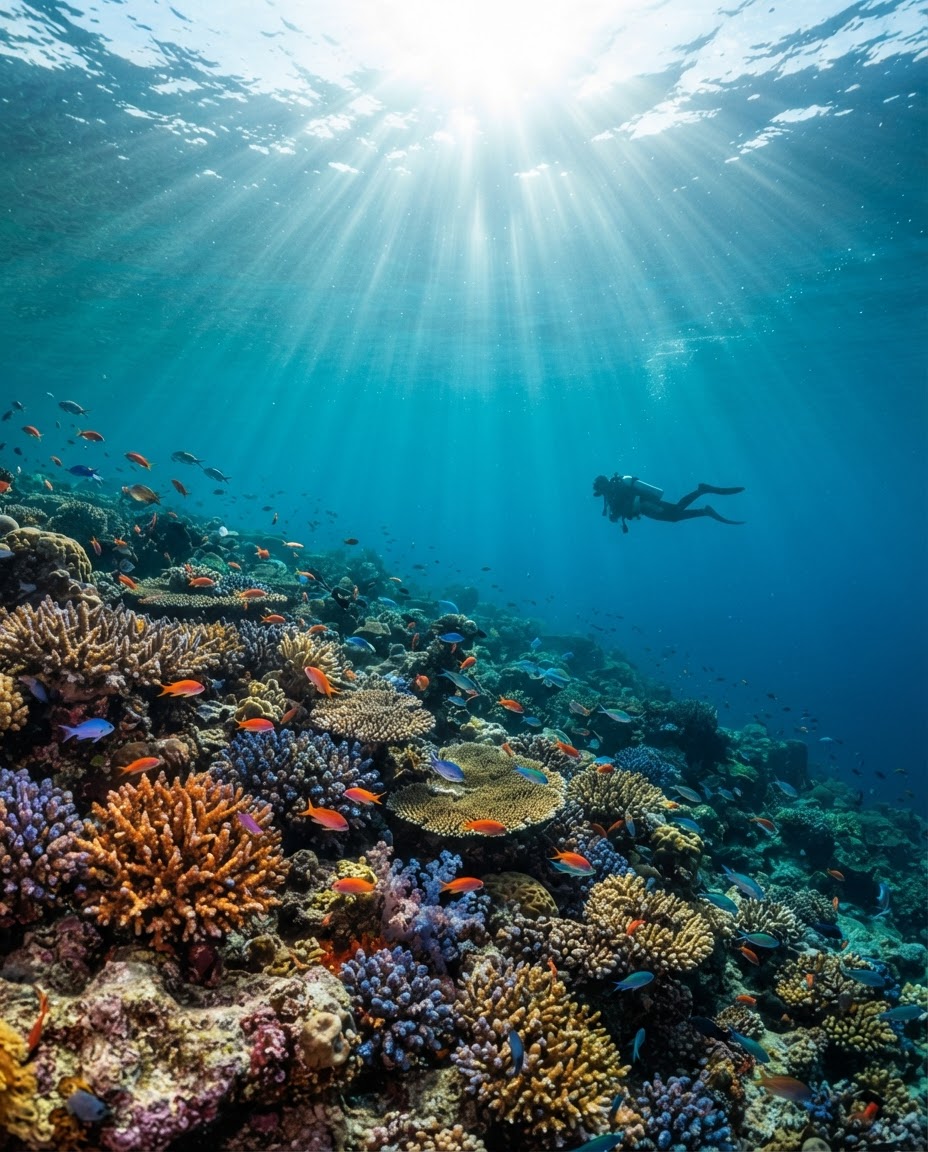
In tropical waters — like, say, the Maldives in November — visibility routinely exceeds 30 metres. On exceptional days, 40+. The light doesn't just penetrate; it dances. Sunbeams angle through the water like cathedral windows. Colours pop. Coral glows.
Yes, some dive sites are murky. Wreck dives in the English Channel? Green. Low-vis training quarries? Brown soup. But those are choices, not defaults. Most recreational diving happens in places where the visibility is better than your local swimming pool on a Saturday afternoon.
The underwater world isn't dim. It's just waiting for you to look.
Myth 10: Women Can't Dive on Their Period
TRUE or FALSE?
FALSE. 🩸
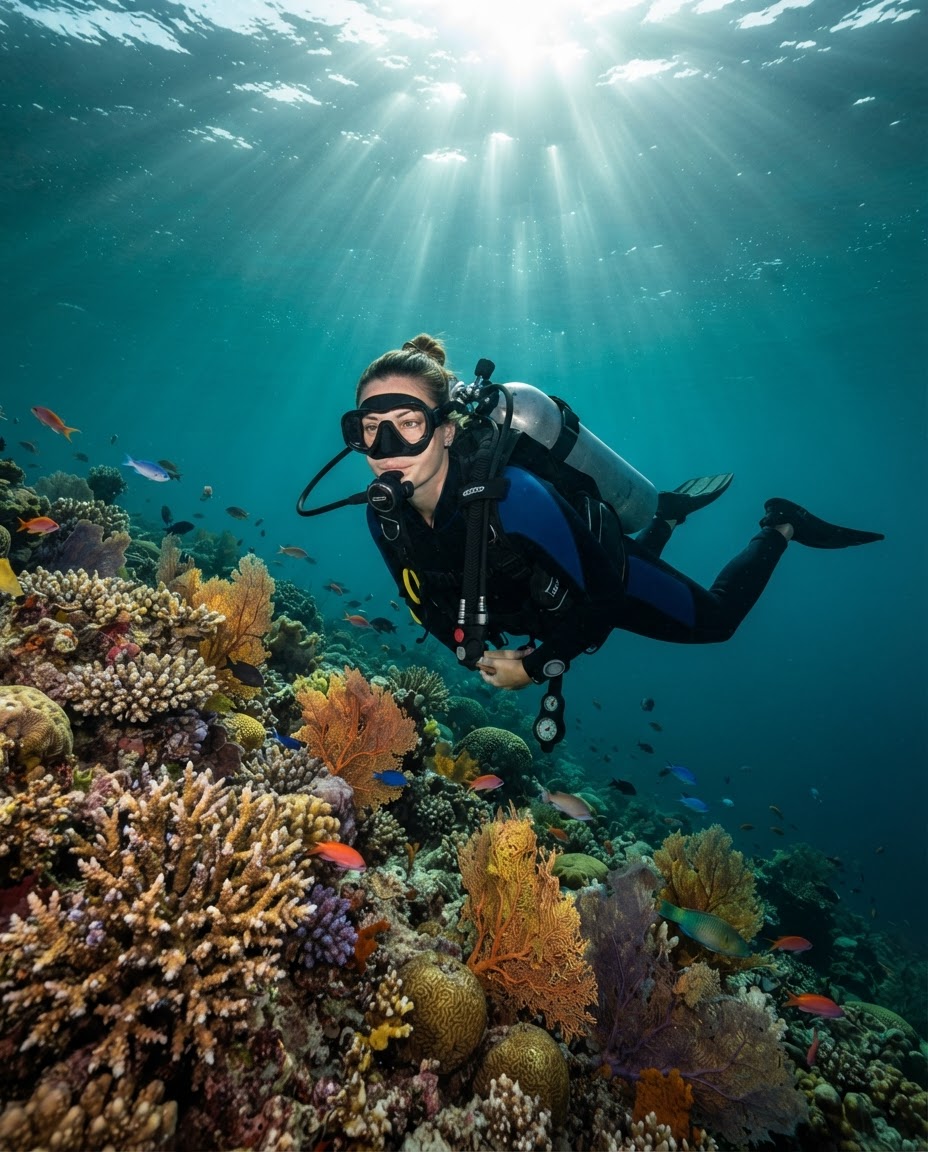
This one deserves a special place in the Facepalm Hall of Fame.
There is no medical contraindication to diving while menstruating. Sharks are not attracted to menstrual blood (they're attracted to fish blood and erratic movement — neither of which describes a calm diver). PADI, DAN, and every major diving medical authority confirm: period diving is perfectly safe.
In fact, menstrual cramps often improve underwater. The pressure, the buoyancy, the general reset of being submerged — many female divers report feeling better during their dive.
The only real consideration? Tampons and menstrual discs work fine. Just change them between dives like you would between any other activities. The ocean doesn't care. Your body doesn't care. Only outdated myths care.
Myth 11: You Should Never Dive Alone
TRUE or FALSE?
MOSTLY TRUE… but it's complicated. 🤿
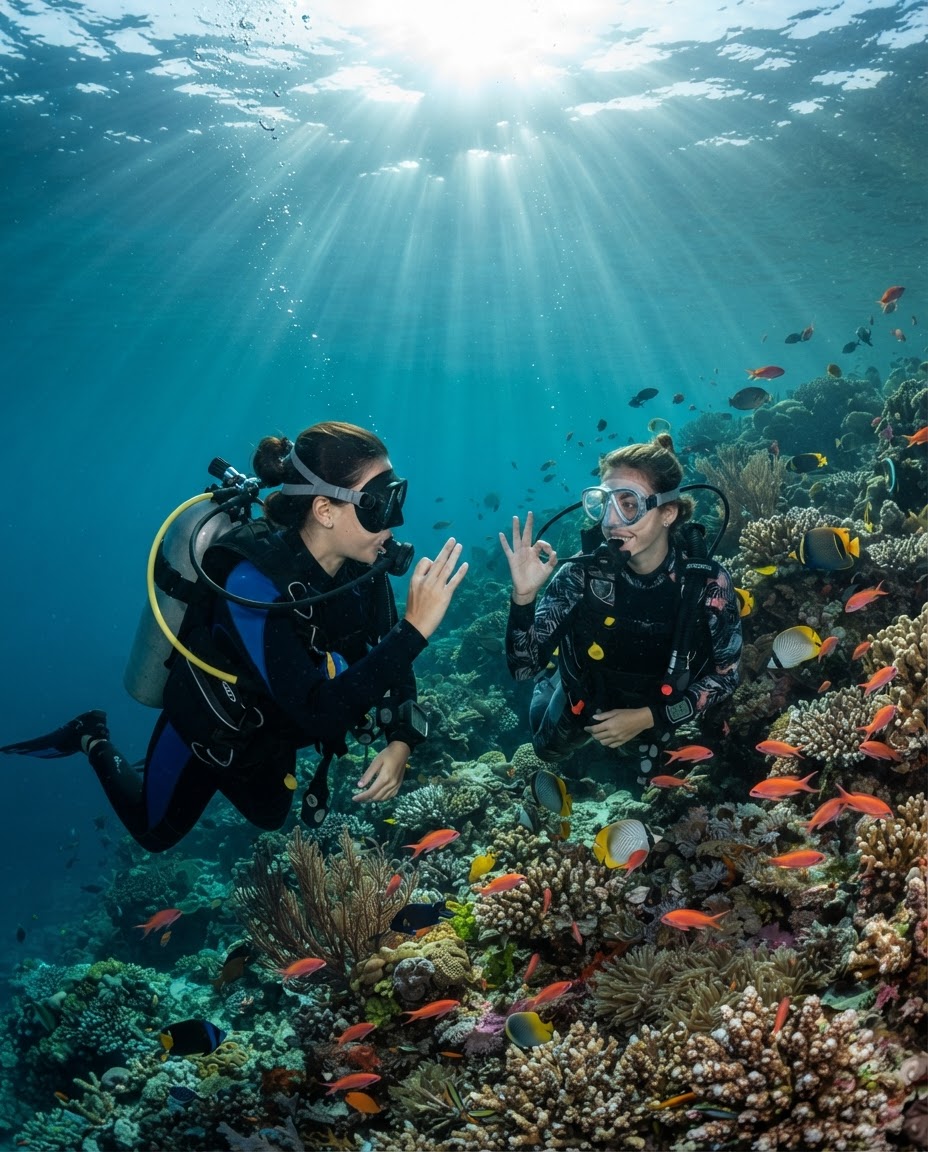
For recreational divers, this is effectively true. The buddy system is the gold standard for a reason: redundancy, safety, and someone to share the "did you see that?!" moment with.
However — solo diving certification exists. SDI offers a dedicated Solo Diver course. Experienced technical divers often solo by design. The key word is trained and equipped. Solo diving with a redundant air source, a solo diver certification, and years of experience is not the same as "my buddy cancelled so I'll just go down alone."
For 99% of readers: treat this as true. For the 1% with solo certs and redundant gear: you already know the answer. Everyone else? Bring a buddy. The tribe dives together.
Myth 12: One Mistake and You're Dead — There's No Margin for Error
TRUE or FALSE?
FALSE. ⚠️
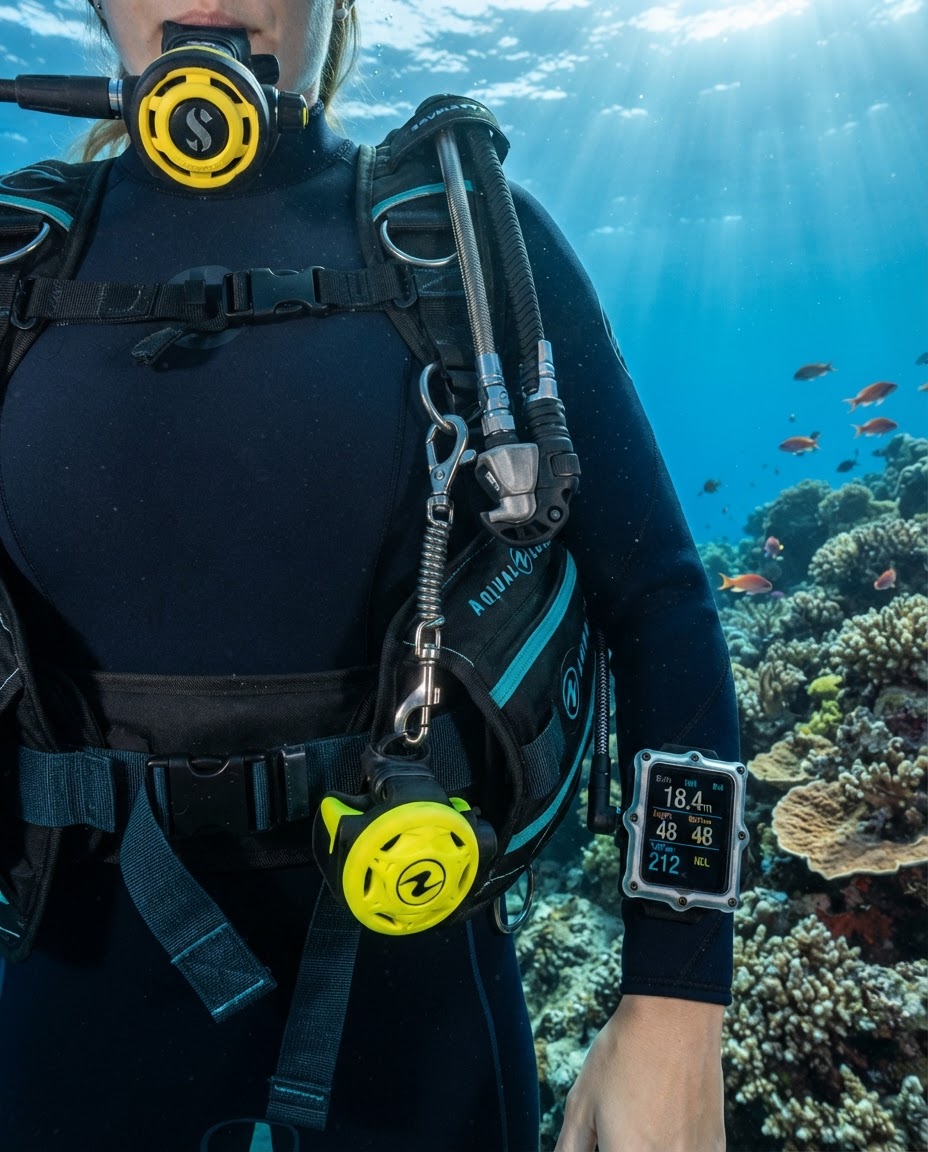
This myth is the most harmful because it keeps people out of the water entirely.
Scuba equipment is redundant by design. Two regulators (primary + octopus). Multiple ascent options. Safety stops. Dive computers that beep warnings. Emergency protocols drilled into every certification course. The system is built to absorb mistakes — because humans make them.
Yes, scuba has risks. So does driving. So does cycling. So does taking a shower (which, statistically, is far more dangerous than diving). The difference is that scuba training explicitly prepares you for problems. You practice out-of-air scenarios. You learn controlled emergency ascents. You train until response becomes reflex.
The margin for error is wider than most people think. The training is specifically designed to make it so.
🏆 Score Yourself
| Score | Your Title |
|---|---|
| 12/12 | Divemaster-in-Waiting — You know more than most instructors. We're impressed. |
| 9–11 | Seasoned Bubble-Maker — Solid knowledge. One more course and you're running the boat. |
| 6–8 | Open Water Graduate — You've got the basics down. Time for that Advanced cert. |
| 3–5 | Dive-Curious Landlubber — Welcome to the tribe. Start with our 30-Day Dive-Curious Starter Guide. |
| 0–2 | Shark Week Enthusiast — We love your enthusiasm. Please subscribe before you scare yourself out of the ocean. |
🩺 Dive Doctor's Weekly Prescription
Think you know scuba? Our Dive Doctor debunks one myth per week — the kind of myth-busting that saves you from facepalming your instructor (and yourself).
Every Friday, we send one myth, one truth, and one "wait, really?" moment straight to your inbox. No spam. Just saltwater therapy for your brain.
Subscribe to The DeepBeat Dispatch and stop facepalming your instructor.
🎁 Take the Full Myth-Buster Quiz
Loved this? The DeepBeat Myth-Buster Quiz has 20 questions — more myths, more surprising reveals, and a score that actually means something.
It's our most popular lead magnet for a reason. Even certified instructors have gotten tripped up.
Join the tribe to download the Myth-Buster Quiz.
💬 How Did You Score?
Drop your number in the comments. Tag the friend who still believes the coconut myth. Share this with the buddy who thinks sharks are "basically ocean serial killers."
The tribe is watching. And yes — we're totally keeping score.
Ready to dive deeper than the myths? The DeepBeat Dispatch is your weekly briefing from the tribe — stories from the deep that you won't see on the feed.
Join the tribe to subscribe to The DeepBeat Dispatch.
About DeepBeatDives
DeepBeatDives is the world's first premium deep-sea scuba + music destination festival — coming to the Maldives, November 2026. We don't just dive. We descend. Discover. Dance. Join the tribe.
SEO Keywords: scuba diving myths, scuba diving facts, is scuba diving dangerous, shark attacks vs coconuts, diving misconceptions, peeing in wetsuit scuba, scuba diving with glasses, how expensive is scuba diving, scuba diving age limit, can women dive on period