
The first time his head went under, the demons disappeared.
Not metaphorically. Not eventually. Instantly.
Former Rifleman Gary Green had already survived two exploding IEDs in Afghanistan, lost the sight in one eye, and endured years of acute PTSD that threatened to consume whatever fragments of himself he had left. Traditional therapy had helped, marginally. Medication took the edge off, sometimes. But the flashbacks, the hypervigilance, the crushing weight of a mind that refused to stand down — those remained.
Then, in 2015, he discovered something no psychiatrist had prescribed. Something no pill could replicate.
He took a breath underwater.
"Underwater I found a peace of mind and a realisation that PTSD does not have to define me," Gary later said. "Underwater I did not have PTSD — and this feeling has stayed with me from the point my head went under the blue until this very day. Diving has healed me."
This is not a metaphor. This is not marketing. This is what happens when human beings — broken, burned out, or simply buried beneath the noise of modern life — surrender to the most ancient reset button our biology knows.
The ocean.
The Invisible Epidemic
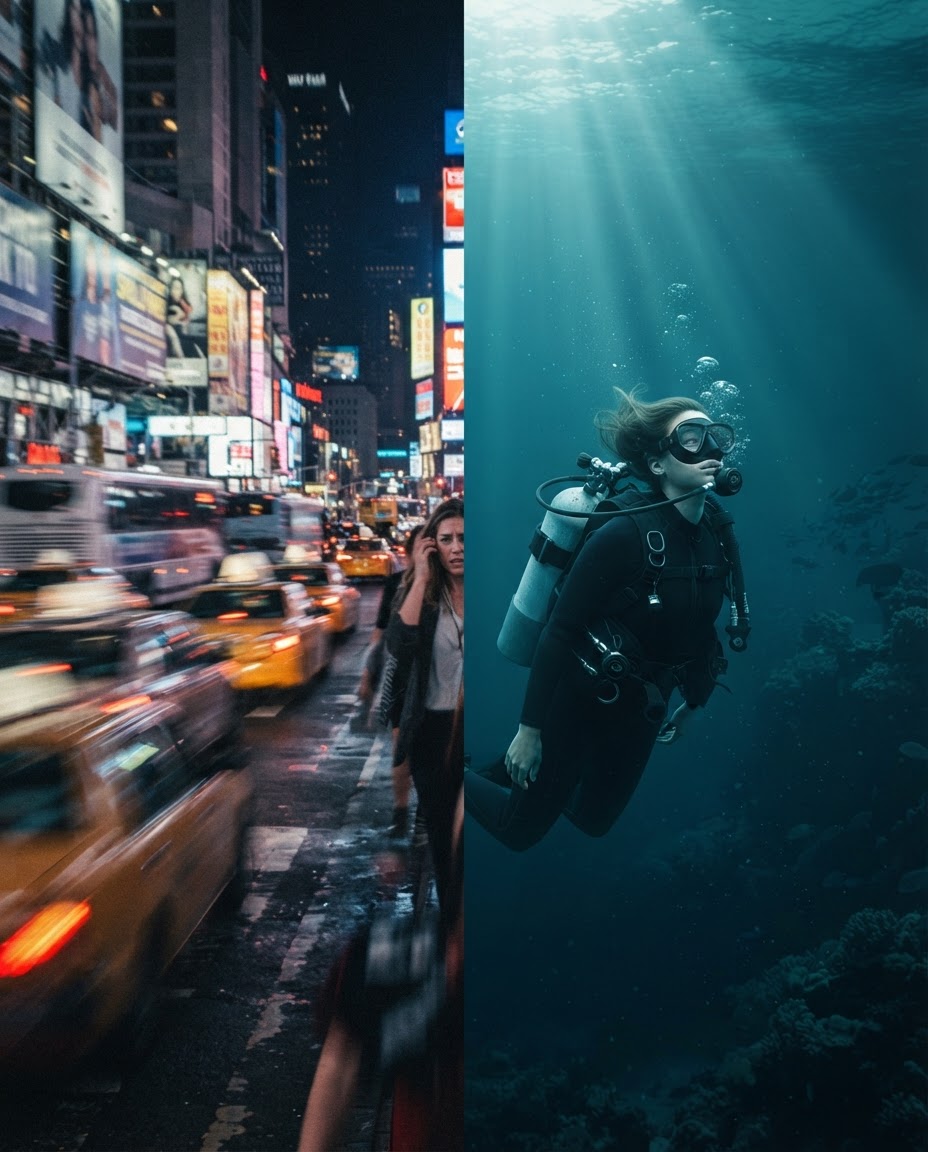
Here is the truth we rarely speak above the surface: the world is drowning in anxiety it cannot name.
The World Health Organization reports that depression is now the leading cause of disability globally. In the United States alone, an estimated 20 veterans lose their battle with mental health every single day. Burnout has been classified as an official occupational syndrome. And a 2013 study found that 45% of military veterans had already turned to nonconventional therapies — not because they were trendy, but because traditional approaches were failing them.
We have built a civilization of constant connection and chronic isolation. Of infinite scrolling and finite presence. Of productivity metrics that measure everything except the one thing that matters: whether we still feel like ourselves.
And then some of us find the water.
What the Science Actually Says
The therapeutic power of scuba diving is no longer anecdotal. It is measured, peer-reviewed, and increasingly impossible to ignore.
In 2016, medical students at the University of Sheffield Medical School conducted a groundbreaking study with 15 military veterans who had completed the PADI Deptherapy programme — a UK-registered charity that rehabilitates injured service personnel through adapted scuba diving. The results were staggering: 90% of participants reported improvements in their general wellbeing and mental health, which they attributed directly to their diving experience. 60% reported significant improvement in psychosocial wellbeing — most notably in anxiety levels, insomnia, and depression.
The study, published in the Journal of Disability and Rehabilitation, concluded that scuba diving "can offer significant therapeutic benefits for ex-Service personnel experiencing anxiety and PTSD, notably in terms of alleviating social dysfunction and symptoms of depression."
Dr. Richard Castle, Vice President of Deptherapy and a psychologist who supervised the research, put it plainly: "This has been a crucially important piece of research and demonstrates the positive impact that the Deptherapy model can have for ex-Service personnel who have experienced life-changing physical and mental injuries."
But the data extends far beyond one programme.
A separate study by Loma Linda University, published in Disability and Rehabilitation, assigned veterans to either scuba diving alone or scuba diving combined with occupational therapy. Both groups saw significant improvements in occupational performance and reduced symptoms of PTSD, depression, and stress. The group that received occupational therapy alongside diving experienced additional reductions in anxiety — suggesting that diving creates a therapeutic foundation, while structured support helps veterans translate that calm into daily life.
At Aix-Marseille University, researchers found that recreational divers using scuba diving for anxiety relief reported sustained reductions in stress levels even a full month after their dives. Not during. After. The calm outlasted the experience.
And in a striking clinical case documented by NAUI, a 32-year-old healthcare professional who developed severe anxiety during the COVID-19 pandemic saw her GAD-7 anxiety score plummet from 16 (moderate anxiety, above clinical threshold) to 5 (below clinical threshold) after just six recreational dives. Six.
The numbers tell a story. But the numbers are not the story.
Why the Ocean Works
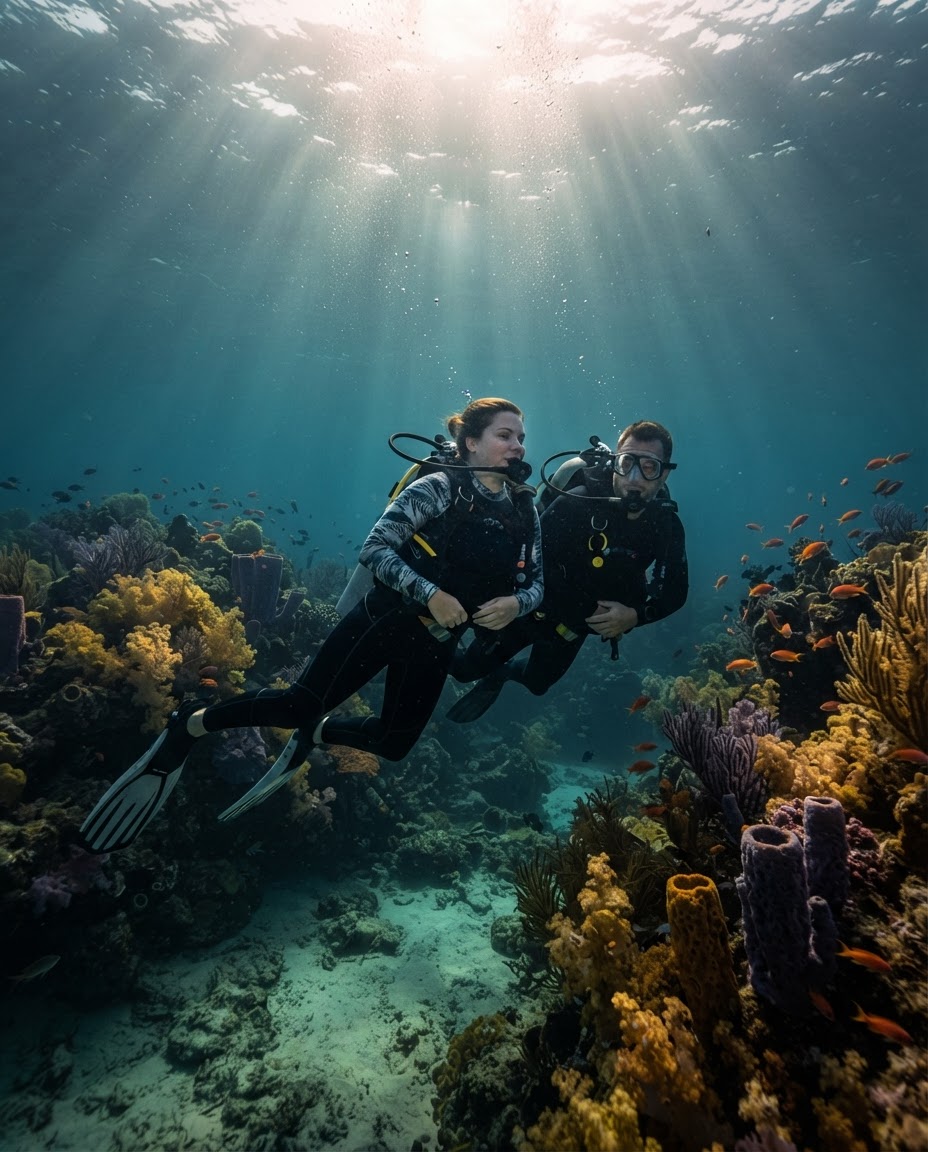
To understand why scuba diving is becoming the new therapy, you have to understand what happens to a human body the moment it submerges.
Your heart rate drops. The mammalian dive reflex — an evolutionary survival mechanism we share with seals and whales — activates the instant your face contacts water. Heart rate decreases by 10–25%. Blood flow redirects to your core. Your parasympathetic nervous system — the "rest and digest" branch — takes the wheel.
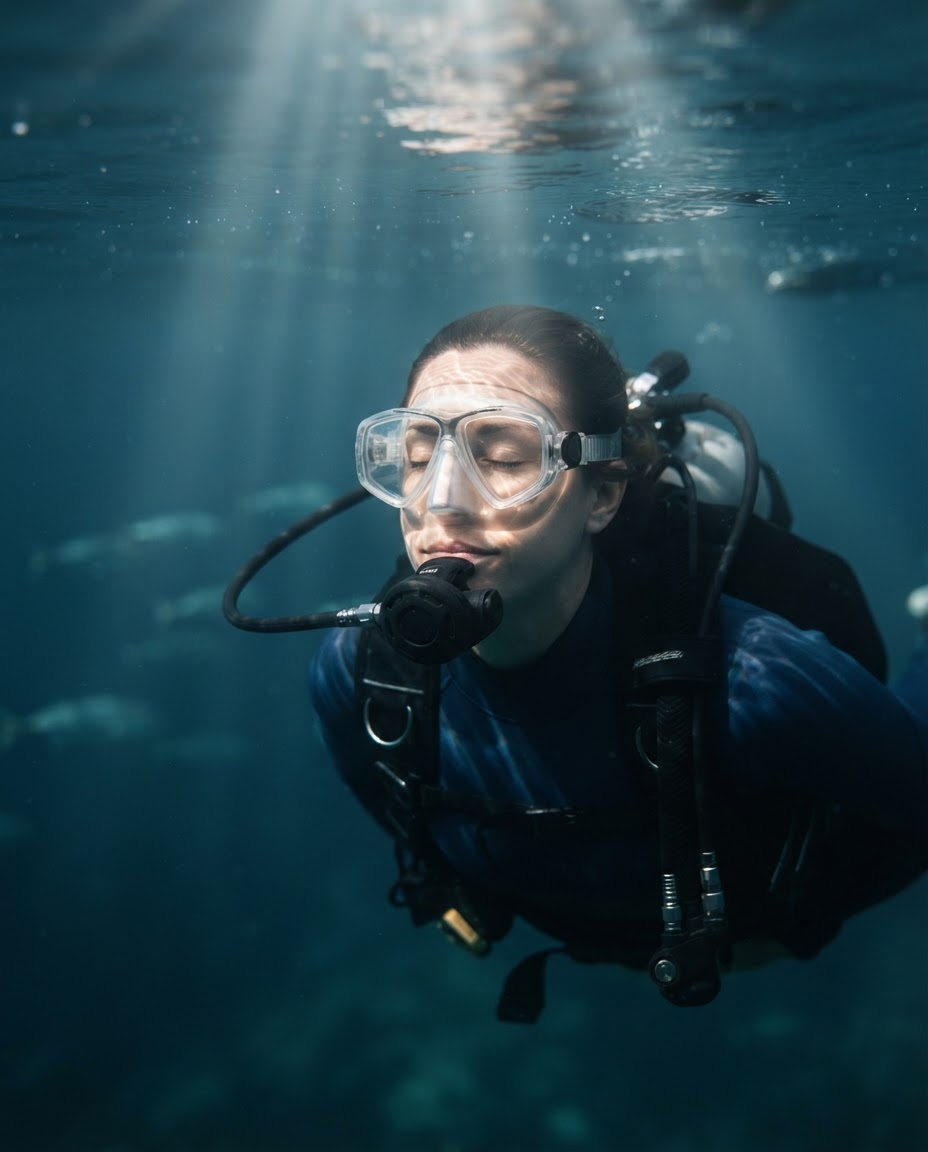
Your breathing slows. Scuba diving demands controlled, deliberate breaths. Six to eight per minute. This is not optional; it is survival. And it mirrors precisely the breathing patterns taught in clinical mindfulness programmes for anxiety and PTSD — the same neurological shift we unpacked in what scuba diving does to your brain. The difference? Underwater, you cannot check your phone. You cannot multitask. You cannot escape the breath. You are locked in the present moment by physics itself.
Your body becomes weightless. For veterans with amputations, spinal injuries, or chronic pain, this is not merely pleasant — it is revolutionary. A 2011 Johns Hopkins University study found that veterans with spinal cord injuries who completed a four-day scuba certification saw significant improvement in muscle movement, increased sensitivity to light touch, and reduced phantom pain. Chris Middleton, a PADI AmbassaDiver who lost both legs in service, described it with devastating simplicity: "The thing about scuba diving is the weightlessness. There's no more phantom pains. There's no more PTSD flashbacks."
Your mind quiets. Marine biologist Dr. Wallace J. Nichols coined the term "Blue Mind" to describe the mildly meditative state our brains enter near, in, on, or under water. Under the surface, cortisol drops. Dopamine and serotonin rise. The noise stops. And for someone whose mind has been a war zone — whether from combat, corporate burnout, or the slow erosion of modern anxiety — that silence is not empty. It is sacred.
The Tribe Beneath the Surface
There is another dimension to this healing, and it has nothing to do with physiology.
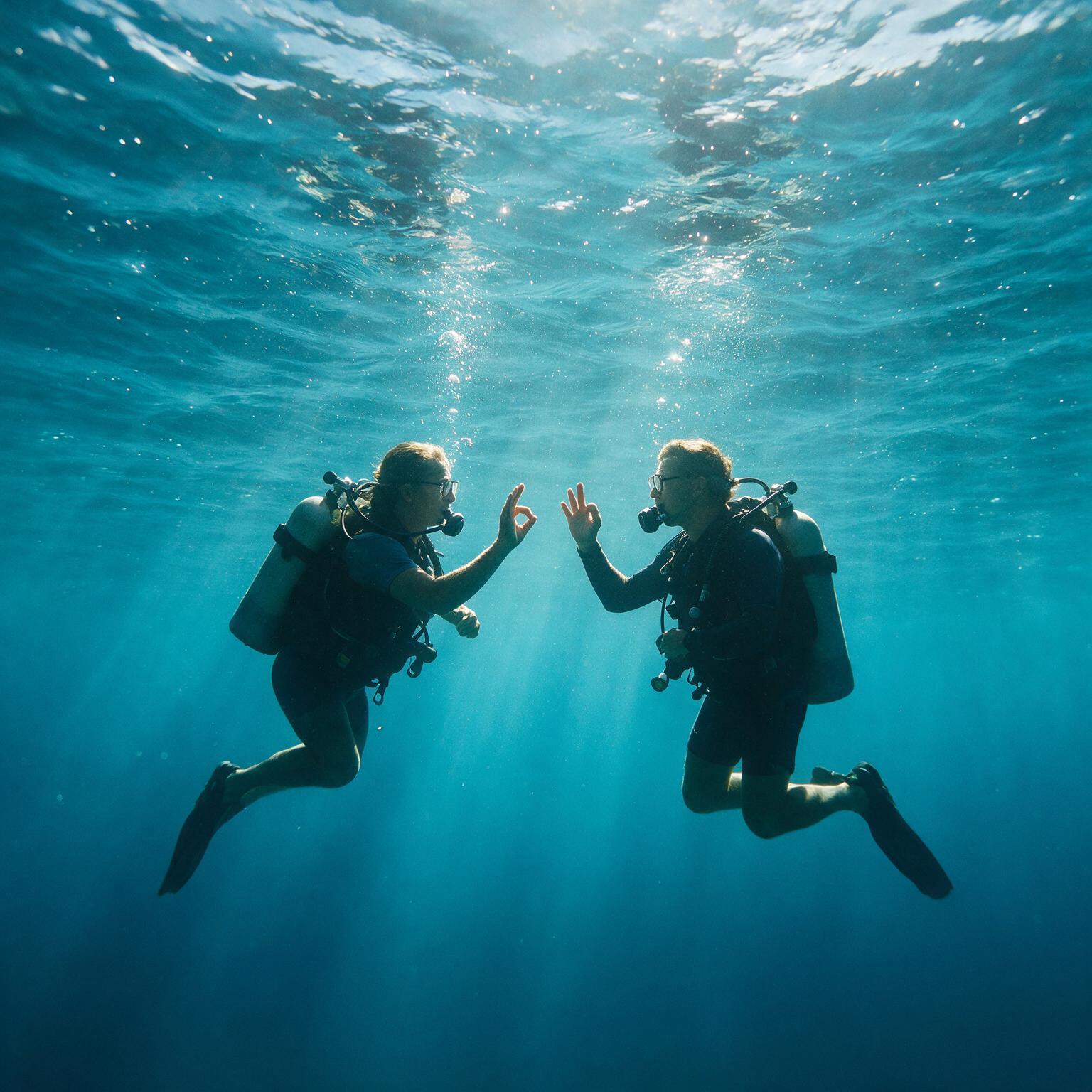
Scuba diving is inherently social. The buddy system is not a suggestion — it is a covenant. You do not dive alone. You check each other. You communicate without words. You trust someone with your life, and they trust you with theirs.
For veterans who have lost their units, their purpose, their sense of belonging, this reconstruction of tribe is not incidental. It is everything.
Michael Wood, an Australian Army veteran who served 19 years and was medically discharged with PTSD in 2020, put it this way: "Scuba diving opened my eyes to a new world – and saved my life. It got me out of my head and made me focus on something positive rather than self-destruction. Since getting into scuba diving, my treating doctors have seen the improvement in my PTSD tenfold."
Michael now teaches other veterans to dive. He has led liveaboard trips for groups of former soldiers, all of them carrying the same invisible wounds. And he reports the same feedback, again and again: "I was finally able to pass on what I felt underwater to others."
The Deptherapy programme reinforces this with what they call the Buddy Peer Support Scheme — a 24/7 network where programme members support each other through the same channels that once carried military communications. The ocean gave them presence. The tribe gave them permission to stay there.
The Corporate Parallel: Burnout Meets Buoyancy
Not everyone who finds healing underwater has been to war.
The same mechanisms that reset a veteran's nervous system work on a burned-out executive's. The same breath that silences PTSD flashbacks silences the 3 AM email anxiety. The same weightlessness that frees an amputee from phantom pain frees a desk-bound professional from the invisible armour they've worn for a decade.
A study of 176 recreational scuba divers found that participants reported enhanced mental wellbeing and reduced stress after just two diving sessions. Two. Not a retreat. Not a sabbatical. Two immersions in a world where Slack notifications cannot reach you.
This is why programmes like Patriots for Disabled Divers, Force Blue, and Wounded Waters have expanded far beyond their military origins. The language of healing is universal. The ocean does not ask for your diagnosis. It only asks that you breathe.
The Prescription No Doctor Wrote
We are not suggesting scuba diving replaces clinical mental health care. It does not. For severe PTSD, depression, or anxiety, professional treatment remains essential.
But what the emerging research suggests — what thousands of veterans, healthcare workers, and burned-out professionals are discovering — is that diving is not merely recreation. It is rehabilitation. It is a physiological intervention that happens to feel like an adventure. It is mindfulness with equipment. It is exposure therapy where the only thing you're exposed to is wonder.
As one Deptherapy programme member described it: "When I put my head under the water, the demons disappear."
Not everyone has demons. But almost everyone has noise. And the ocean, it turns out, is very good at turning noise into presence.
Your First Descent
If you are reading this and recognising yourself — the sleeplessness, the hypervigilance, the sense that you have become a stranger in your own life — know this: the water does not require you to be healed before you enter. It only requires you to enter.
The PADI Deptherapy programme, Patriots for Disabled Divers, and a growing network of adaptive diving centres worldwide are proving that the ocean is not a luxury. It is medicine. And it is becoming more accessible every year.
But you do not need a trauma diagnosis to benefit from what the depths offer. You only need to be human, overwhelmed, and willing to take one breath where the air does not reach.
Join the Tribe
Real stories from real divers. The transformations we don't post on Instagram.
Every week, we send one story from the deep — veteran journeys, burnout recoveries, quiet moments of presence that remind us why we dive. These are Tribe Tales, and they are exclusive to our subscribers.

Subscribe to The DeepBeat Dispatch and receive:
- One transformation story per week
- Early access to our Maldives community events
- The 7-Day Ocean Wellness Plan — a guided daily protocol to bring the calm of the dive into your land life, even if you're months away from your certification
"The ocean doesn't judge. It resets."
Subscribe. Breathe. Belong.
DeepBeatDives is building the world's first premium deep-sea scuba + music destination festival in the Maldives — not because the world needs another festival, but because the world needs more places where humans remember how to be present. Join the tribe. The invitation is limited.
Sources & Further Reading:
- Morgan, A. et al. (2018). "Can scuba diving offer therapeutic benefit to military veterans?" Journal of Disability and Rehabilitation.
- University of Sheffield Medical School (2016). Independent Service Evaluation Study of Deptherapy Programme.
- Krpalek, D. et al. (2020). "Reducing Veterans' Symptoms of Depression, Anxiety, Stress, and Posttraumatic Stress with SCUBA Diving and Occupational Therapy." Disability and Rehabilitation.
- Johns Hopkins University (2011). Study on scuba diving and spinal cord injury recovery.
- Nichols, W.J. Blue Mind: The Surprising Science That Shows How Being Near, In, On, or Under Water Can Make You Happier, Healthier, More Connected, and Better at What You Do.
- PADI Deptherapy Programme: deptherapy.co.uk
- Patriots for Disabled Divers: patriotsfordisableddivers.org
Published by DeepBeatDives | Lifestyle Pillar | Blog 10 of 30