When to Go. What to See. Why November Is the Decision. And Why DeepBeatDives Chose It.
There is a moment every diver knows — the one right before you roll backward off the dhoni, when the surface of the Indian Ocean holds its breath and you wonder what waits below. In the Maldives, that moment comes with a guarantee: something extraordinary is always there. But what exactly? That depends on the month. This Maldives dive calendar breaks it down — month by month, species by species — so you know exactly when to dive Maldives for the encounters you want.
The Maldives does not reward the casual planner. This is an archipelago of 26 atolls stretched across nearly 800 kilometres of equatorial ocean, and the same current system that makes one atoll electric will leave another quietly magnificent. The northeast monsoon brings glassy mornings and 30-metre visibility. The southwest monsoon brings plankton, rougher surface conditions, and the greatest marine spectacles on Earth. Neither is "better." They are different frequencies of the same underwater symphony — and the tribe that understands the calendar hears the whole composition.
This is the guide we wish existed when we started planning DeepBeatDives. Pair it with our 13 dive sites that will ruin your land life forever for the full picture. Bookmark it. Share it with your buddy. And when you are ready — we will see you in the Maldives.
The Two Monsoons That Rule Everything
Before we dive month by month, understand this: the Maldives operates on a binary rhythm.
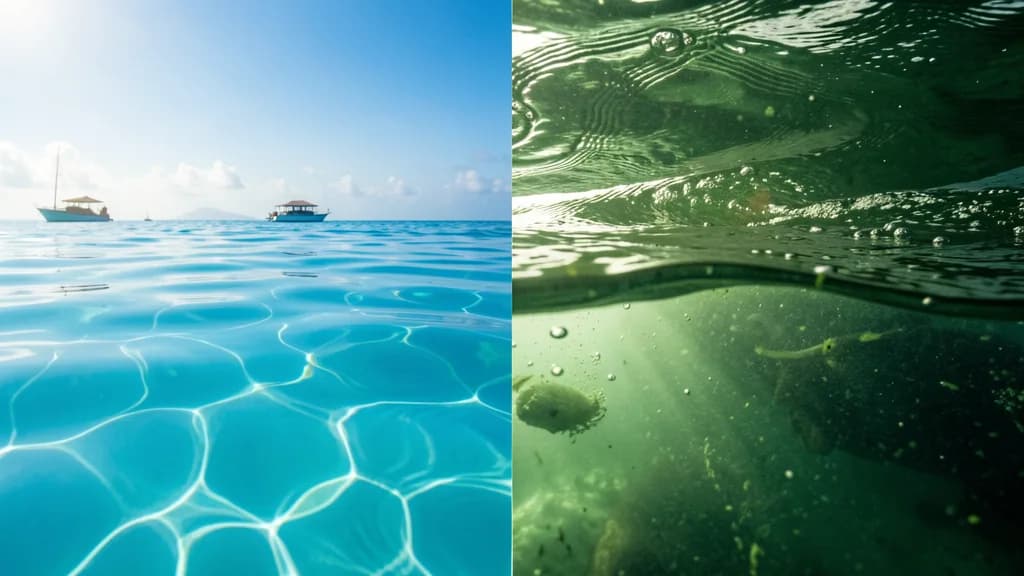
The Northeast Monsoon (Iruvai): December to April. Dry season. Calm seas. Low humidity. Visibility pushing 25–30 metres on the eastern atolls. This is when the Maldives looks like the postcards — flat water, impossibly blue, the kind of conditions that make underwater photographers weep with joy.
The Southwest Monsoon (Hulhangu): May to November. Wet season. More wind. More rain. More plankton. And because of that plankton — more mantas, more whale sharks, more of the "big stuff" that makes divers sell their furniture to book a second trip.
Water temperature? A steady 26–30°C year-round. A 3mm shorty handles almost everything. The Maldives diving season you choose is not about warmth. It is about what you want to meet underwater.
January: The Manta Cleaning Stations Wake Up
The Vibe: Crisp, calm, deliberate.
January is the Maldives at its most photographed. The northeast monsoon is firmly established, and the northern and central atolls — North Malé, Ari, Lhaviyani — settle into a rhythm of flat seas and cloudless mornings. Visibility on the eastern sides of the atolls pushes 25–30 metres. The water is so clear it feels like flying.
But here is what most travellers miss: January is prime time for manta cleaning stations.
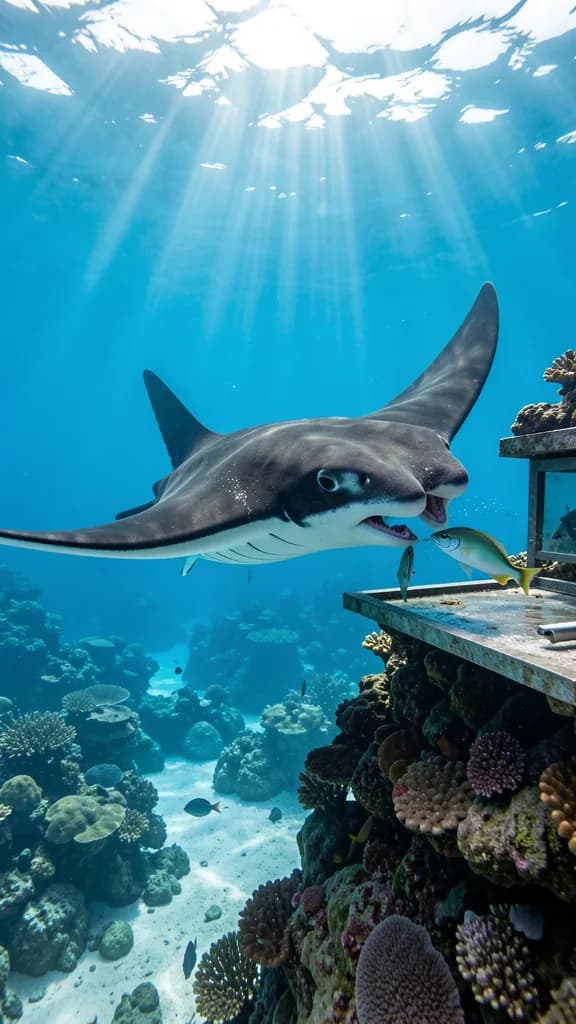
While the famous Hanifaru Bay feeding aggregations are still months away, the reef mantas of the Maldives do not disappear in the dry season. They simply shift their behaviour. At sites like Lankan Manta Point in North Malé Atoll and Rangali Madivaru in South Ari, mantas arrive to be cleaned — hovering motionless while cleaner wrasse and butterflyfish remove parasites from their gills and skin. These encounters are slower, more intimate, and arguably more photogenic than the feeding frenzies of later months. You are not chasing mantas through plankton clouds. You are kneeling on the reef, breathing in three-beat cycles, while a four-metre ray hangs inches above your head like a living cathedral.
January is also when Bodu Hithi Thila — a coral pinnacle in Kaafu Atoll — becomes a reliable manta cleaning and feeding station. The site runs from 8–10 metres at the reef top down to sandy bays at 15–25 metres, and the southern end delivers the best encounters. A cave at 17 metres holds nurse sharks for those patient enough to look.
What to Pack: A full 3mm suit for multiple daily dives. Sunscreen for the surface intervals. And patience — the mantas will come, but on their schedule, not yours.
February: The Whale Sharks Never Left
The Vibe: Peak dry season. Maximum clarity. The gentle giants are waiting.
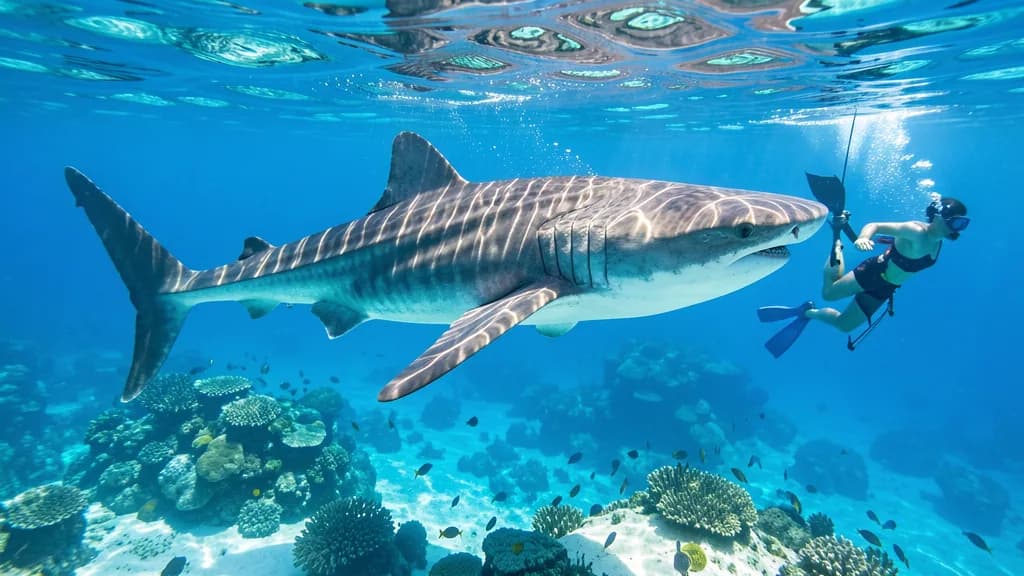
February sits at the heart of the dry season, and if January is about Maldives manta rays, February is about the largest fish on Earth — because in South Ari Atoll, Maldives whale sharks never go anywhere.
Most whale shark destinations are seasonal propositions. The animals follow plankton blooms, pass through, scatter. South Ari Atoll broke that pattern entirely. Along a 42-kilometre strip of southern outer reef known as the South Ari Marine Protected Area (SAMPA) — established in 2009 and one of the only truly year-round whale shark hotspots on the planet — juvenile whale sharks cruise the drop-off every single month.
Research by the Maldives Whale Shark Research Programme reveals that 91% of the whale sharks here are juvenile males, averaging about five metres in length. These are not the mature 18-metre giants of the open ocean. They are teenagers — curious, unbothered by humans, and patrolling the warm shallows like they own them. Operators report finding sharks on 70–90% of excursions across the entire year, numbers no seasonal destination can promise.
Why do they stay? Scientists call SAMPA a developmental habitat — a secondary nursery where young sharks grow before dispersing. The drop-off lifts cool, plankton-rich water against the reef in a predictable feeding line, and the sun-warmed shallows give the sharks a place to reheat between deep dives. Reliable food plus a thermal recharge means a growing shark has little reason to leave.
February offers something the wet season cannot: best-in-class surface visibility. The water is so clear that spotters can see the sharks from the boat deck. You slip in, fin hard to keep pace, and find yourself swimming alongside a bus-sized filter-feeder that rolls one golf-ball-sized eye in your direction before pulling away without apparent effort. The encounter can last ten minutes or more. The shark is barely working. You are burning lungs and grinning through your regulator.
Pro Tip: Book an early morning excursion (6:00–7:30 AM departures). The sharks are most active in the first hours of daylight, and the surface is glassier than it will be all day.
March: The Visibility Champion
The Vibe: Glass. Pure, liquid glass.
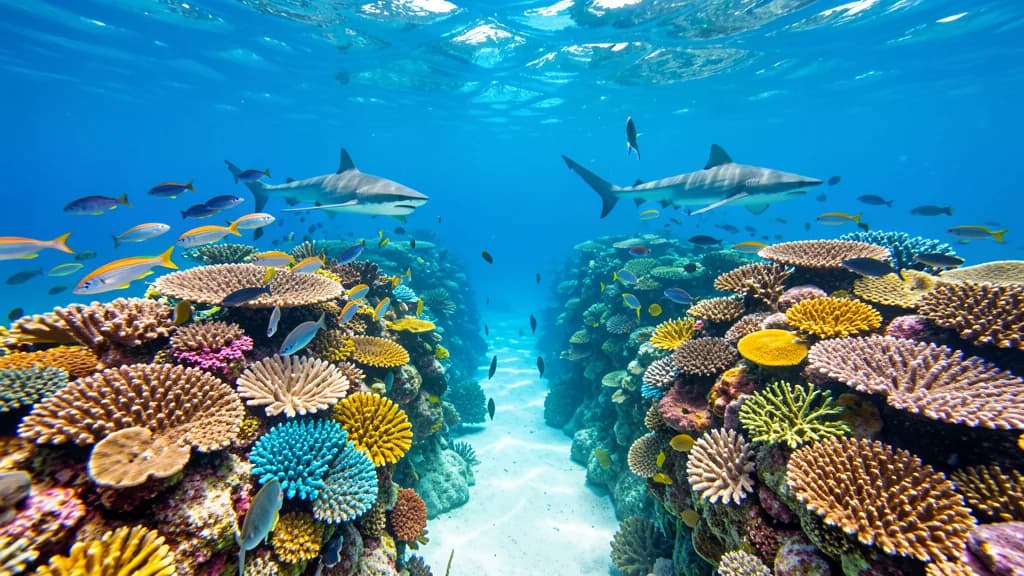
If you are the kind of diver who measures a trip by the clarity of the water, March is your month. This is widely considered the peak of underwater visibility in the Maldives — 30 metres and beyond on the eastern atolls, with calm seas that make channel crossings feel like gliding across a lake.
March is also one of only two months when the Far North expeditions run. The Eight Degree Channel — the open-ocean crossing between the central and northern atolls — is calm enough in March and April for liveaboards to reach the farthest reaches of the Maldivian chain. These specialist itineraries are limited, expensive, and extraordinary. Why? Because the far north is where blue whales and sperm whales pass through, animals rarely encountered anywhere else in the country.
For reef divers, March delivers the Maldives at its most saturated. Coral coverage — already remarkable for an Indian Ocean destination that has weathered bleaching events — shows at its best in clear, well-lit water. Once you learn how to read a reef like a marine biologist, March's visibility makes every coral formation and fish behavior crystal clear. The reef colours pop with an intensity that makes macro photographers obsessive and wide-angle shooters euphoric. Schools of fusiliers, snappers, and trevallies move through the channels in silver rivers. Reef sharks gather at the eastern channel entrances in numbers that defy counting.
This is also the month when the manta cleaning stations of the western atolls — quieter than their eastern counterparts — begin to see increased activity as the monsoon transition approaches.
What to Pack: Every lens you own. March is when the Maldives becomes an underwater studio.
April: Tiger Shark Territory
The Vibe: Hot. Intense. Not for beginners.
April is the hottest month of the year — temperatures nudge 32°C, humidity rises, and the dry season exhales its final breath before the monsoon shifts. But April has a secret that adrenaline-seeking divers need to know: this is when the southern atolls enter their prime, and Fuvahmulah becomes the centre of the underwater universe.
Fuvahmulah is unlike anywhere else in the Maldives. It is the country's only single-island atoll, a geological anomaly sitting 500 kilometres south of Malé in deep oceanic water. It has freshwater lakes, pebble beaches, and no overwater villas — but what it has beneath the surface is the stuff of diver dreams.
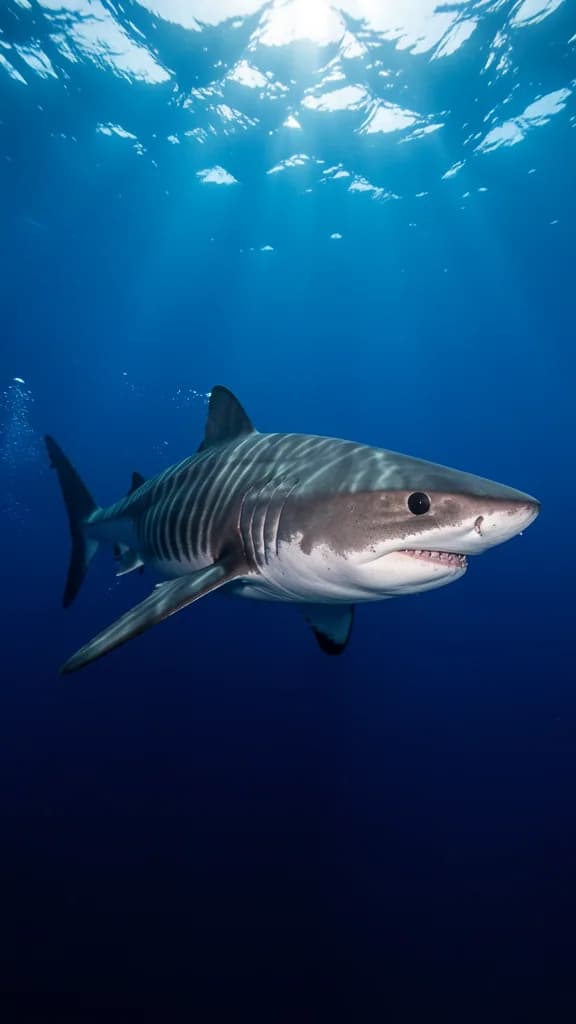
Tiger sharks. Year-round. On 60–70% of dives.
No other Maldivian destination can say this. At Tiger Zoo, the island's signature dive site, these apex predators — reaching lengths of up to five metres — gather at cleaning stations along steep drop-offs, often joined by thresher sharks, grey reef sharks, silvertip sharks, and massive devil rays. The encounters are reliable because the sharks are fed by local tuna fisheries, a tradition that has created one of the only places on Earth where tiger shark dives are planned rather than prayed for.
April sits at the end of the hammerhead and thresher shark window (January–April is peak for both at Fuvahmulah), meaning divers who time it right can encounter three species of pelagic sharks in a single day. Visibility often exceeds 30 metres. The water is warm, clear, and charged with the energy of animals that do not know the meaning of "timid."
Important: Fuvahmulah is advanced diving. Depths range 20–40 metres. Currents are real. A minimum of 30 logged dives, Advanced Open Water certification, and solid buoyancy control are non-negotiable. This is not the place for your first ocean dive. But for the experienced tribe member? It is the place you will talk about for the rest of your life.
May–June: The Shoulder Season Gamble
The Vibe: Unpredictable. Rewarding. For the flexible.
May marks the transition. The northeast monsoon exhales. The southwest monsoon inhales. The weather becomes less reliable — some days of perfect calm, others of sudden downpours and choppy surface conditions. But May also marks the beginning of something extraordinary: Hanifaru Bay season.
In Baa Atoll — a UNESCO Biosphere Reserve since 2011, protecting roughly 250 coral species and over 1,200 fish species — the tiny bay of Hanifaru begins its annual transformation. The southwest monsoon currents channel plankton into the bay's funnel-shaped reef, and by late May, the first mantas arrive to feed. The numbers build through June, but these are shoulder months — lower frequency, smaller aggregations, and a fraction of the crowds that descend in peak season.
For divers willing to accept some uncertainty, May and June offer a compelling value proposition. Resort rates drop 30–50% from dry-season peaks. Operators run promotions like stay-7-pay-5. Liveaboard itineraries that include Baa Atoll become more affordable. And the marine life is not diminished — it is simply different.
South Ari's whale sharks remain consistent (remember: year-round, 70–90% encounter rate). The manta cleaning stations of the western atolls begin to activate as plankton shifts. And in the southern atolls, the first thresher sharks of the wet season arrive at Fuvahmulah.
The Trade-Off: You may lose a dive day to weather. You may get 25-metre visibility one morning and 12 metres the next. But you will also dive with fewer boats, fewer bubbles, and a sense that you are catching the ocean in a moment of change.
July–August: The Southwest Monsoon Delivers
The Vibe: Raw. Plankton-rich. The greatest show on Earth.
If the dry season is the Maldives at its most beautiful, the southwest monsoon is the Maldives at its most alive.
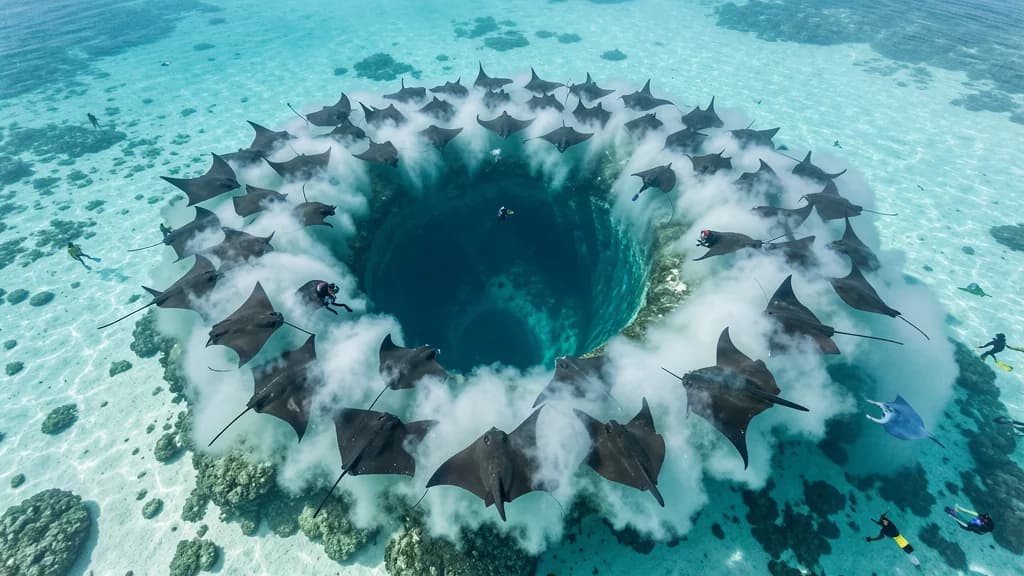
By July, Hanifaru Bay is in full eruption. The bay — barely larger than a football field — can hold 50 to 200+ manta rays feeding simultaneously in synchronised cyclone formations, a behaviour so spectacular it has no equal in diving. The Hanifaru Bay mantas are not there because the weather is good. They are there because the plankton is there. And the plankton is there because the southwest monsoon has turned the Indian Ocean into a nutrient delivery system.
The statistics from Baa Atoll are staggering. In 2024, marine biologists at Four Seasons Landaa Giraavaru recorded an estimated 4,477 manta ray sightings during the season. On peak days during full and new moons — when tides amplify plankton concentration — over 200 mantas can gather in a single bay. Whale sharks occasionally join the feeding. Juvenile whale sharks up to nine metres have been documented mingling with the ray cyclones.
Access is strictly controlled. Hanifaru Bay is snorkel-only — diving was banned to protect the aggregation. Visitor numbers are capped at 45 per session. Each session lasts 45 minutes. A licensed guide must accompany every group. The permit costs roughly $30, with profits funding the Baa Atoll Conservation Fund. These regulations are not inconveniences. They are the reason the bay still exists in this form.
July and August are also peak South Ari whale shark season. The juvenile sharks concentrate on the eastern side of the atoll, following the plankton "downwind" of the monsoon. Encounter rates remain in that 70–90% window, but the density increases. On some days, multiple sharks are visible from the same boat.
The Reality Check: Surface conditions can be rough. Visibility at Hanifaru drops to 10–15 metres on heavy plankton days. Rain falls in short, intense bursts. But beneath the surface, the ocean is performing its annual masterpiece — and the tribe that dives through the monsoon is the tribe that sees it.
Booking Note: Hanifaru-focused liveaboards for July–August sell out 6–12 months in advance. Do not assume you can book two months out. The best boats are claimed by divers who understand the calendar.
September–October: The Transition & the Bargain
The Vibe: Quiet. Unpredictable. The insider's window.
September is the Maldives' best-kept secret — and its cheapest month. Resort occupancy drops to around 39%. Rates fall 30–60% below peak season. Many properties run aggressive promotions: free transfers, upgraded meal plans, dive packages thrown in as incentives. Budget-conscious travellers can save $2,000–$5,000 on a week-long stay by choosing September over February.
But this is not just about money. September and October represent a transition window where the ocean is in flux — and flux, for the observant diver, means opportunity.
Hanifaru Bay is still active through September, though the frequency of large aggregations begins to taper. October is the shoulder of the shoulder — some years deliver exceptional late-season manta events, others see the bay go quiet early. The variability is the point. You are gambling on nature's timing, and when it pays off, you have 200 mantas and a fraction of the boats that crowded the bay in August.
Whale sharks in South Ari remain reliable through both months. The southern atolls — Huvadhoo, Addu, Fuvahmulah — begin to see improved conditions as the southwest monsoon loosens its grip. And across the archipelago, the first signs of the returning northeast monsoon appear: clearer skies, calmer afternoons, the water beginning to shift from green-blue back to sapphire.
This is the season for divers who have done the Maldives before. Who do not need guaranteed conditions. Who would rather save thousands, share the reef with fewer divers, and accept that the ocean's schedule is not theirs to command.
November–December: The Peak Returns — And DeepBeatDives Arrives
The Vibe: The decision month. When everything aligns.
November is the hinge of the Maldivian year. The southwest monsoon releases its hold. The northeast monsoon begins to establish. The seas settle. The skies clear. And the marine life — the mantas, the whale sharks, the reef sharks, the turtles — does not disappear. It simply shifts into a different gear.
By late November, visibility on the eastern atolls climbs back toward 25–30 metres. The manta cleaning stations of North Malé and Ari reactivate. The whale sharks of South Ari remain as reliable as ever. And the surface conditions return to that glass-calm state that makes sunrise dives feel like entering a prayer.
But November is something else for our tribe. November 2026 is when DeepBeatDives launches.
We chose this window deliberately — not because it is the only good month, but because it is the convergence month. The month when dry-season conditions return but the wet-season crowds have gone home. When the water is clear enough for underwater photography but still rich enough for pelagic encounters. When the Maldives feels like it belongs to the divers who understand its rhythms, not just the tourists who saw a postcard.
December solidifies the transition. By mid-December, the dry season is established. Christmas and New Year bring peak-season pricing and the highest occupancy of the year. The diving is exceptional — but you will share it with more boats, more bubbles, and the holiday crowd that treats the Maldives as a beach destination rather than a dive destination.
For the tribe, November is the sweet spot. The conditions are there. The prices have not yet hit December peaks. And the sense of arriving at the exact right moment — that is the feeling we built DeepBeatDives around.
The DeepBeat Decision: Why November Matters
If you have read this far, you already understand something most travellers do not: the Maldives is not a single destination. It is twelve different destinations, one for each month, each with its own frequency.
January gives you clarity. February gives you whale sharks in crystalline water. July gives you the manta cyclones of Hanifaru Bay. April gives you tiger sharks in the deep south. Every month has its argument. Every month has its tribe.
But November is the month we chose for DeepBeatDives because November is the convergence.
It is the moment when the ocean calms and the music begins. When the dive boats are not overcrowded and the reefs are not exhausted. When you can spend your mornings with whale sharks, your afternoons on a drift dive through a channel, and your evenings on a sandbar where the sound system is already warming up.
This is not a coincidence. We planned DeepBeatDives around the calendar because the calendar is everything in the Maldives. The ocean sets the schedule. We simply chose the month when that schedule aligns with what our tribe needs: world-class diving, clear conditions, and the space to discover what happens when 1,500 divers, musicians, and ocean lovers gather in one place at the right time.
Your Next Move
Bookmark this page. Send it to your buddy. Print it and stick it on your fridge. The Maldives dive calendar is not a suggestion — it is the framework that separates a good trip from a transformative one.
Want the complete, printable version? We have compiled the entire 2026–2027 Maldives Dive Calendar into a downloadable PDF — month-by-month species guides, atoll recommendations, moon-phase windows for Hanifaru Bay, and the liveaboard booking timelines that will save you from showing up too late.
Get the DeepBeatDives Maldives Calendar: 2026–2027 Edition → — delivered to your inbox when you join the tribe.
"Get the Maldives Calendar + a hidden gem every month. This isn't a newsletter. It's an invitation to the blue."
Subscribe to The DeepBeat Dispatch → and receive:
- The full 2026–2027 Maldives Dive Calendar (PDF)
- Monthly hidden gem dive sites we refuse to post on Instagram
- First access to DeepBeatDives announcements, artist lineups, and early-bird invitations
The blog is the surface. The Dispatch is the deep. Subscribe to go further.
Ready to stop planning and start descending? The Maldives is waiting. And in November 2026, so are we.
Join the waitlist. Claim your invitation. We will see you in the water.
Sources & References:
- Maldives Whale Shark Research Programme (MWSRP) — long-term residency data, South Ari Atoll
- Baa Atoll UNESCO Biosphere Reserve — marine biodiversity statistics, Hanifaru Bay regulations
- PADI Travel — Fuvahmulah dive profiles and species calendars
- Manta Trust — 2024 manta sighting statistics