
If you've ever wondered can you hear a reef dying, drop a hydrophone into a healthy coral reef at dusk — say, a living wall of staghorn coral off the Maldives' North Malé Atoll — and what you hear will defy every romantic notion of the ocean as a quiet place.
It is not quiet. Not even close.
It is a riot. A cacophony. A biological metropolis with the volume turned up to eleven.
The dominant sound — the ever-present crackle that scientists compare to frying bacon or rain on a tin roof — comes from thousands upon thousands of snapping shrimp. Each one, barely larger than your thumbnail, fires a cavitation bubble from its oversized claw at speeds of nearly 100 kilometres per hour. The bubble collapses with such violence that it produces one of the loudest biological sounds on Earth. Individually, a snap. Collectively? An unrelenting sizzle that can hit 155–165 decibels at peak.
Layered on top of that crackle are the grunts of damselfish, the chirps of clownfish defending their anemone territories, the croaks of reef-dwelling drums, the scrape of parrotfish beaks against coral skeletons, and the rhythmic pulse of waves translating their energy through living architecture. As we explored when analyzing why sound travels 5x faster underwater, the underwater world is a dense medium for acoustic communication.
This is the sound of a vibrant ocean soundscape — a reef that is working and singing.
The Ocean Soundscape: A City Underwater
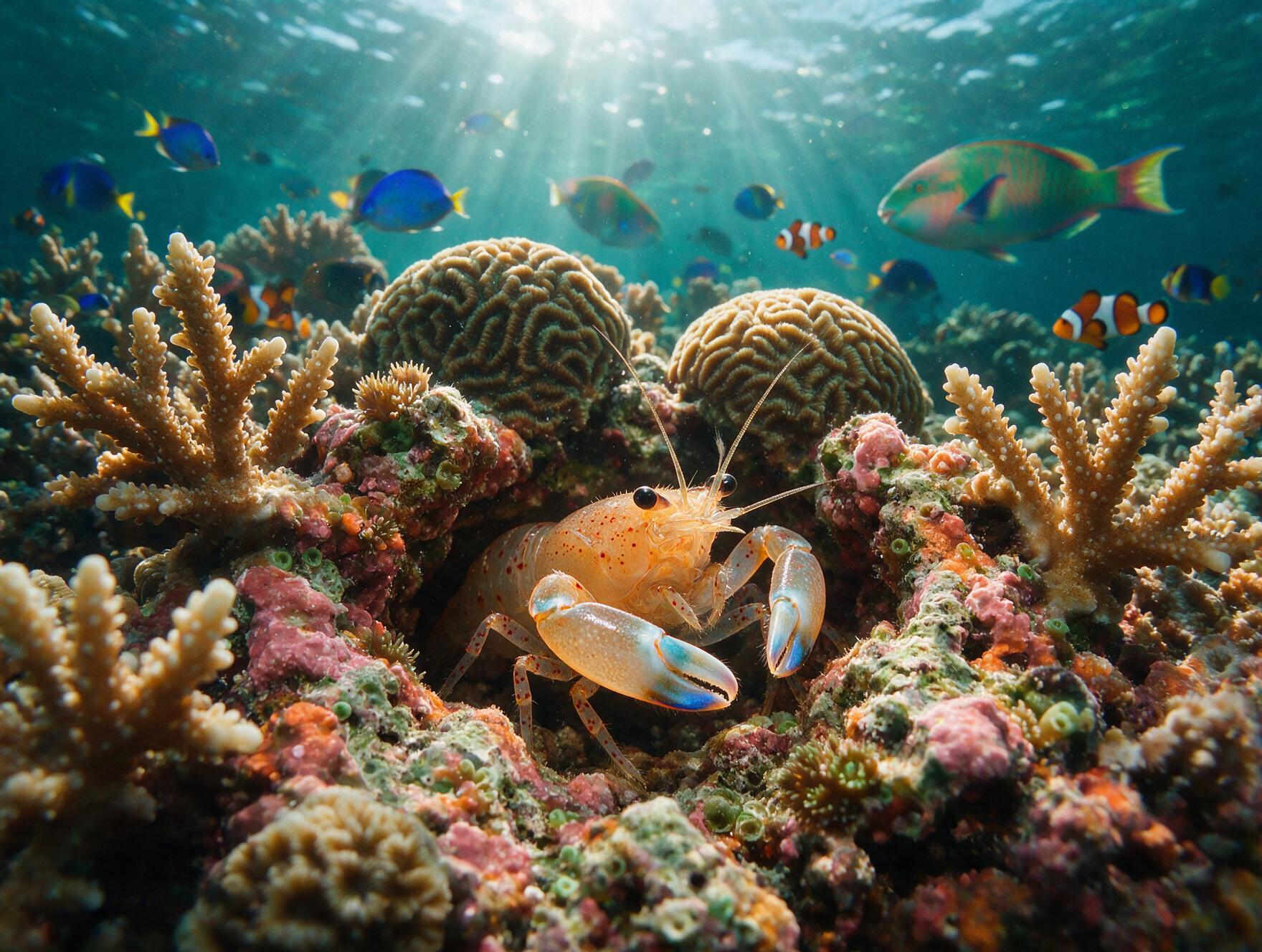
Dr. Tim Gordon, a leading marine ecologist whose research in reef acoustics has transformed marine conservation, describes it best: "When you put your head underwater on a healthy coral reef, it is just an absolutely dizzying array of shapes and colours and noises and sounds. It is completely overwhelming."
That symphony is not just ambient background noise. It is vital ecological information. It is a navigational beacon and a sonic welcome mat broadcasting to larval fish and coral planulae: This is home. This is safe.
And when that sound goes quiet, the reef doesn't just lose its music. It loses its ability to heal itself.
Can You Hear a Reef Dying? The 15-Decibel Death
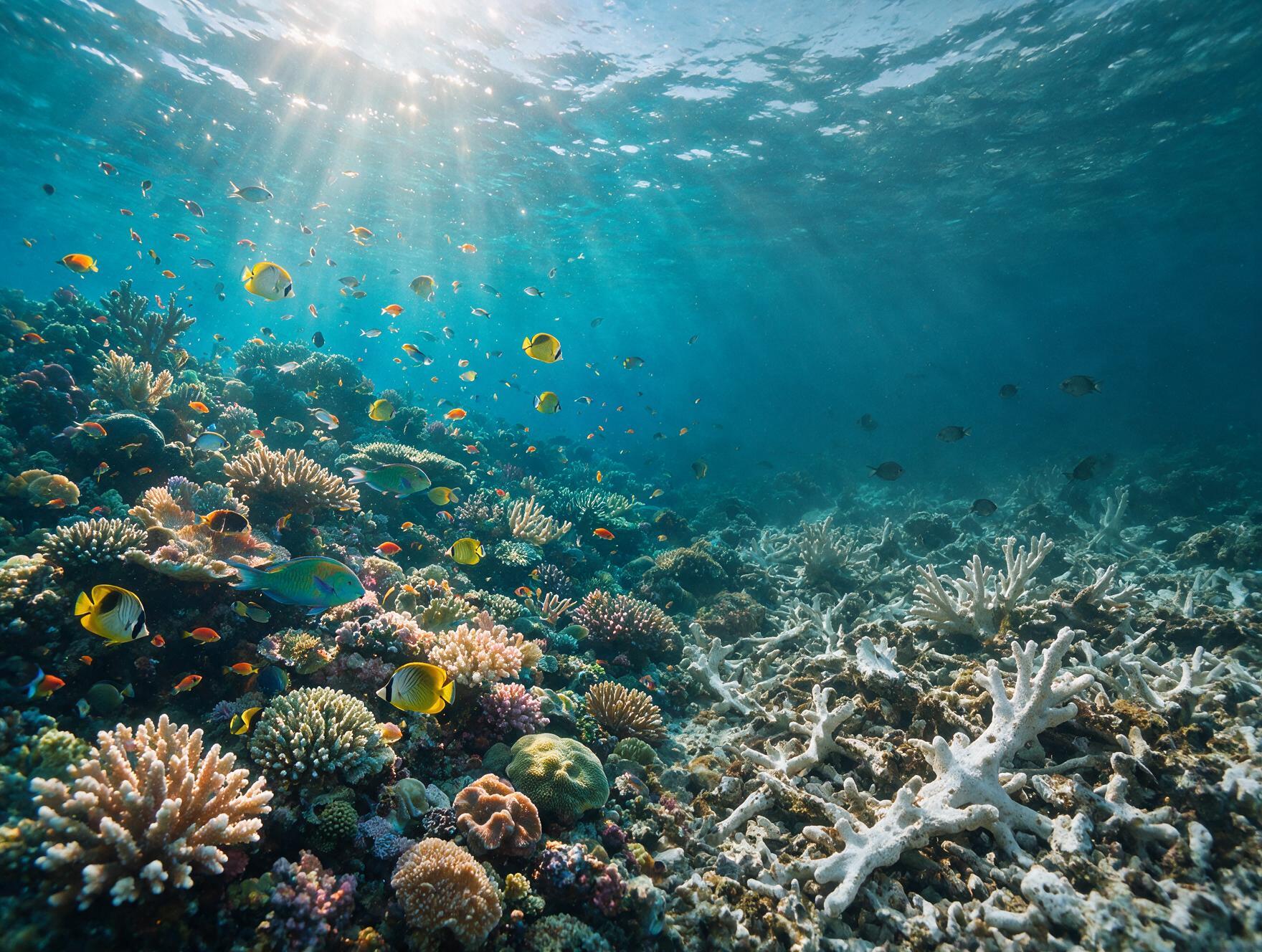
In 2012, Gordon and his team anchored hydrophones at ten lagoonal reefs surrounding Lizard Island on Australia's northern Great Barrier Reef. They recorded night-time soundscapes when the reef was thriving, and again in 2016 after severe cyclones and mass-bleaching events.
When researchers played the recordings side by side, the post-degradation soundscapes were an average of 15 decibels quieter. In acoustic terms, a 10-decibel reduction represents a halving of perceived loudness. Fifteen decibels is the difference between a lively dinner conversation and a whispered confession.
Even worse, acoustic complexity cratered. When Gordon's team tested these degraded recordings in controlled experiments, the degraded soundscapes resulted in 40% less settlement of juvenile fishes. Young fish, programmed by millions of years of evolution to follow sound toward safety, simply swam past the silent, damaged reefs.
The Feedback Loop of Reef Degradation
Coral reefs rely on recruitment — the arrival of young fish and coral larvae from the open ocean — to replenish populations and maintain ecosystem balance. Without recruitment, a damaged reef cannot recover. As it degrades, it gets quieter; as it gets quieter, even fewer larvae find it. This forms a destructive feedback loop that impairs reef resilience.
Since the 1950s, Earth has lost approximately half of its coral reef cover. In the Maldives, mass bleaching events have impacted 40 to 60 percent of coral coverage. Divers who learn how to read a reef like a marine biologist quickly spot these warning signs.
Acoustic Enrichment: The Boombox Solution
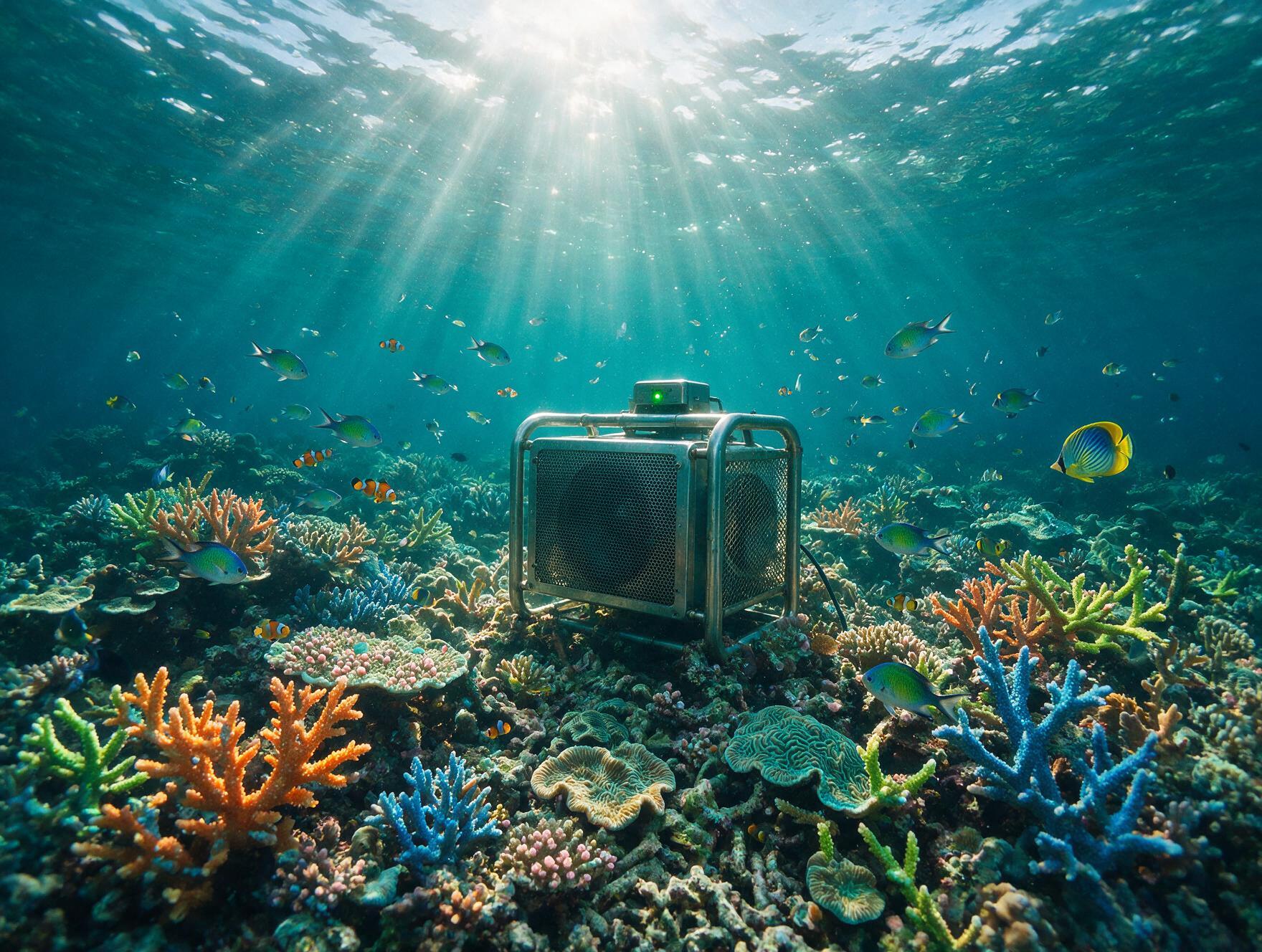
Here is where marine science pivots from elegy to innovation: acoustic enrichment.
Researchers install underwater speakers ("reef boomboxes") on degraded reefs, playing recordings of healthy reef soundscapes. Published in Nature Communications, Gordon's 2019 study showed that reefs with acoustic enrichment attracted twice as many fish as quiet control sites, with species richness increasing by 50%.
Furthermore, 2024 research by Woods Hole Oceanographic Institution demonstrated that coral larvae were up to seven times more likely to settle near speakers broadcasting healthy reef sounds. This breakthroughs offer unprecedented hope for coral reef restoration.
Much like global efforts documenting ocean species discoveries, acoustic conservation opens brand-new pathways for saving marine ecosystems.
What Divers Can Do
Acoustic enrichment is a powerful tool, but addressing root causes remains vital:
- Practice Flawless Buoyancy: Every fin kick into coral is acoustic vandalism. Maintain pristine position in the water column.
- Use Reef-Safe Sunscreen: Avoid chemicals like oxybenzone that bleach coral.
- Advocate for Passive Acoustic Monitoring: Support hydrophone monitoring at your favorite dive destinations.
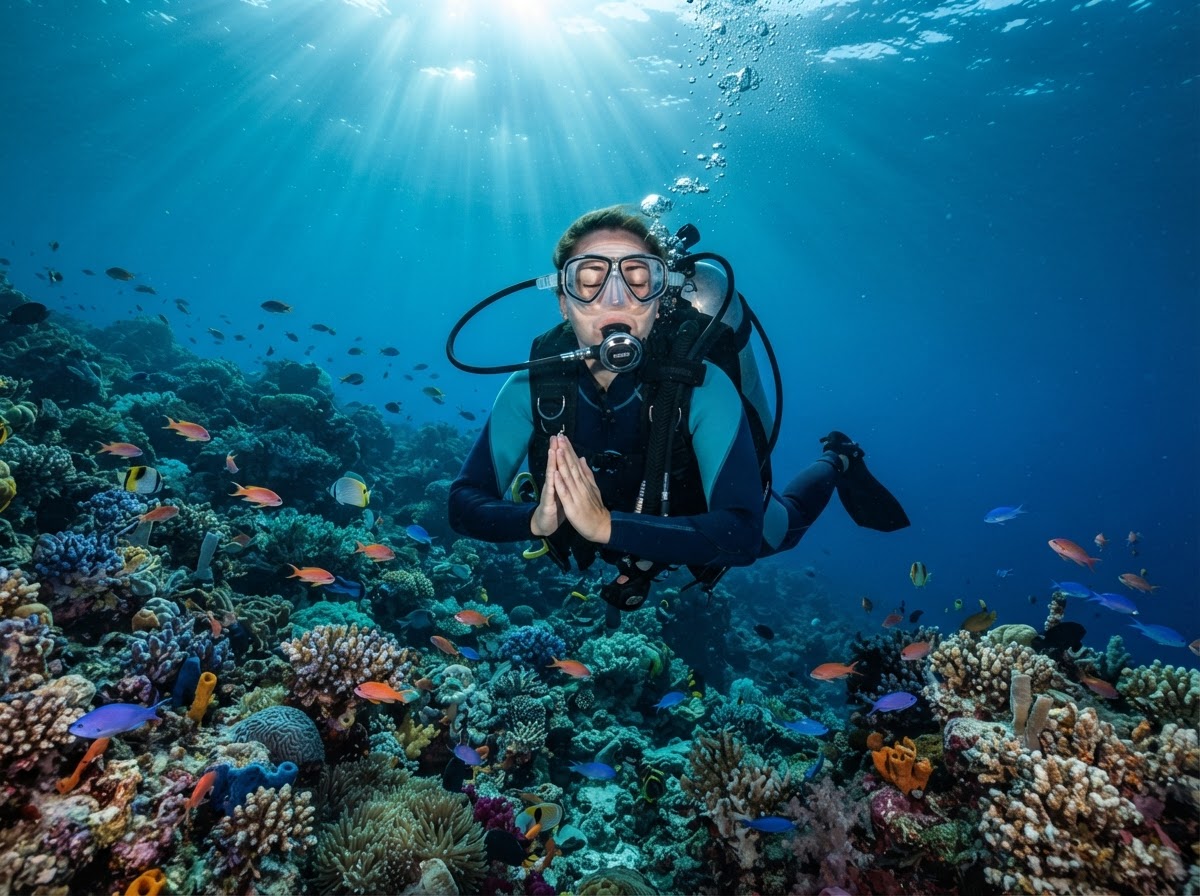
- Listen Active on Every Dive: Pause underwater for 30 seconds to tune into the ocean soundscape.
Join the DeepBeat Tribe
At DeepBeatDives, we believe sound is sacred — from deep-sea acoustic soundscapes to curated music experiences. Protecting what we celebrate is central to our mission.
Join the tribe to receive exclusive ocean conservation dispatches, hydrophone audio recordings, and festival announcements.
DeepBeatDives is the world's first premium deep-sea scuba + music destination festival. Listen to the deep, protect the reef, and keep the music playing.