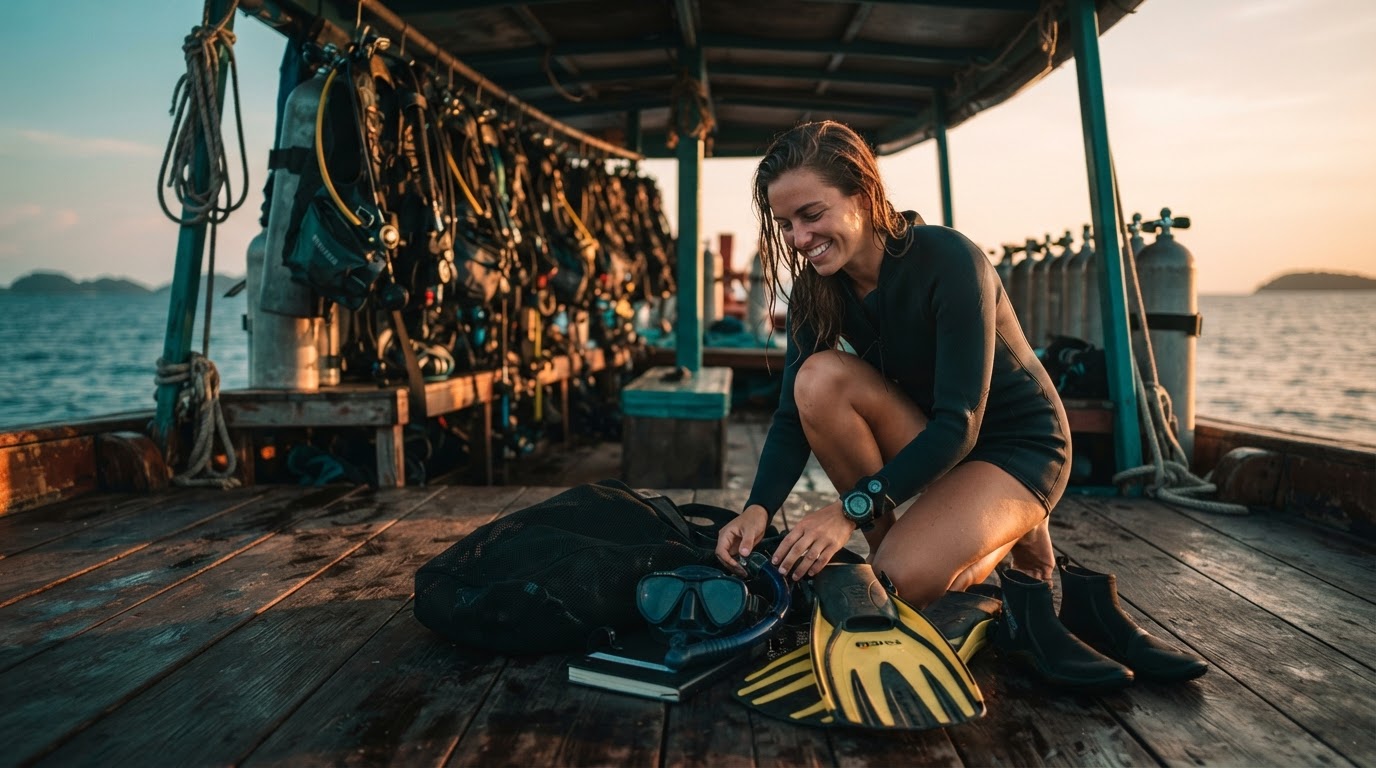
The Question Every Fresh Open Water Diver Asks
"Do I need to buy all this stuff, or can I just rent it?"
You've just finished your Open Water course. Your certification card is (probably) still being processed. And now you're standing in a dive shop, staring at a wall of masks, fins, and BCDs, while someone hands you a laminated price sheet for a "starter package" that costs more than your flight to the dive site.
Here's the truth nobody tells you in certification class: the rent-or-buy decision isn't one decision. It's five separate decisions, and the right answer is different for each piece of gear.
Most new divers either buy everything at once — dropping $1,500+ on gear before they know if they'll dive more than twice a year — or rent everything indefinitely, fighting ill-fitting masks and mystery-smell wetsuits on every trip. Both are mistakes. There's a smarter middle path, and it comes down to understanding what actually matters: fit, hygiene, and how often you're realistically going to use it.
Rule One: Buy What Touches Your Face and Feet
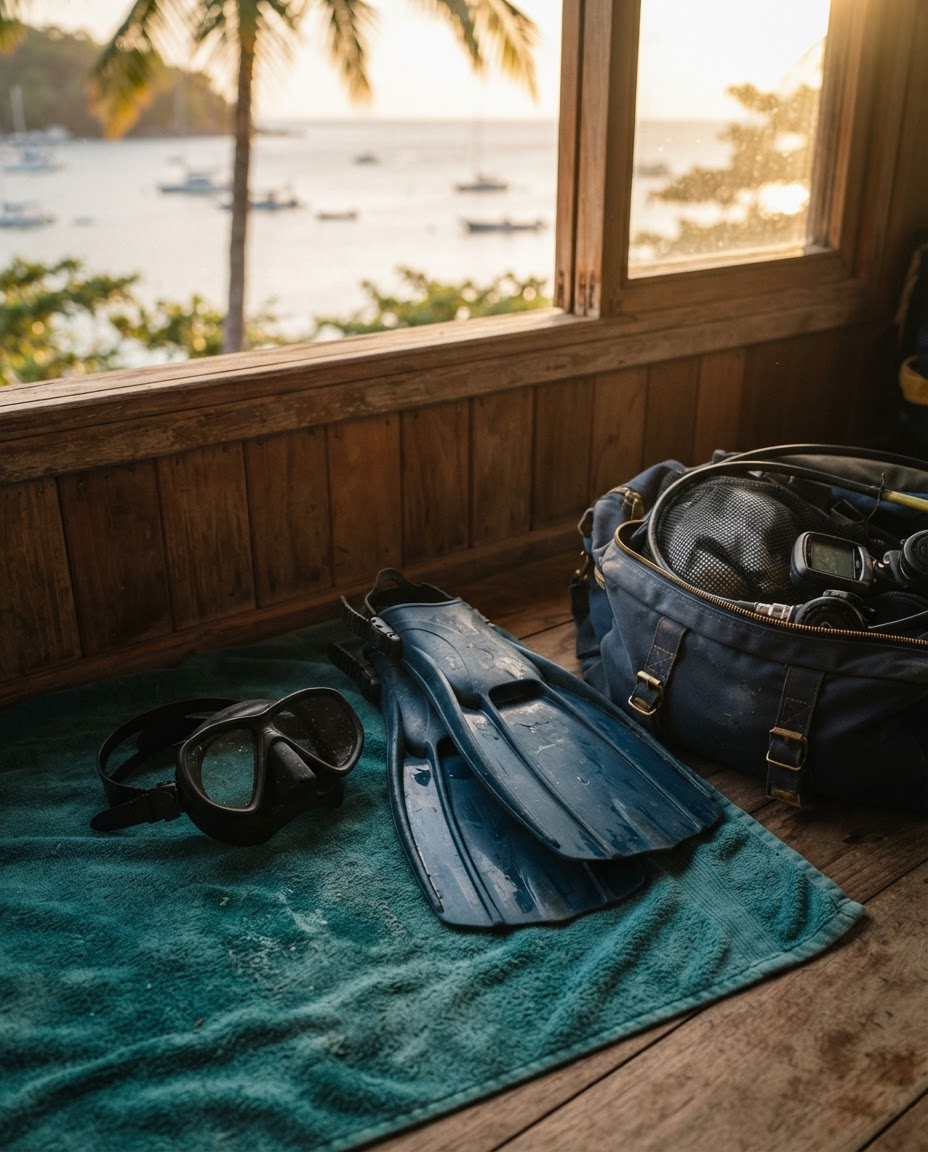
If you remember nothing else from this article, remember this: mask, snorkel, and fins are the first three things you should own — even before you own a single fin's worth of anything else.
Here's why. A rental mask has been on dozens, maybe hundreds, of different faces. Every face has a different bone structure, and a mask that doesn't seal against your specific face will leak, fog, or dig into your skin for an entire dive. You can spend an entire 45-minute dive fighting a leaking mask instead of watching the reef. A properly fitted mask — one you tested by pressing it to your face without the strap and inhaling gently through your nose to check the seal — solves this permanently, for around $40–$100.
Fins are a fit issue too, but they're also a comfort and efficiency issue. Rental fins are sized in broad ranges (S/M/L) and get abused by hundreds of kicks against boat ladders and reef edges. Your own fins, fitted to your foot and your kick style, mean less leg fatigue and better buoyancy control — the same control that separates confident divers from the one buoyancy mistake 90% of certified divers still make.
Approximate cost to own mask + snorkel + fins: $150–$250 total. This is the one category where we tell every guest at DeepBeatDives: don't rent, don't wait, just buy.
Rule Two: Rent the Expensive, Bulky, Rarely-Broken Stuff
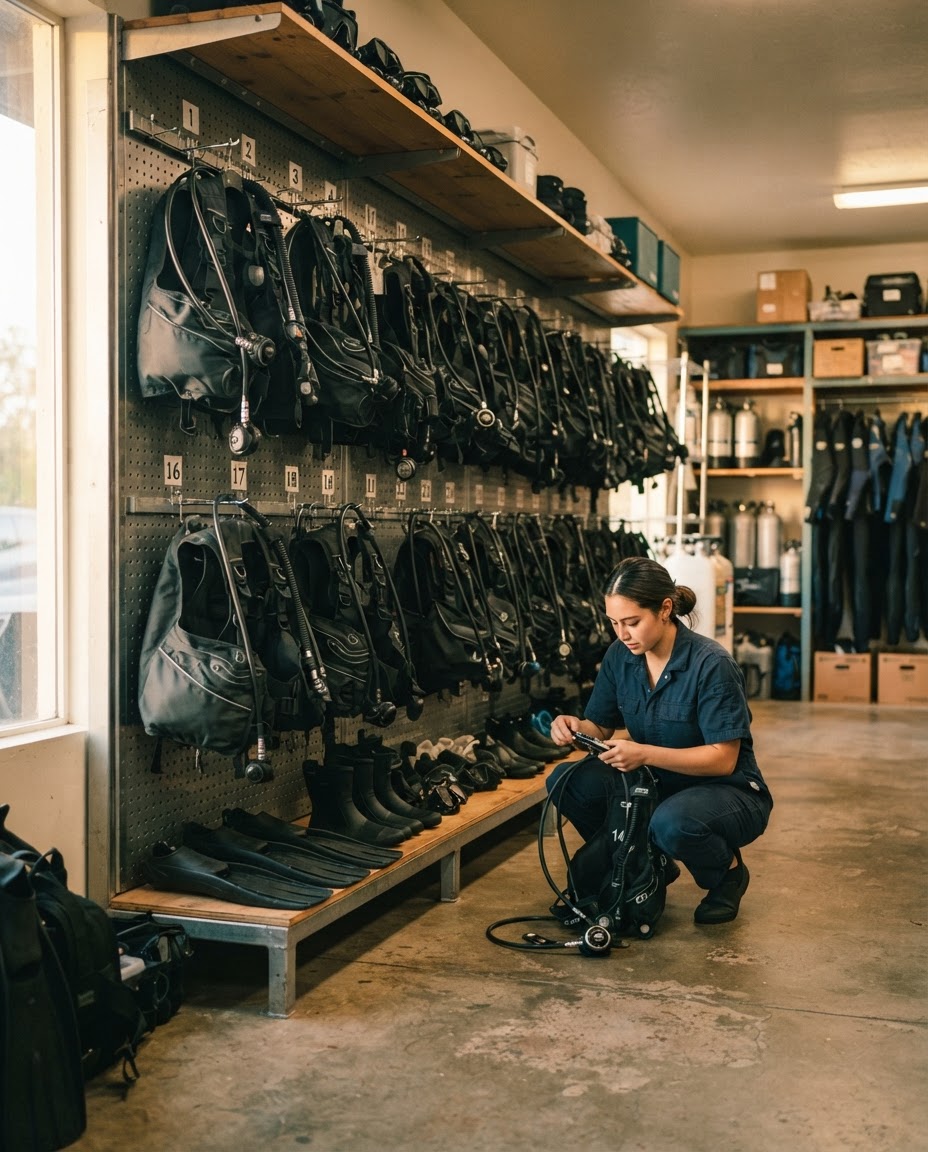
Now for the gear that should stay on the rental rack for your first year or two of diving: the BCD (buoyancy control device), the regulator set, and the tank.
This isn't a compromise — it's the financially smart move, for three reasons:
- Cost. A quality BCD runs $400–$900. A full regulator set (first stage, primary second stage, octopus, gauges) runs $500–$1,200. Tanks are typically never personally owned by recreational divers at all — they're refilled and swapped at every dive operation, everywhere in the world.
- Weight and travel. A BCD and regulator set adds 8–12 kg (18–26 lbs) to your luggage. If you're flying to the Maldives, Red Sea, or Raja Ampat once or twice a year, that's baggage fees and packing headaches for gear that sits in a closet the other 350 days.
- Maintenance liability. Regulators need annual professional servicing (roughly $80–$150 per service) regardless of how much you dive. Own one, and you're paying that fee every year whether you took ten dives or zero. Rent, and the dive shop absorbs that cost and guarantees the gear was serviced before it reached you.
At any reputable dive operation, rental BCDs and regulators are inspected and serviced on a schedule — this is standard practice, not a corner being cut. The idea that "rental gear is unsafe" is one of the most persistent scuba diving myths that make instructors facepalm.
🫧 INFOGRAPHIC DESCRIPTION: A simple two-column comparison graphic. Left column "Buy First" shows icons of a mask, snorkel, and fins with a small price tag reading "$150–250, one-time." Right column "Rent First" shows icons of a BCD, regulator, and tank with a price tag reading "$25–45/day, no maintenance, no baggage weight." Caption: "The gear that touches you, you own. The gear that gets serviced, you rent."
Rule Three: The Wetsuit Question Depends on Where You Dive
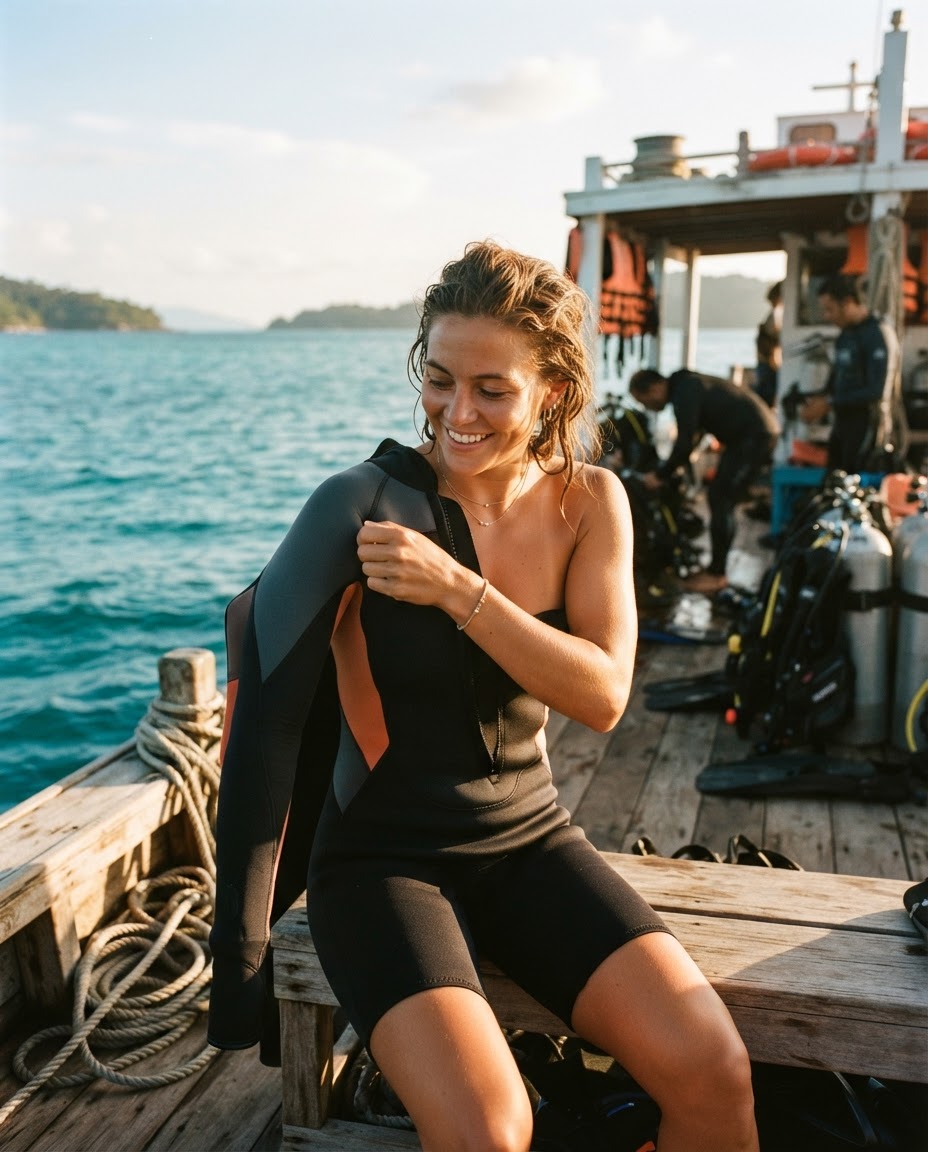
Wetsuits are the one category where the answer genuinely depends on your dive destination and how much you value hygiene over cost.
If you're diving almost exclusively in warm tropical water — the Maldives, Andamans, most of Southeast Asia — you're likely in a 3mm shorty or full suit. Rental shorties are widely available and, unlike a mask, don't require a precision seal to function. The main downside is purely aesthetic and hygienic: rental wetsuits have been worn, sweated in, and occasionally not-fully-dried by dozens of previous divers.
If you dive more than a handful of times a year, or you dive in cooler water (drysuits, 5–7mm suits), owning your own wetsuit becomes worth it faster — both for fit (a suit that's too loose lets in cold water and kills thermal protection) and for the simple fact that nobody wants to layer up in someone else's neoprene indefinitely.
Our rule of thumb: if you're doing fewer than 10 dives a year in warm water, rent. Past that, or if you're diving in anything below 24°C (75°F), start pricing your own suit.
The Real Cost Comparison: Renting vs. Owning Over Time
Let's put numbers to this, because "it depends" isn't useful without math.
| Scenario | Rent Everything | Own Mask/Snorkel/Fins Only | Own Full Kit |
|---|---|---|---|
| Upfront cost | $0 | $150–$250 | $1,200–$2,500 |
| Cost per dive trip (5 dives) | $150–$225 | $75–$125 (BCD/reg/tank rental only) | $0 (excl. tank fills, ~$25–$40/tank) |
| Annual servicing | $0 (shop's cost) | $0 | $80–$150/year |
| Diver doing 1 trip/year (5–10 dives) | Cheapest overall | Best value | Overkill — years to break even |
| Diver doing 4+ trips/year (20+ dives) | Gets expensive fast | Good, but reconsider BCD/reg | Best value — breaks even within 1–2 years |
The break-even math is straightforward: if you're diving fewer than roughly 15–20 dives a year, renting your BCD and regulator almost always costs less than owning, once you factor in servicing and depreciation. Past that threshold, owning starts winning — not just financially, but because gear you know intimately (your BCD's exact weight pocket placement, your regulator's exact breathing resistance) makes you a more relaxed, more present diver.
What About Dive Computers?
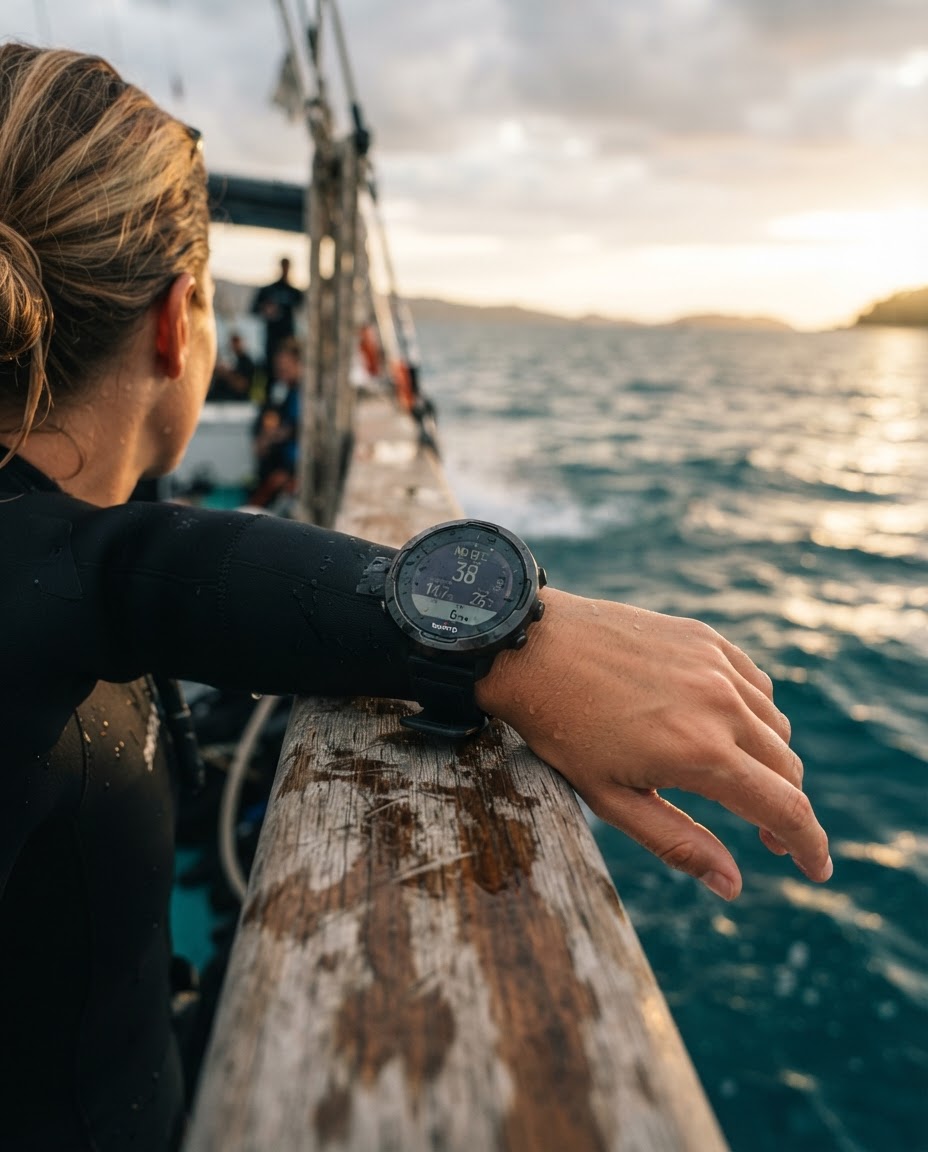
We didn't forget this one — it just deserves its own line, because it's the exception to "rent the expensive stuff."
A dive computer is arguably the single most important piece of safety gear you'll ever own, tracking your nitrogen loading in real time the way we explained in our breakdown of decompression theory for non-physicists. Unlike a BCD or regulator, a dive computer is personal by nature — it needs to know your dive profile, and you need to trust the specific algorithm and interface enough to read it correctly under stress.
Entry-level dive computers now run $200–$400, which is a smaller investment than most divers expect. Our recommendation: this is the first "expensive" item worth buying, even before a BCD, because using a rental computer you've never touched before is one dive-briefing away from confusion at exactly the wrong moment.
The Myth-Busting Sidebar: Gear Edition
❌ Myth: "Rental gear is old and unsafe." ✅ Truth: Reputable dive operations service rental regulators and BCDs on manufacturer-recommended schedules — often more rigorously than a hobbyist diver services personal gear. Choose a shop with visible, current equipment, and this isn't a real risk.
❌ Myth: "You need to own everything before you can call yourself a real diver." ✅ Truth: Plenty of experienced divers with hundreds of logged dives still rent tanks, BCDs, and regulators everywhere they travel — it's normal, not amateur. Gear ownership is a convenience and comfort decision, not a rite of passage.
❌ Myth: "Buying a full package deal from your certification shop is always the best price." ✅ Truth: Certification-shop packages are convenient but rarely the cheapest option. Compare mask/fin prices online and at multiple retailers before bundling — the markup on bundled starter kits can be 20–30% above buying pieces individually.
The Bottom Line: Buy for Fit, Rent for Convenience
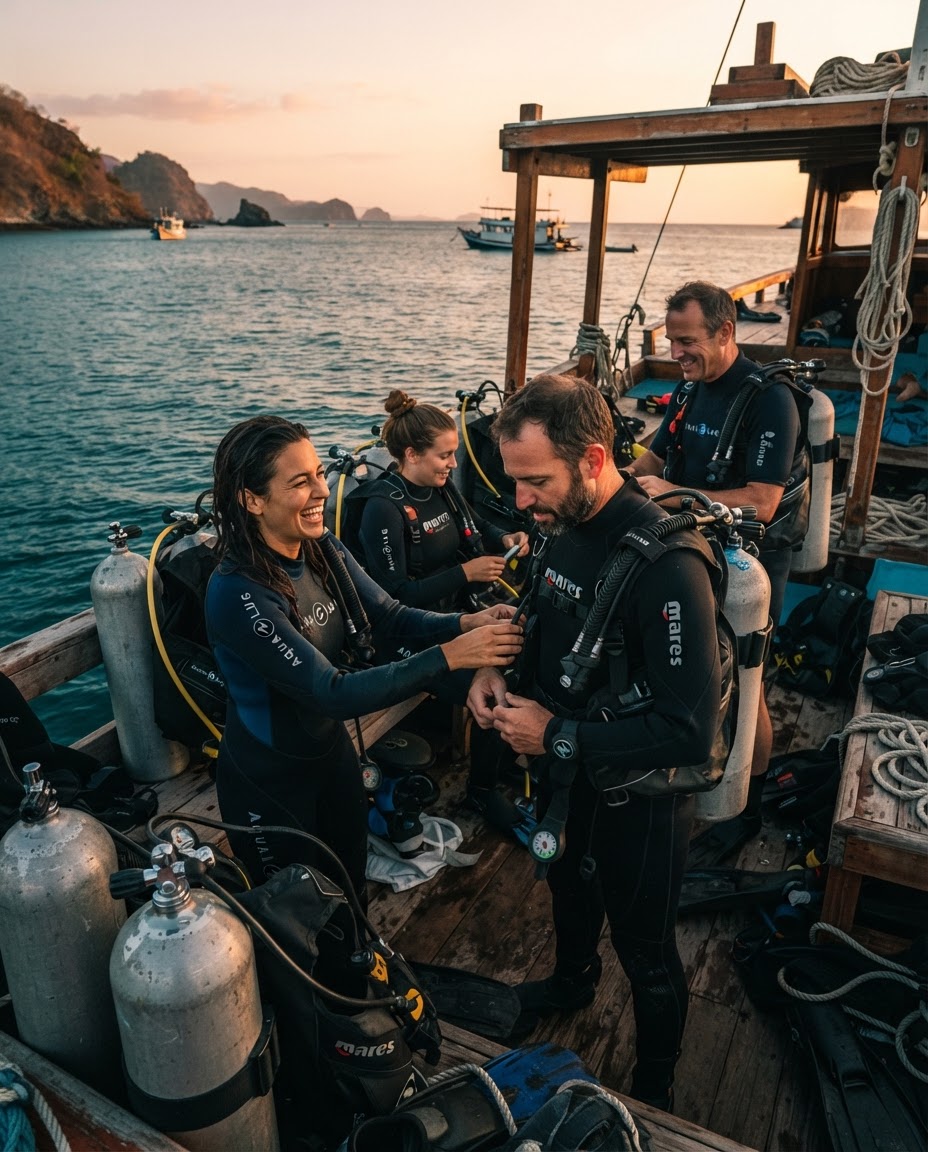
Here's the whole decision, compressed:
- Mask, snorkel, fins: Buy immediately. They're cheap, fit matters enormously, and hygiene is non-negotiable.
- Dive computer: Buy early. It's your safety instrument, and familiarity with your own unit matters under pressure.
- BCD, regulator, tank: Rent until you're diving 15–20+ times a year. Let the dive shop absorb the servicing and the baggage weight.
- Wetsuit: Rent if you dive occasionally in warm water; buy once you're diving often or in cooler conditions.
None of this is about being cheap or extravagant. It's about matching your gear investment to how you actually dive — which, if you're anything like the guests who join us at DeepBeatDives, might change faster than you expect once the ocean gets its hooks in you.
Dive Doctor's Inbox 💌
Every week, we answer one gear or safety question from the tribe — the kind you might be too embarrassed to ask your instructor.
This week's question: "I bought a mask that fit perfectly in the shop, but it fogs up constantly underwater. What am I doing wrong?"
Our answer: Almost certainly a new-mask issue, not a fit issue. Silicone masks come from the factory with a manufacturing residue on the inside of the lens that causes fogging even on a perfect seal. Before your first dive, scrub the inside of the lens with a small amount of non-gel toothpaste or diluted baby shampoo, rinse thoroughly, and repeat once more. After that, a pre-dive spit-and-rinse (yes, really — diver saliva works as a defogger) or a proper commercial defog solution should keep it clear. If it's still fogging after that, check the strap tension isn't over-tightened, which can subtly warp the seal.
Your Next Step: The Beginner Diver's Gear Checklist
📋 Download The Beginner Diver's Gear Checklist — a free PDF covering exactly what to buy, what to rent, sizing tips for masks and fins, and a packing list for your first dive trip.
Join the tribe to get the Checklist and the DeepBeat Dispatch.
Good gear disappears. You forget you're wearing it, and all that's left is the reef. Subscribe to the DeepBeat Dispatch for the weekly brief — one question, one answer, one reason to dive smarter.
Join the tribe. Get the ocean's best-kept secrets delivered to your inbox.
Published by DeepBeatDives | The world's first premium deep-sea scuba + music destination festival. Coming to the Maldives, November 2026.