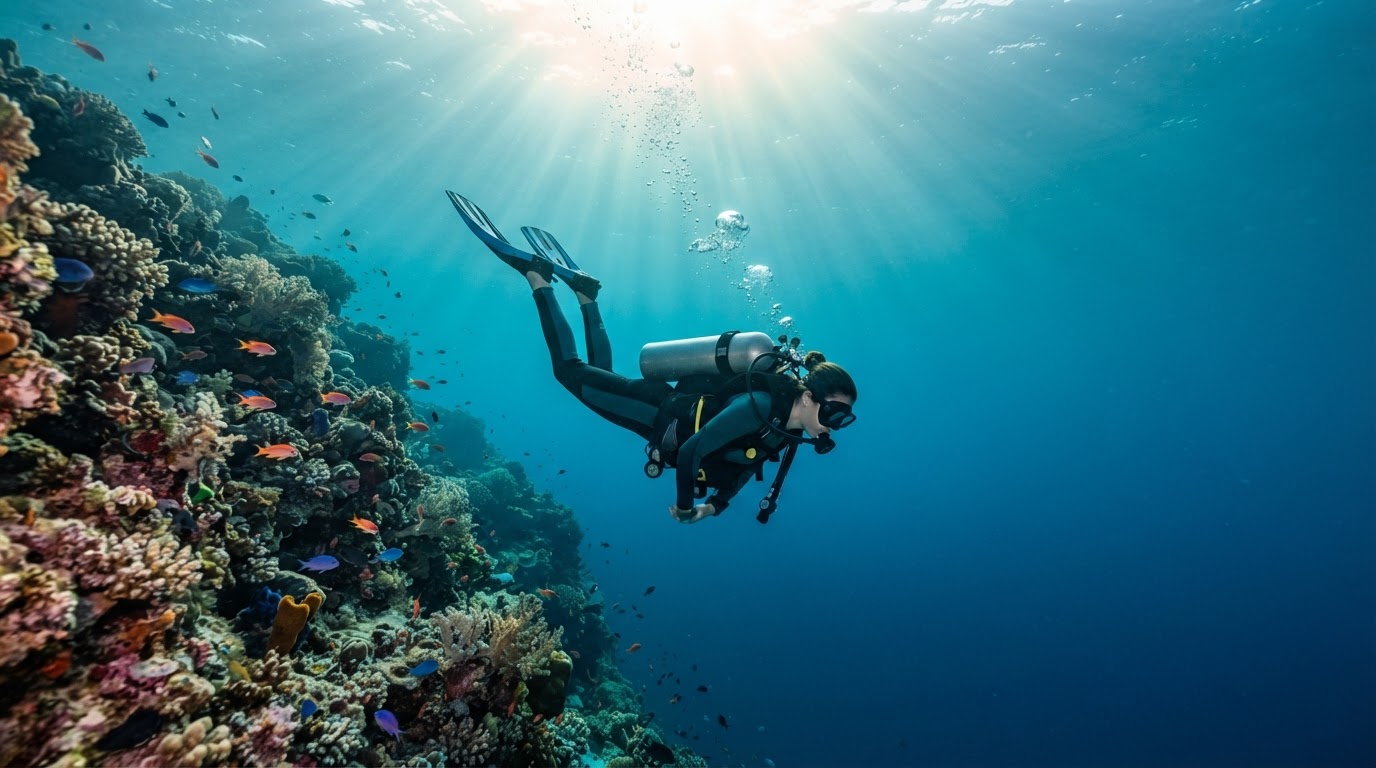
There is a moment every diver knows, even if they cannot name it.
It happens in the first three seconds after your face breaks the surface tension of the water. Your breath catches. Your chest loosens. Your mind — racing a moment ago with deadlines, notifications, the low hum of modern anxiety — suddenly goes quiet. Not because you willed it to. Not because you meditated for twenty minutes that morning. But because your body, deep in its ancient architecture, recognized water and made a decision:
Survival mode is over. Restore mode begins.
This biological phenomenon is driven by the mammalian dive reflex, a deep evolutionary mechanism that delivers immediate scuba diving stress relief. If you have ever felt inexplicably, profoundly calm underwater, you have already experienced this parasympathetic reset underwater. You just didn't know what your nervous system was doing for you.
To understand why this happens, it helps to look at Your Brain on Scuba and how underwater acoustics and pressure alter neurological activity.
The Mammalian Dive Reflex: Code That Predates Language
The mammalian dive reflex is not a human invention or a modern wellness trend. It is a 200-million-year-old survival mechanism shared by every mammal on Earth — from Weddell seals diving to 600 meters in Antarctica, to infants in birthing pools who automatically slow their heart rate underwater.
Your body carries this biological code because your ancestors carried it. Long before we walked upright or built cities, mammals occasionally needed to conserve oxygen underwater. Evolution does not discard critical code. It buries it deep, waiting for the moment cold water touches your face.
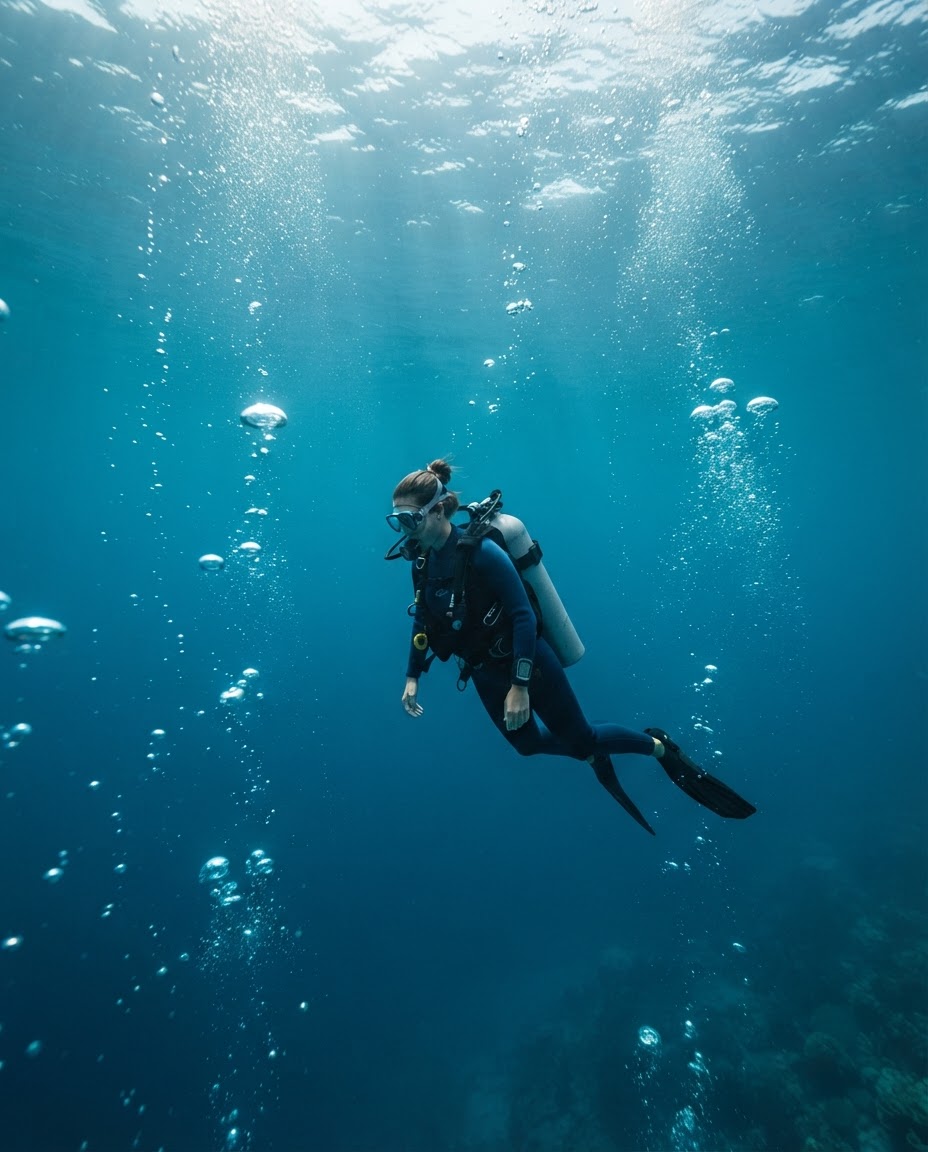
What Actually Happens in Those First 30 Seconds
The physiological shift is swift and precise.
When cold water contacts your face — specifically the trigeminal nerve receptors around your eyes, nose, and forehead — sensory signals travel straight to your brainstem along Cranial Nerve V.
The brainstem immediately triggers two parallel responses:
- Vagal Activation & Bradycardia: It signals the vagus nerve (Cranial Nerve X) to slow your heart rate. In average adults, heart rate drops 10–25% within seconds. In trained divers, it can drop by 50% or more.
- Peripheral Vasoconstriction: It constricts peripheral blood vessels in your limbs, rerouting oxygen-rich blood toward your core — forming a dedicated heart-brain circuit.
This is why simple cold water facial immersion triggers instant physiological calm. The brake pedal of your autonomic nervous system engages automatically.
The Vagus Nerve: Your Body's Built-In Brake Pedal
To understand why submersion feels like a reset, you need to look at the vagus nerve.
As the primary highway of the parasympathetic nervous system, the vagus nerve governs resting heart rate, digestion, and stress recovery. Higher vagal tone correlates directly with higher heart rate variability (HRV) and emotional resilience.

Modern life — with constant digital notifications and urban stress — keeps the sympathetic "fight-or-flight" system chronically active. Targeted vagus nerve stimulation water techniques reverse this state instantly.
Clinical studies demonstrate that cold water application to the facial trigeminal area produces rapid autonomic shifts. When you combine cold facial contact with controlled breathing underwater, your vagal tone rises, lowering cortisol and stabilizing blood pressure.
This biological calm is closely linked to The Blue Mind Effect, which explains why human beings experience psychological healing near water.
The Parasympathetic Reset Underwater: Why Divers Feel "Reborn"
Surfacing from a dive often leaves divers feeling renewed, clear-headed, and calm. This is not poetic exaggeration — it is neurophysiology.
Underwater, background acoustic noise drops by up to 85%. Visual inputs soft-focus into calming blue and green spectrums. Gravity releases its grip as you achieve neutral buoyancy.
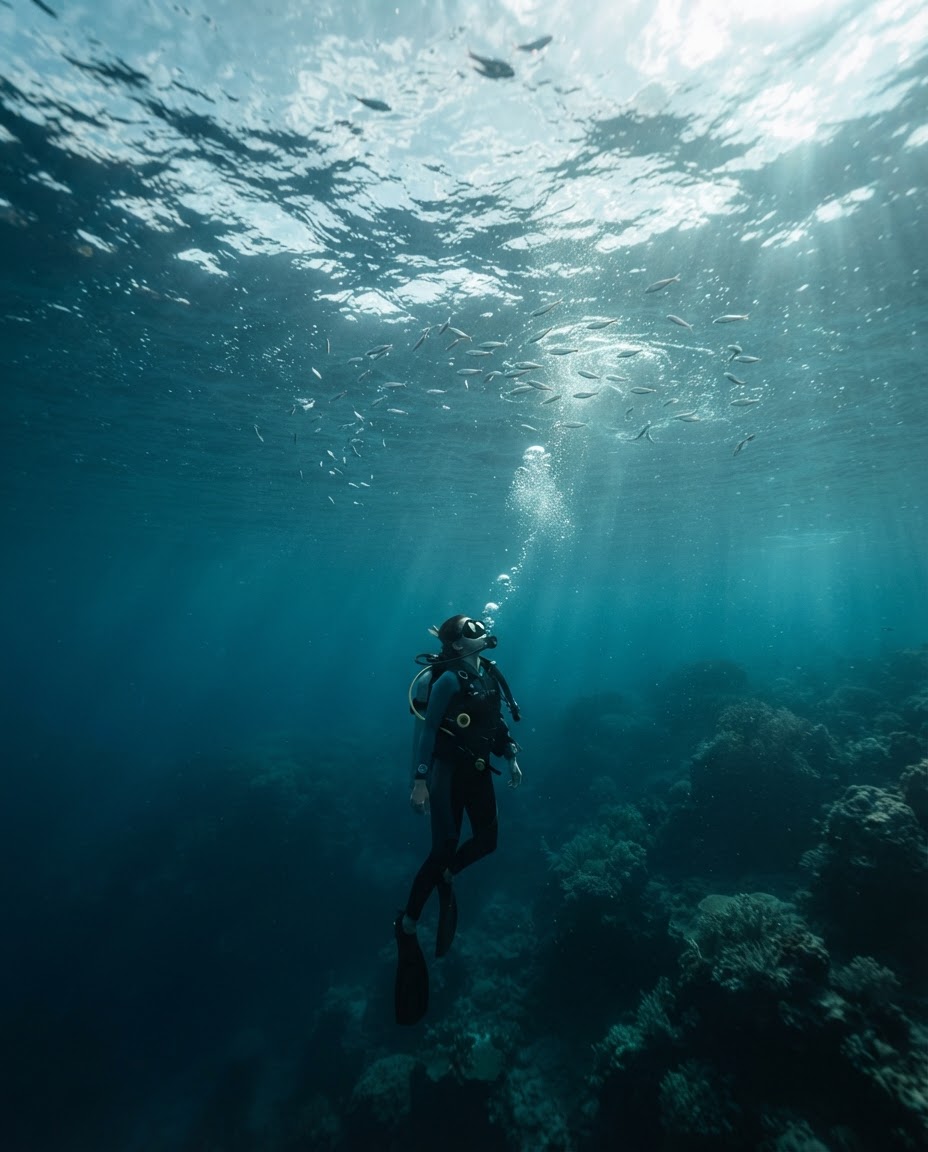
This sensory environment quiets the Default Mode Network (DMN) — the brain network responsible for anxiety and rumination. The result is a profound parasympathetic reset underwater.
Many divers who struggle with daily anxiety or burnout find sanctuary in the ocean, a topic explored deeply in our guide on From Panic to Presence.
Try the 3-Minute Submersion Reset
You do not need full scuba gear to trigger this reflex. You can experience the physiological shift at home using a simple cold water facial immersion protocol:
- Prepare: Fill a broad bowl with cool or cold water (around 15°C / 60°F).
- Breathe: Take three slow, deep nasal breaths (in for 4 seconds, out for 6 seconds).
- Submerge: On your final exhale, submerge your forehead, eyes, and cheeks for 10–15 seconds.
- Observe: Lift your face, pat dry, and notice your slowed heart rate and unclenched jaw.
- Repeat: Perform 2–3 rounds for a complete biological reset.
The Deeper Invitation
Cold water immersion is more than a biohack; it is an invitation to reconnect with your natural biology.
At DeepBeatDives, we craft ocean experiences, dive expeditions, and boutique gatherings around this deep connection to the sea. If you are ready to immerse yourself in ocean culture and join a global community of ocean lovers, Join the DeepBeat Tribe for our upcoming dive festivals and retreats.
Sources & Scientific References
- StatPearls: Physiology, Diving Reflex (NCBI Bookshelf) — Detailed clinical overview of the human dive response and trigeminal-vagal arc.
- Sympathetic nerve activity and simulated diving in healthy humans (Autonomic Neuroscience) — Research on autonomic nerve shifts during face immersion.
- Cardiorespiratory adaptations in marine mammals (PMC) — Comparative analysis of oxygen conservation mechanisms in diving mammals.
- Exploratory study into effects of regular cold-water sea swimming on mental health (Wiley) — Empirical study on vagal tone, mood improvements, and cold-water adaptation.